Cart Abandonment Emails: What Are They and Tips to Help You Tackle the Problems

Ayesha Ejaz
Ayesha Ejaz

Last updated on

April 8, 2026

Cart abandonment is one of the biggest revenue leaks in ecommerce. A visitor shows buying intent, adds products to the cart, reaches checkout and then leaves.

A well-structured cart abandonment email strategy helps recover these lost sales by re-engaging potential buyers at the right time with the right message.

In this guide, you will learn:

  • What cart abandonment emails are

  • Reasons for shopping cart abandonment

  • How to write high-converting shopping cart abandonment emails

  • How to time your emails effectively

  • Practical cart abandonment emails examples

  • Actionable optimization tips

All strategies discussed here can be implemented using Mailmunch as your primary email marketing and automation tool.
What Are Cart Abandonment Emails?

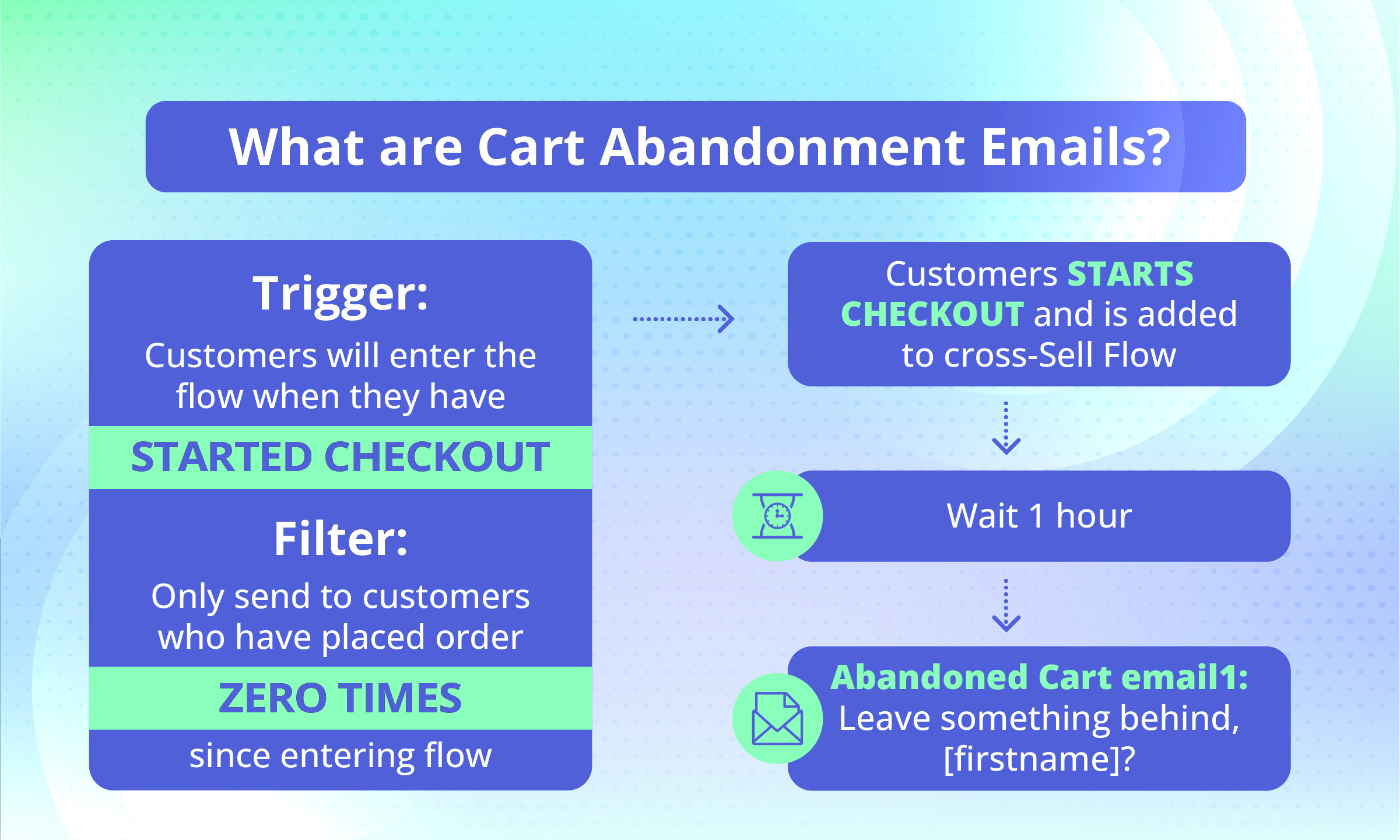
A cart abandonment email is an automated message sent to users who add products to their cart but leave the website without completing the purchase.

These emails are triggered automatically through marketing automation workflows. With Mailmunch, businesses can:

  • Track cart activity

  • Trigger automated emails

  • Segment users based on behavior

  • Recover lost revenue through structured email flows

The goal of shopping cart abandonment emails is to:Cart abandonment emails work because they target high-intent users who were already close to purchasing.

Why Do Customers Abandon Their Carts?

Understanding the reasons for shopping cart abandonment is essential before designing your email strategy.

Below is a structured breakdown
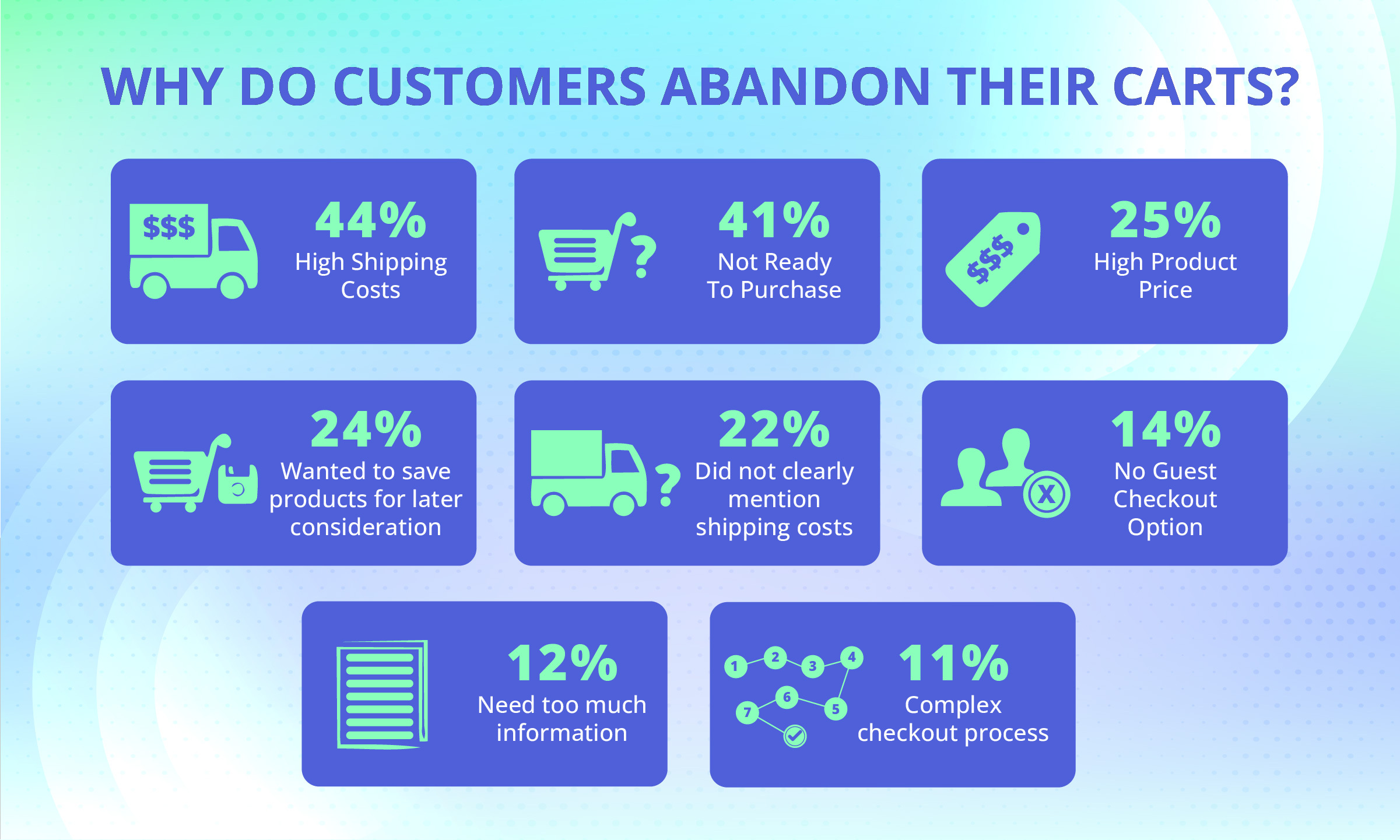
Reason Explanation How Email Can Fix It
Product Delivery Time Shipping takes longer than expected Highlight estimated delivery time clearly
Delivery Costs Unexpected or high shipping fees Offer free shipping or clarify pricing
Privacy Issues Concerns about payment security Emphasize secure checkout and trust badges
Complicated Checkout Too many steps or required account creation Provide direct return-to-cart link
Price Comparison Users comparing competitors Reinforce product value and benefits
Distraction User simply got interrupted Send a timely reminder

1. Get a Better Understanding of the Customer

Segmentation improves conversions.

With Mailmunch, you can segment users based on:

Segmentation Type Example
New vs Returning First-time visitor vs repeat buyer
Cart Value High-ticket vs low-ticket items
Product Category Electronics vs apparel
Location Shipping region customization

2. Use a Catchy Subject Line

Your subject line determines open rates.

Type Example
Reminder Did you forget something?
Curiosity Your cart is still waiting…
Urgency Your items are almost gone
Incentive Complete your order and get 10% off

3. Provide Clear Product Details

Your email must visually remind users what they left behind.

Include:

Element Why It Matters
Product Image Visual memory trigger
Product Name Provides clarity
Price Reinforces transparency
Quantity Reduces confusion
Direct Checkout Button Minimizes friction

4. Personalize the Email

Personalization improves engagement significantly.

Personalization Type Example
Name Hi Sarah
Product Reference Your black leather jacket is still available
Location-Based Info Fast delivery to Chicago
Behavior-Based Recommendation You may also like…

5. Create Urgency

Urgency reduces hesitation. Don't forget always use urgency ethically and truthfully.

Urgency Trigger Example
Limited Stock Only 3 left in stock
Cart Expiration Your cart will expire soon
Time-Limited Offer Offer ends in 24 hours

6. Use a Strong CTA

Every cart abandonment email should have one primary CTA.

Weak CTA Strong CTA
Click Here Complete Your Purchase
View Return to Cart
Continue Checkout Now

Keep the CTA button bold, clear, and above the fold.

7. Provide Incentives Strategically

Do not immediately offer discounts. Structure your flow properly.

Email Stage Strategy
First Email Reminder only
Second Email Benefits and reassurance
Third Email Discount or free shipping

This protects margins while maximizing conversions.
How to Time Your Cart Abandonment Emails

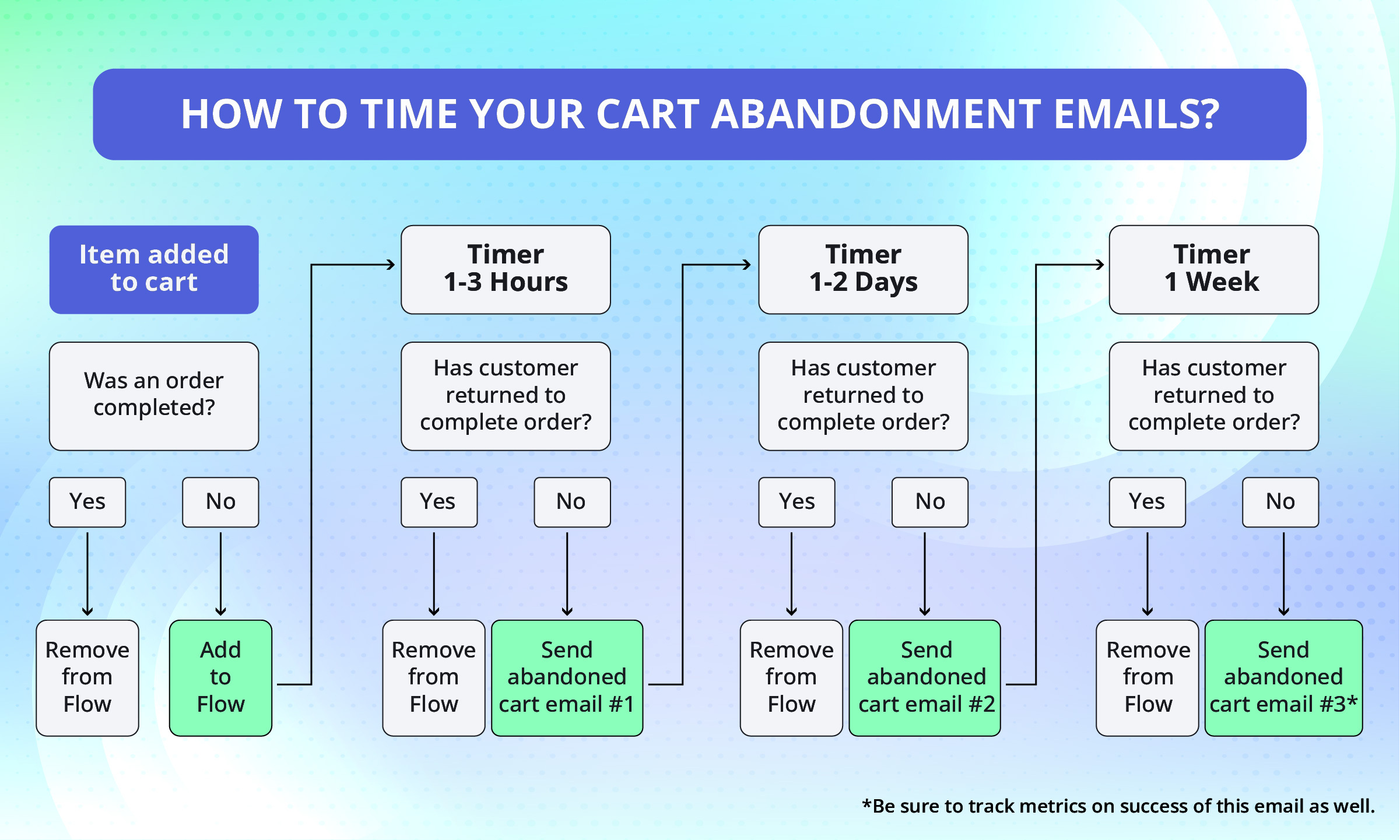
Timing impacts performance significantly.

A high-converting email sequence looks like this:

Email Timing Purpose Content Focus
Email 1 1–2 Hours After Abandonment Reminder Product image + checkout link
Email 2 24 Hours Later Objection Handling Reviews, FAQs, benefits
Email 3 48–72 Hours Later Final Push Limited-time incentive

Mailmunch automation allows you to:

  • Trigger based on cart activity

  • Set time delays

  • Add conditional logic

  • Send multi-step recovery flows

This ensures your shopping cart abandonment emails reach users at optimal moments.

Cart Abandonment Email Examples

Below are structured cart abandonment emails examples.

Example 1: Reminder Email

Component

Content

Subject

“Your cart is waiting for you”

Opening

Friendly greeting

Body

Product image + brief reminder

CTA

“Return to Cart”

Purpose: Re-engage distracted shoppers.

Example 2: Social Proof Email

Component

Content

Subject

“Customers love this product”

Opening

Acknowledge hesitation

Body

Product benefits + review snippet

CTA

“Complete Your Purchase”

Purpose: Reduce doubt and comparison behavior.

Example 3: Incentive Email

Component

Content

Subject

“Here’s 10% off to complete your order”

Opening

Limited-time offer

Body

Discount code + expiration reminder

CTA

“Checkout Now”

Purpose: Create urgency and close sale.

Cart Abandonment Email Tips

Below is a performance optimization checklist:

Optimization Area Action
Mobile Optimization Ensure responsive design
Design Simplicity Avoid clutter
Social Proof Add testimonials or ratings
Trust Signals Mention secure checkout
A/B Testing Test subject lines and CTAs
Analytics Track open rate, CTR, and recovery rate

Monitor metrics such as:

  • Open rate

  • Click-through rate

  • Conversion rate

  • Revenue recovered

Mailmunch provides reporting dashboards to measure campaign effectiveness and improve results over time.

Final Thoughts

Cart abandonment is not just a lost sale it is a second opportunity.

Users who abandon carts already demonstrated buying intent. A strategic cart abandonment email sequence can recover a significant percentage of that revenue.

Author Bio

Ayesha Ejaz

Ayesha Ejaz is a passionate writer who loves diving into research to explore new topics and broaden her knowledge. With a keen interest in learning through writing, Ayesha crafts informative and engaging content across various subjects. You'll find her unwinding with music or challenging herself with word search puzzles when she's not writing.

Tags:

No items found.
TABLE OF CONTENT
Don't forget to share this post!

Related articles

No items found.