The Ultimate Guide to Drip Email Marketing (2026 Edition)

Ayesha Ejaz Last updated on

Drip email marketing has become one of the most powerful and scalable strategies in modern digital marketing. As inbox competition intensifies and consumer expectations shift toward personalization and immediacy, automated email sequences provide businesses with a structured, data-driven method of engaging prospects and customers over time.
Unlike one-time email blasts that deliver a single message to an entire list, drip email marketing relies on marketing automation, behavioral triggers, and audience segmentation to deliver a carefully timed sequence of emails. Each message builds on the previous one, guiding subscribers through the customer journey in a logical and persuasive manner.
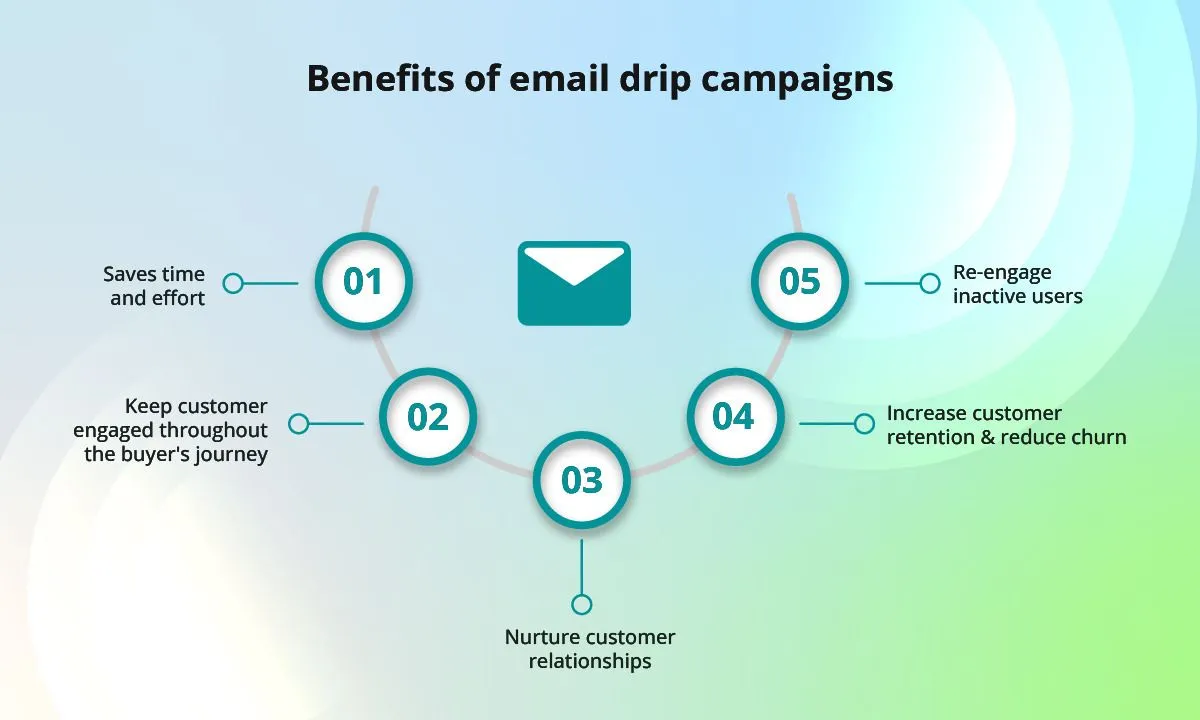
When executed strategically, drip campaigns increase engagement rates, improve conversions, reduce churn, and maximize email marketing ROI making them an essential component of any high-performing digital marketing strategy.
What Is Drip Email Marketing?
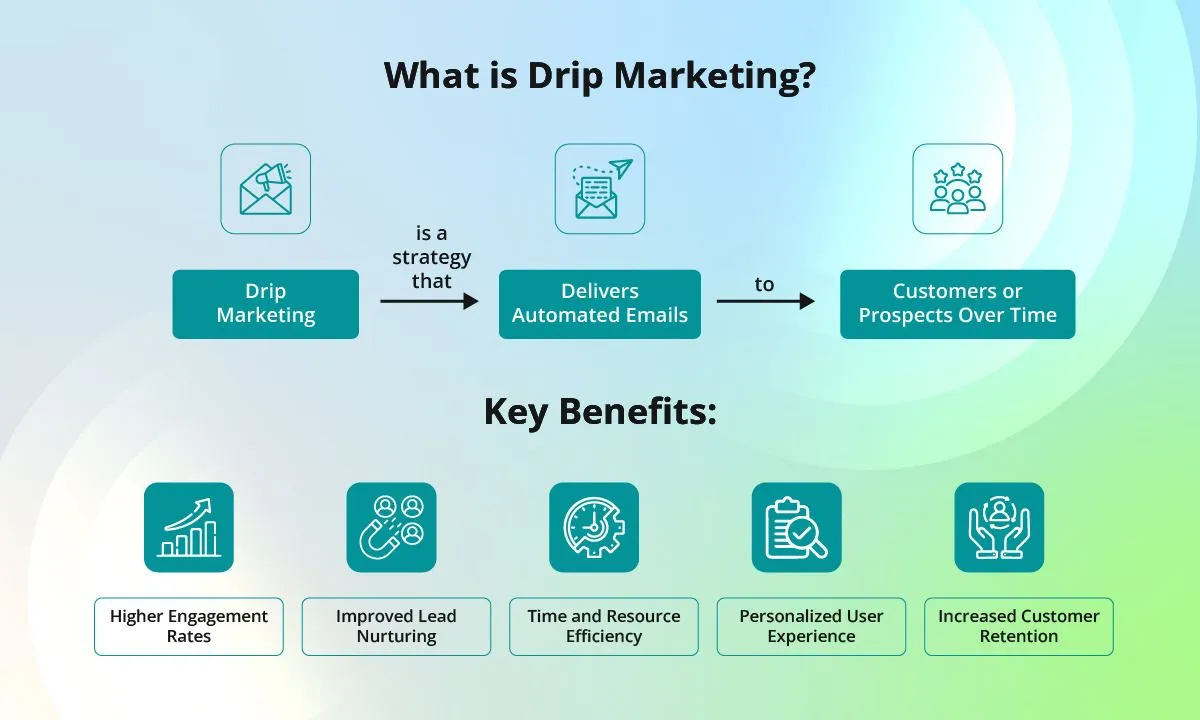
Drip email marketing is a form of automated email marketing that sends a sequence of pre-written emails to subscribers based on specific triggers, timelines, or behaviors. Instead of sending one generic campaign to everyone on your list, drip campaigns deliver targeted messages at predetermined intervals or in response to user actions.
The “drip” concept refers to the gradual release of information. Rather than overwhelming subscribers with excessive messaging, the campaign unfolds strategically over time. This approach mirrors how trust and purchase decisions naturally develop, making it highly effective for lead nurturing and conversion optimization.
Drip email marketing plays a central role in lifecycle email marketing, helping businesses move contacts from awareness to consideration and ultimately to purchase. It transforms static email lists into dynamic engagement pipelines that operate continuously through marketing automation workflows.
Why Drip Email Marketing Matters in 2026
The digital marketing ecosystem continues to evolve, but email remains one of the highest ROI channels available. However, success now depends on relevance and personalization rather than volume. Drip email marketing meets this demand by delivering context-aware communication aligned with user intent.
Consumers expect brands to understand their needs. Generic campaigns that lack personalization often result in low engagement rates and higher unsubscribe rates. Drip campaigns, on the other hand, use behavioral data to tailor messaging, significantly improving open rates and click-through rates.
Additionally, with increasing competition across industries, nurturing leads through automated email campaigns allows businesses to maintain consistent touchpoints without requiring constant manual effort. In 2026 and beyond, automation-driven customer journey marketing will be the standard rather than the exception.
Improved Lead Nurturing Through Automation
Lead nurturing is one of the primary functions of drip email marketing. Most prospects do not convert immediately after discovering a brand. They require education, reassurance, comparison, and validation before making a purchase decision.
Drip email campaigns allow businesses to deliver relevant content progressively, building credibility and trust. By addressing common objections, highlighting benefits, and showcasing social proof, these sequences warm up leads until they are ready to buy.
Automated lead nurturing also shortens sales cycles by keeping prospects engaged. Instead of losing momentum after initial contact, businesses maintain visibility and authority through consistent, value-driven communication.
Higher Engagement and Personalization
Drip email marketing consistently outperforms one-time campaigns because it is behavior-driven. When emails are triggered by user actions such as signing up, downloading content, or abandoning a cart they feel timely and relevant.
Relevance is the foundation of engagement. Personalized subject lines, dynamic content blocks, and behavioral segmentation all contribute to improved email marketing metrics. Subscribers are more likely to open, read, and act on emails that reflect their interests and previous interactions.
Advanced automation tools now allow marketers to tailor entire sequences based on engagement patterns, ensuring that subscribers receive content aligned with their lifecycle stage.
Increased Conversion Rates and Revenue Growth
Every drip email marketing campaign should be designed around a conversion objective. Whether the goal is completing a purchase, scheduling a consultation, upgrading a subscription, or renewing a membership, structured automation increases the likelihood of action.
By guiding subscribers through a strategic email marketing funnel, businesses can systematically remove friction from the buying process. Educational content builds awareness, testimonials provide reassurance, and limited-time offers create urgency.
Over time, optimized drip email campaigns significantly increase customer lifetime value, revenue per subscriber, and overall marketing return on investment.
How Drip Email Marketing Works
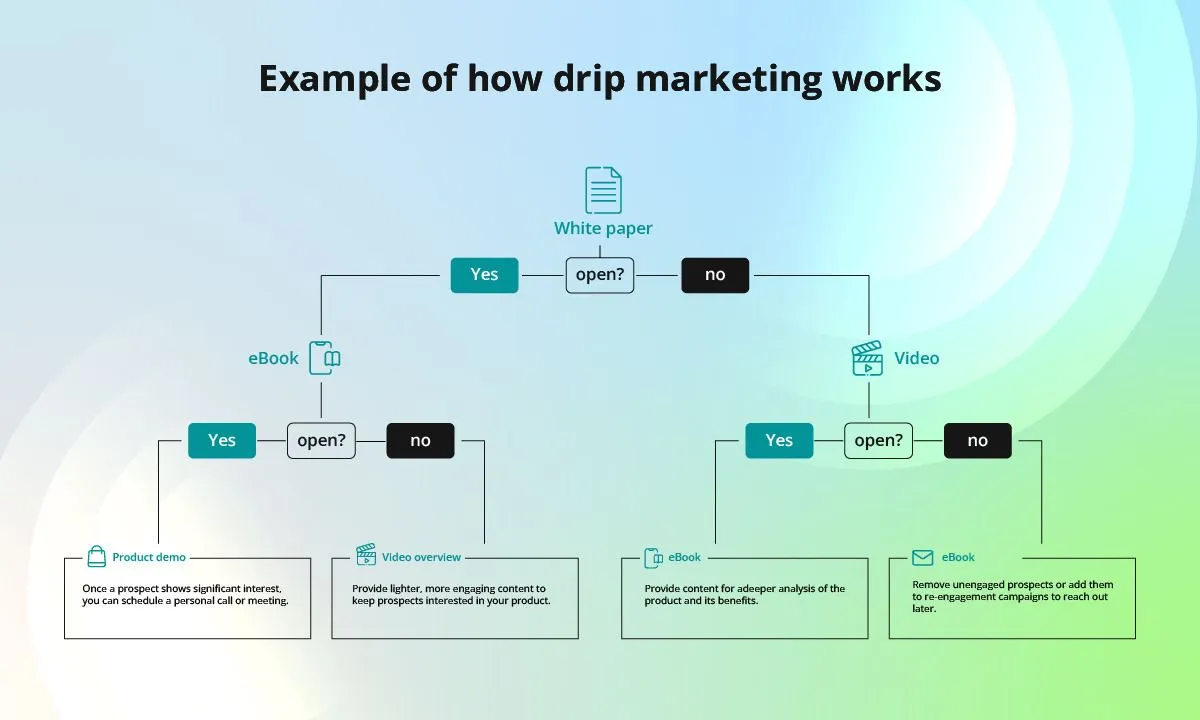
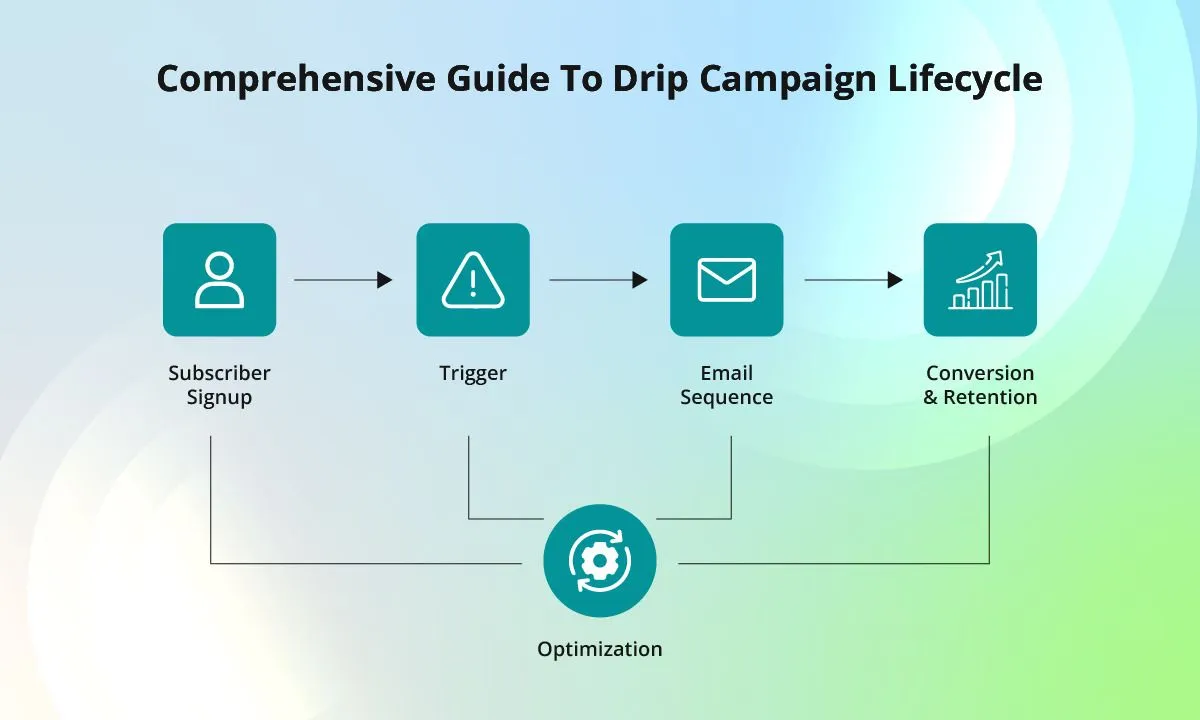
Understanding the mechanics of drip email marketing is essential for building high-performing campaigns. A successful workflow integrates strategy, segmentation, content creation, and automation technology into a cohesive system.
The process is not random. Each stage of campaign development contributes to a structured customer journey designed to drive measurable outcomes.
Define the Campaign Objective
Before building a drip email sequence, define the primary goal. Campaign objectives typically fall into categories such as lead nurturing, customer onboarding, abandoned cart recovery, upselling, cross-selling, or re-engagement.
A clearly defined objective ensures consistency throughout the sequence. Each email should serve a purpose that aligns with the overall conversion strategy rather than functioning as standalone communication.
When goals are measurable such as increasing free trial conversions by 20%, performance evaluation becomes more precise and optimization efforts become more strategic.
Choose Strategic Triggers
Triggers activate the drip campaign. These can be time-based (e.g., three days after signup) or behavior-based (e.g., visiting a pricing page).
Common triggers include:
- New subscriber registration
- Product purchase
- Free trial sign-up
- Cart abandonment
- Webinar attendance
- Prolonged inactivity
Behavior-based triggers are particularly powerful because they respond directly to user intent, making communication highly relevant.
Implement Audience Segmentation
Segmentation is foundational to effective drip email marketing. Sending identical sequences to every subscriber reduces personalization and weakens results.
Marketers can segment audiences based on demographics, behavioral data, engagement level, purchase history, or lead score. Dynamic segmentation ensures that subscribers automatically move between segments as their behavior evolves.
Well-executed segmentation increases open rates, click-through rates, and overall conversion performance.
Map the Email Sequence Strategically
A drip campaign must follow a logical progression. Typically, sequences include between three and seven emails, though complex nurturing funnels may include more.
An example structure might include:
- Introduction and value delivery
- Educational insights
- Case studies or testimonials
- Objection handling
- Strong call-to-action
Each message should advance the subscriber closer to the desired outcome without overwhelming them.
Develop Conversion-Focused Email Content
Effective drip email marketing requires compelling copywriting. Each email should focus on one primary objective supported by persuasive messaging.
Strong subject lines increase open rates, while concise body content maintains attention. Clear calls-to-action eliminate ambiguity and guide subscribers toward the next step.
Mobile optimization is also essential, as a significant portion of email opens occur on smartphones.
Launch, Measure, and Optimize
Once the campaign is live, monitoring performance metrics is critical. Open rate, click-through rate, conversion rate, and unsubscribe rate provide insights into campaign effectiveness.
A/B testing subject lines, CTA placements, and email timing can reveal opportunities for improvement. Continuous optimization ensures long-term performance growth.
Automation does not eliminate the need for strategy; it enhances it when monitored carefully.
Types of Drip Email Campaigns
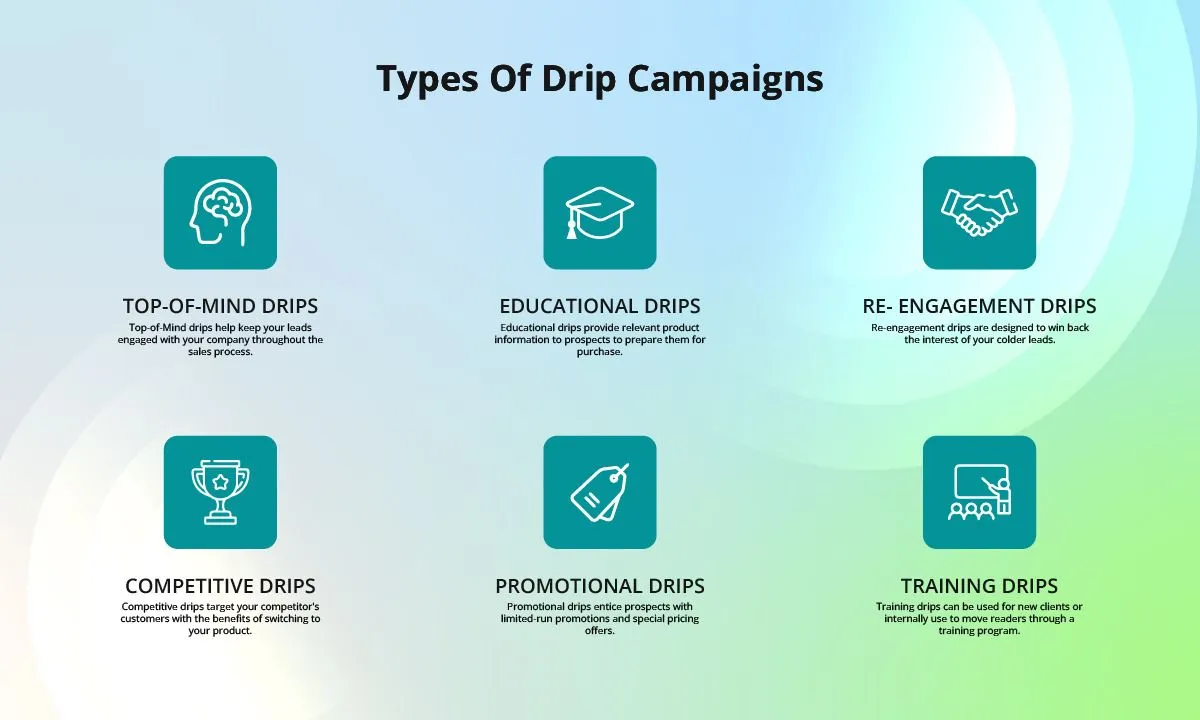
Different objectives require different drip email marketing structures. Below are the most impactful campaign types used across industries.
Welcome Email Series
Welcome email campaigns are triggered immediately after subscription. These emails introduce the brand, set expectations, and often deliver immediate value such as discounts or downloadable resources.
Because subscriber interest is highest at the point of signup, welcome sequences typically generate the strongest engagement rates. A well-crafted welcome drip sets the tone for the entire relationship.
Lead Nurturing Campaigns
Lead nurturing campaigns are designed for prospects who are still evaluating solutions. These sequences provide educational content, product comparisons, industry insights, and case studies.
By gradually building trust and authority, nurturing emails help move leads further down the sales funnel without aggressive selling.
Abandoned Cart Drip Campaigns
For e-commerce businesses, cart abandonment sequences are critical revenue recovery tools. These emails remind shoppers about products left behind and often include incentives or urgency messaging.
Well-optimized abandoned cart drip email marketing campaigns can recover a substantial percentage of otherwise lost sales.
Product Onboarding Sequences
Onboarding drip campaigns help new customers maximize product value. For SaaS businesses, this may include tutorials, feature highlights, and usage tips.
Effective onboarding reduces churn and increases customer satisfaction by ensuring users fully understand the product’s capabilities.
Re-Engagement Campaigns
Inactive subscribers can negatively affect deliverability and overall engagement rates. Re-engagement drip campaigns aim to win back disengaged contacts through targeted messaging.
These sequences may include special offers, surveys, or preference updates. If engagement remains low, list cleaning may be necessary to maintain email health.
Upsell and Cross-Sell Campaigns
Upsell and cross-sell drip email marketing targets existing customers with complementary products or premium upgrades.
Because these subscribers already trust the brand, these campaigns often produce strong ROI and increase customer lifetime value.
Drip Email Marketing Best Practices
Successful drip campaigns rely on adherence to strategic best practices rather than automation alone.
Behavior-based personalization should guide messaging. Timing should be optimized to prevent fatigue. Messaging should remain consistent and aligned with brand voice.
Regular audits of automated workflows ensure that content remains accurate and aligned with evolving business goals.
Advanced Drip Email Marketing Strategies
For marketers seeking competitive advantage, advanced automation strategies can significantly improve performance.
Conditional logic workflows allow branching paths based on subscriber engagement. Lead scoring integration prioritizes high-intent prospects. Multichannel automation connects email with SMS and retargeting ads for omnichannel impact.
Dynamic content blocks and predictive send-time optimization further enhance personalization and engagement rates.
Conclusion: Why Drip Email Marketing Drives Sustainable Growth
Drip email marketing is more than a tactical automation feature it is a strategic framework for guiding customers through structured journeys that build trust and drive conversions.
By combining marketing automation, segmentation, personalization, and continuous optimization, businesses can transform passive subscribers into loyal customers.
In a competitive digital landscape, brands that invest in sophisticated drip email marketing strategies will consistently outperform those relying on one-time campaigns. When executed thoughtfully, drip campaigns become a long-term revenue engine and one of the most profitable channels in the marketing ecosystem.