E-commerce Email Marketing Statistics: Data-Driven Insights to Maximize Revenue in 2026

Ayesha Ejaz Last updated on

E-commerce email marketing continues to outperform nearly every other digital marketing channel in terms of ROI, engagement, and revenue contribution. Despite the rapid rise of social commerce, influencer marketing, and paid acquisition, email remains the most controllable and profitable owned channel for online retailers.
Understanding e-commerce email marketing statistics is no longer optional; it is essential for strategic planning, budgeting, segmentation, automation design, and performance forecasting. Whether you manage a Shopify store, a DTC brand, or a large-scale online marketplace, the data behind email performance can shape your entire customer lifecycle strategy.
This comprehensive guide analyzes the most important e-commerce email marketing statistics, interprets what they mean for marketers, and explains how to translate those numbers into measurable growth.
Why E-commerce Email Marketing Statistics Matter More Than Ever
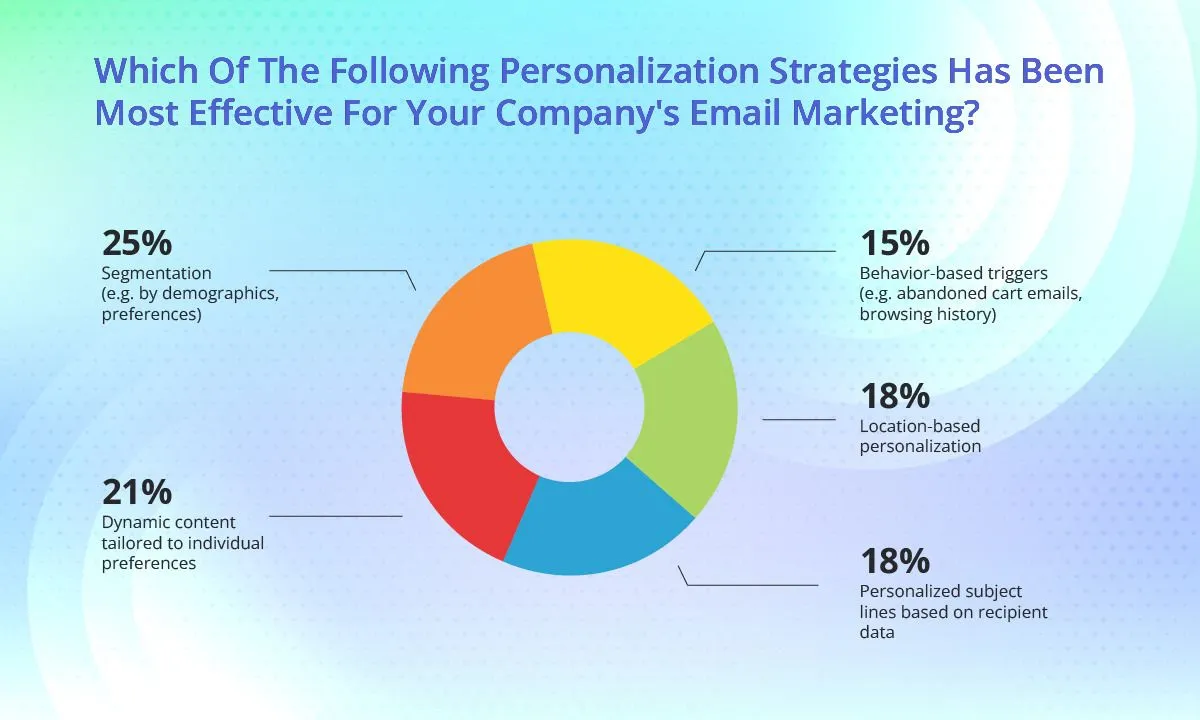
In an era where paid advertising costs are rising and privacy regulations are tightening, first-party data has become the backbone of sustainable growth. Email marketing operates entirely on permission-based communication, making it one of the few scalable channels brands truly own.
E-commerce brands that actively monitor performance benchmarks such as open rates, click-through rates, conversion rates, and revenue per email can make data-backed optimization decisions instead of relying on assumptions. When marketers understand how their metrics compare against industry standards, they can identify performance gaps and uncover immediate improvement opportunities.
Additionally, statistical insights allow businesses to refine audience segmentation, personalize campaigns more effectively, and build automated workflows that drive predictable revenue rather than one-time promotional spikes.
Global E-commerce Email Marketing ROI Statistics
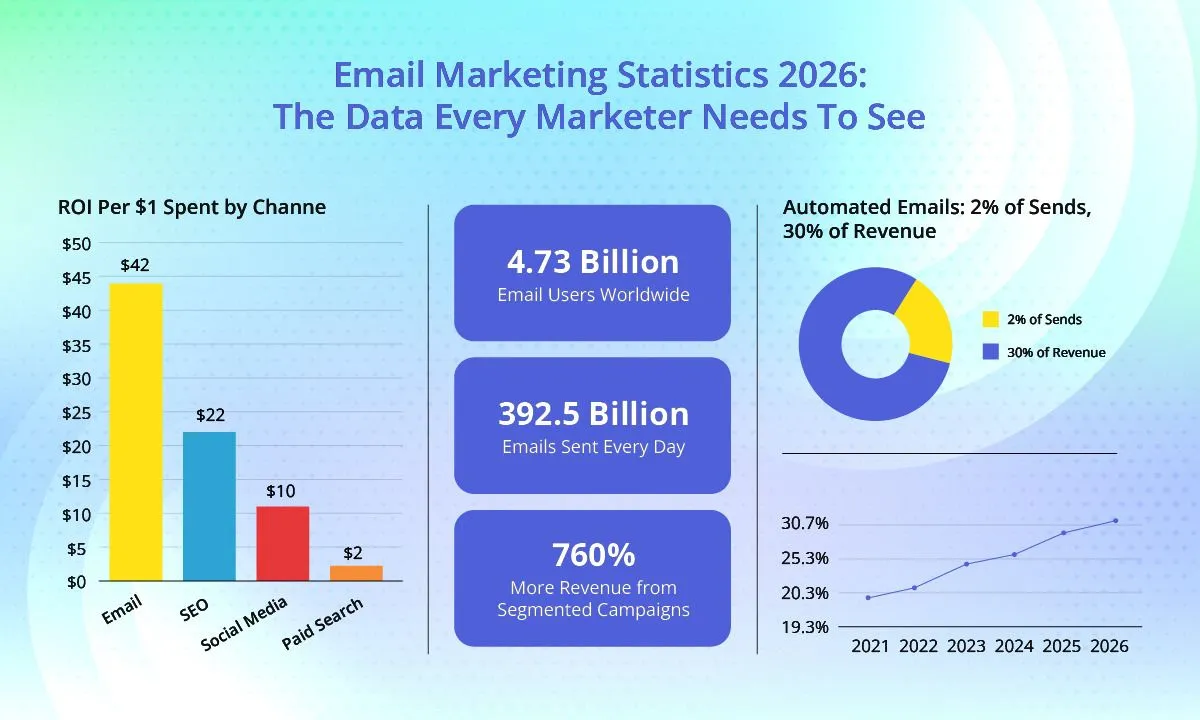
Return on investment remains the most compelling reason e-commerce brands prioritize email marketing. Across industries, email consistently delivers one of the highest ROIs in digital marketing.
Key ROI Statistics for E-commerce Email Marketing
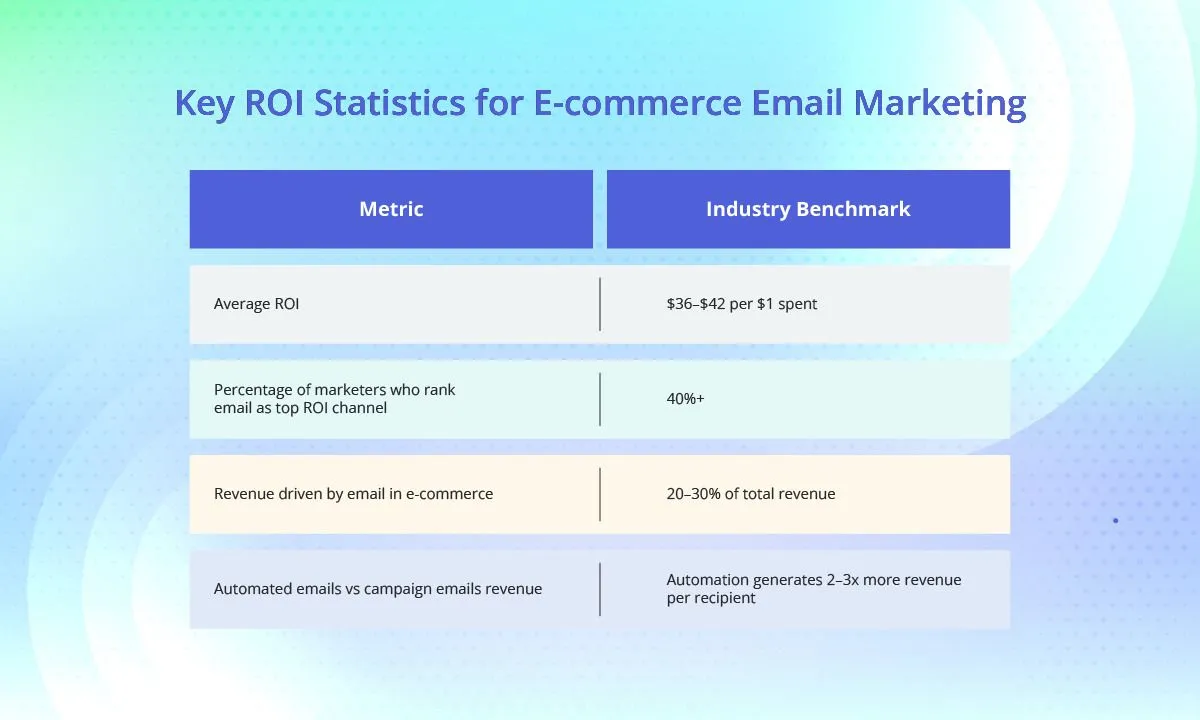
These numbers demonstrate why email marketing is not simply a communication tool but a revenue engine. For many online retailers, email contributes between one-fifth and one-third of total revenue, particularly for repeat purchases.
Automated flows such as abandoned cart, welcome series, post-purchase upsell, and re-engagement campaigns typically outperform standard broadcast emails because they are triggered by behavior rather than sent in batches.
Email List Growth and Subscriber Acquisition Statistics
Growing a high-quality email list is foundational to e-commerce success. Without continuous subscriber acquisition, even the most optimized email campaigns will stagnate over time due to list churn.
List Growth Benchmarks
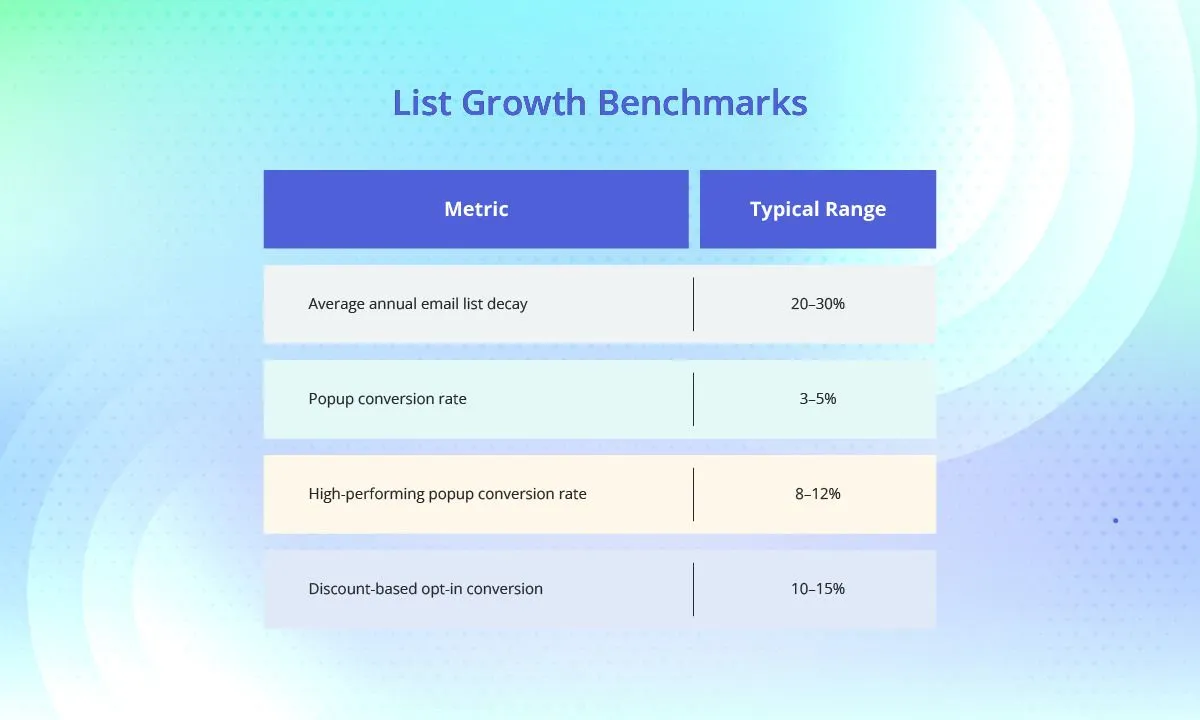
Email lists naturally decay due to unsubscribes, inactivity, and invalid addresses. This means brands must proactively invest in lead generation strategies such as exit-intent popups, gamified spin-to-win forms, landing pages, and embedded signup forms.
E-commerce email marketing statistics show that offering an incentive such as a first-purchase discount significantly increases opt-in rates. However, brands must balance short-term discount acquisition with long-term margin sustainability.
E-commerce Email Open Rate Statistics
Open rates remain an essential metric, although recent privacy updates have made them less precise indicators of true engagement. Nevertheless, they still provide directional insight into subject line performance and sender reputation.
Average Open Rates by E-commerce Email Type
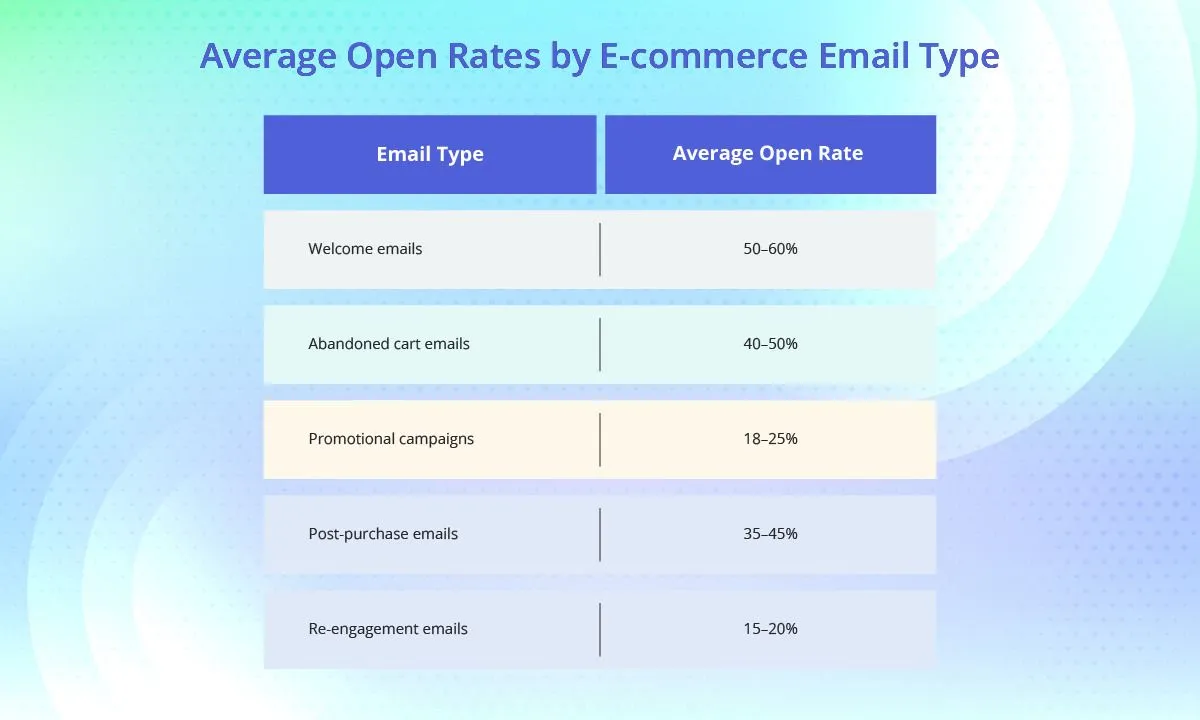
Welcome emails consistently achieve the highest open rates because subscribers are most engaged immediately after signing up. This underscores the importance of sending a welcome email instantly and leveraging that initial attention to guide subscribers toward their first purchase.
Abandoned cart emails also perform strongly due to high purchase intent. These emails target users who have already demonstrated buying behavior, making them more likely to re-engage.
Click-Through Rate (CTR) and Click-to-Open Rate (CTOR) Statistics
Clicks represent deeper engagement and stronger purchase intent compared to opens. CTR and CTOR provide valuable insight into content effectiveness and call-to-action optimization.
E-commerce Email Click Performance Benchmarks
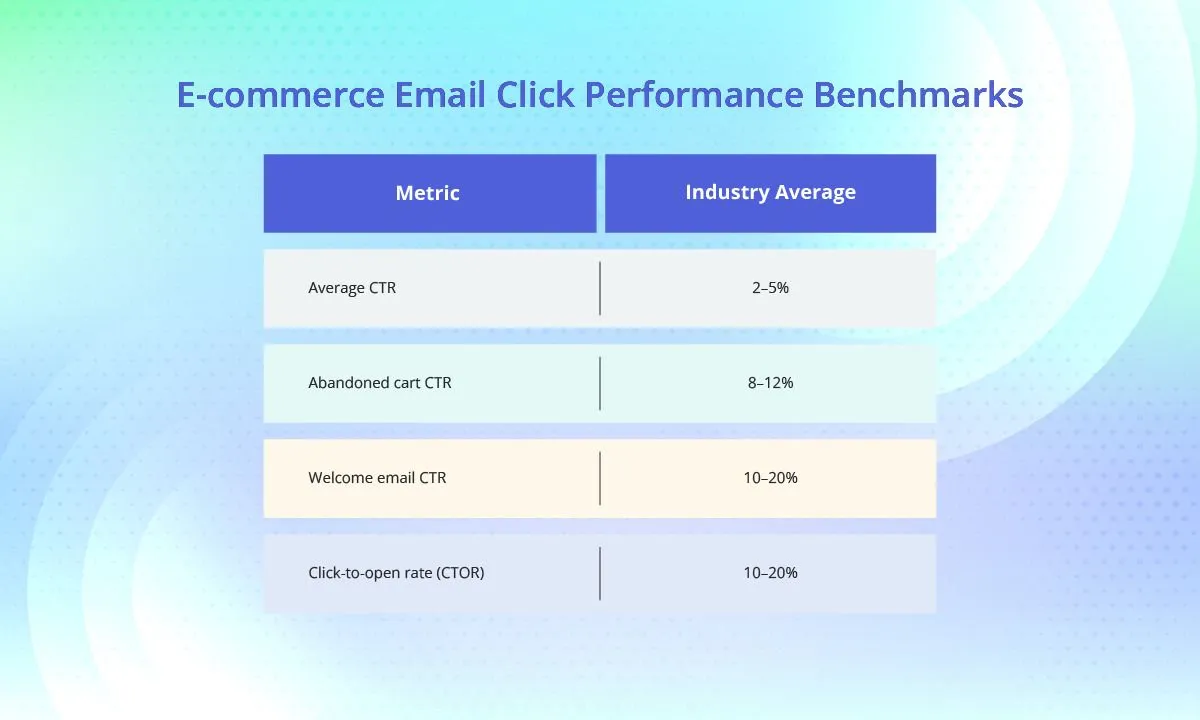
Emails that include personalized product recommendations often outperform generic promotional emails. Dynamic content blocks driven by browsing behavior significantly increase click likelihood.
For e-commerce brands, optimizing CTA placement, button color contrast, and mobile responsiveness can have measurable impacts on CTR.
Conversion Rate Statistics in E-commerce Email Marketing
Conversion rate directly reflects how effectively email drives revenue. While open and click rates indicate engagement, conversions determine financial impact.
Conversion Rate Benchmarks by Email Type
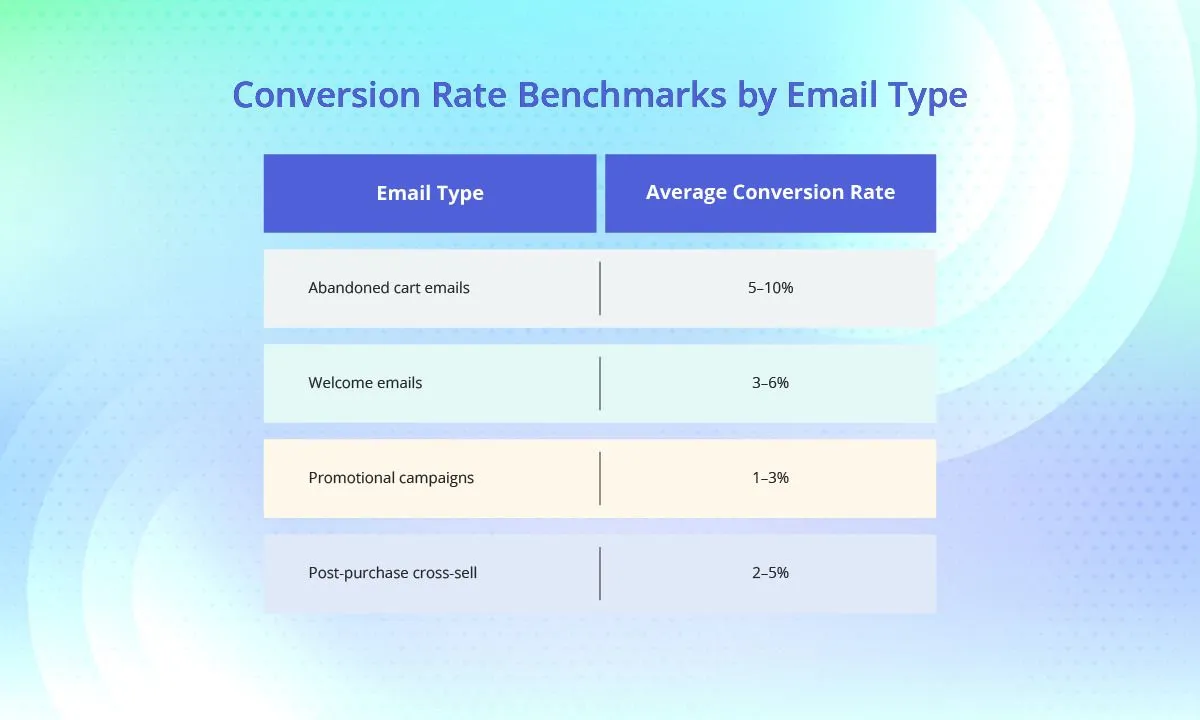
Abandoned cart emails typically achieve the highest conversion rates because they target customers already in the buying process. Multi-step cart recovery sequences further increase recovery rates compared to single-email reminders.
Promotional campaigns, while lower in direct conversion, can drive volume-based revenue during sales events such as Black Friday or seasonal promotions.
Cart Abandonment Email Statistics
Cart abandonment is one of the most critical revenue opportunities in e-commerce. Global cart abandonment rates often exceed 60–70%, meaning the majority of initiated checkouts never convert.
Abandoned Cart Email Performance Insights
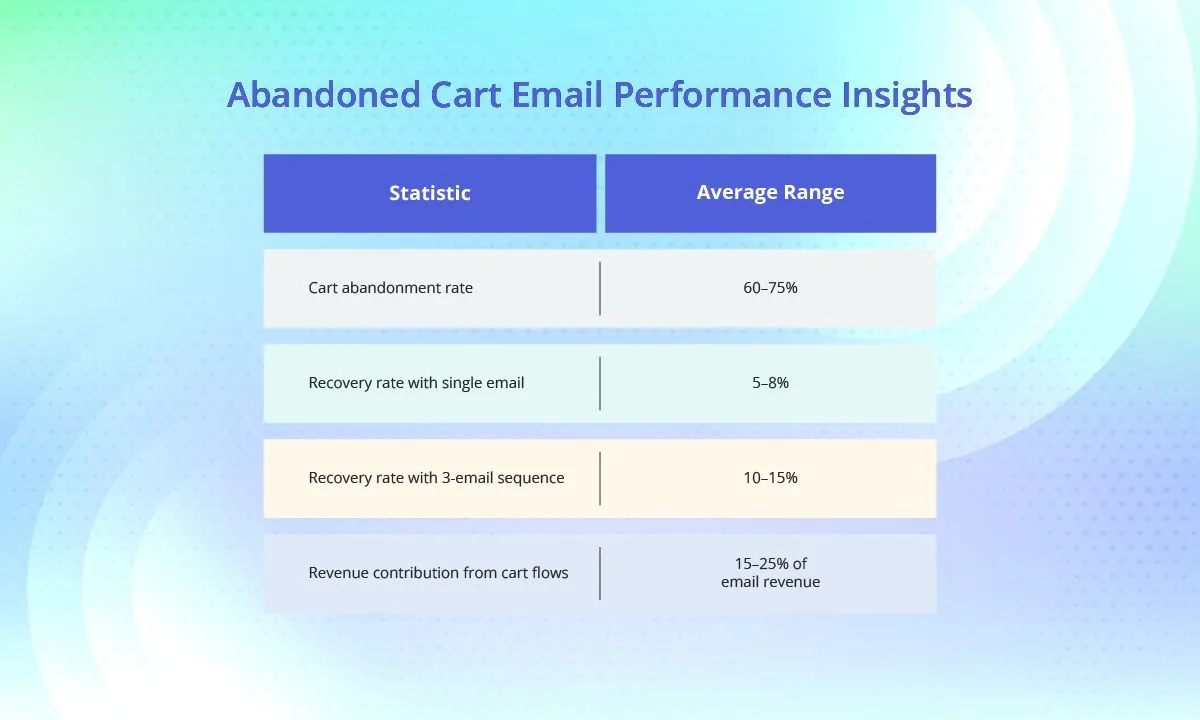
Sending multiple reminder emails spaced strategically over 24–72 hours significantly improves recovery rates. Including product images, urgency messaging, and limited-time incentives further boosts performance.
E-commerce email marketing statistics consistently show that automated cart flows generate disproportionately high revenue relative to list size.
Personalization and Segmentation Statistics
Personalization is no longer a competitive advantage; it is an expectation. Modern consumers respond more favorably to emails tailored to their behavior, preferences, and purchase history.
Personalization Impact Data
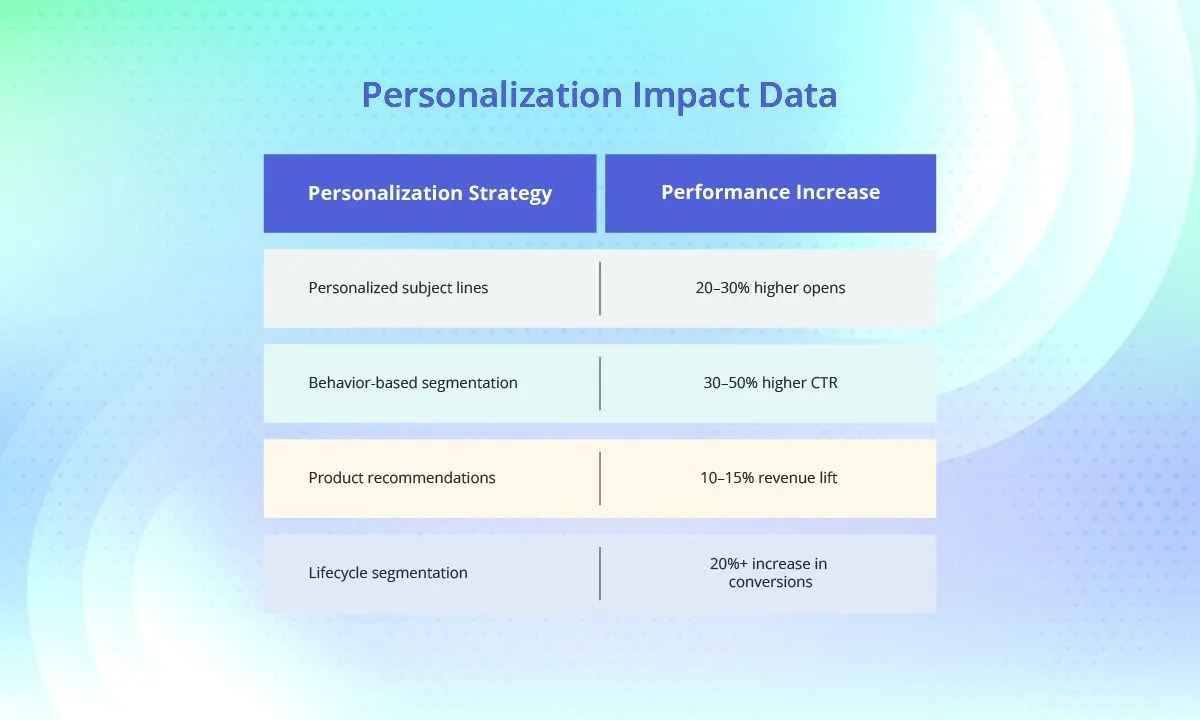
Segmentation strategies based on browsing history, past purchases, location, and engagement frequency allow brands to deliver more relevant messaging. The more granular the segmentation, the more targeted the offers and messaging can be.
Mobile Optimization Statistics for E-commerce Email
Mobile commerce continues to dominate online shopping behavior. Email marketing must adapt to mobile-first design principles.
Mobile Email Statistics
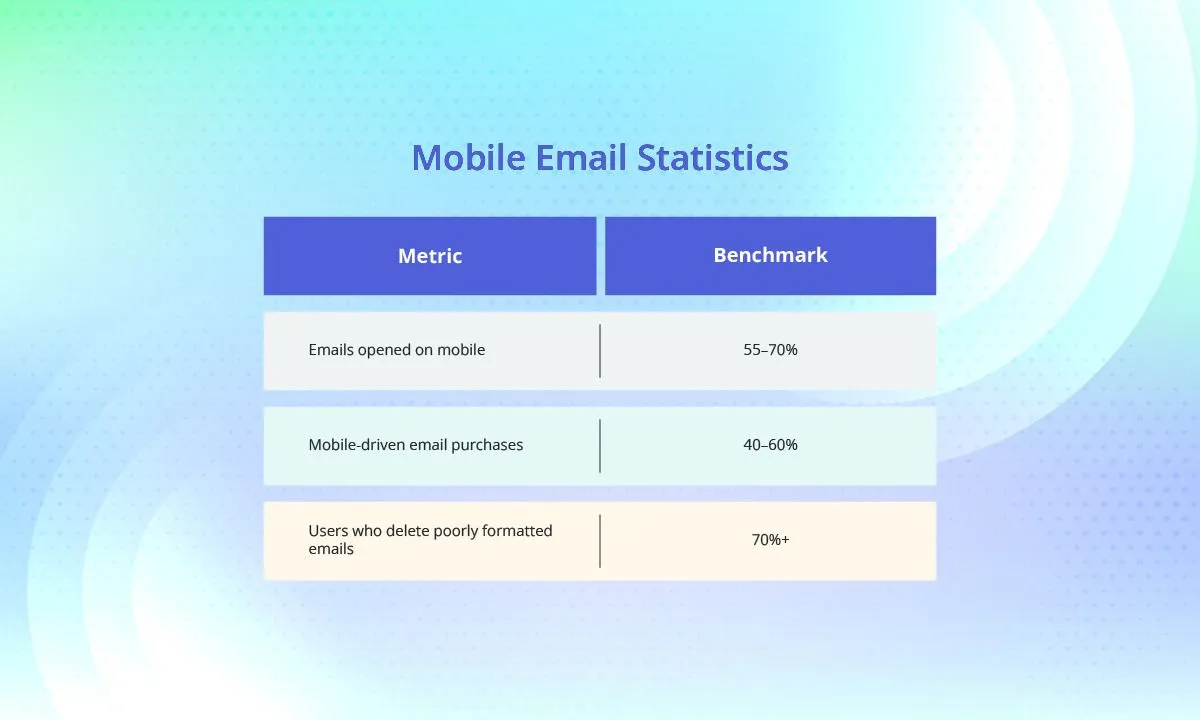
If emails are not optimized for mobile devices, brands risk losing a significant portion of potential revenue. Responsive design, single-column layouts, large tappable buttons, and concise copy improve mobile engagement.
Mobile optimization is directly correlated with conversion performance, making it a non-negotiable element of any e-commerce email strategy.
Automation vs Campaign Email Revenue Statistics
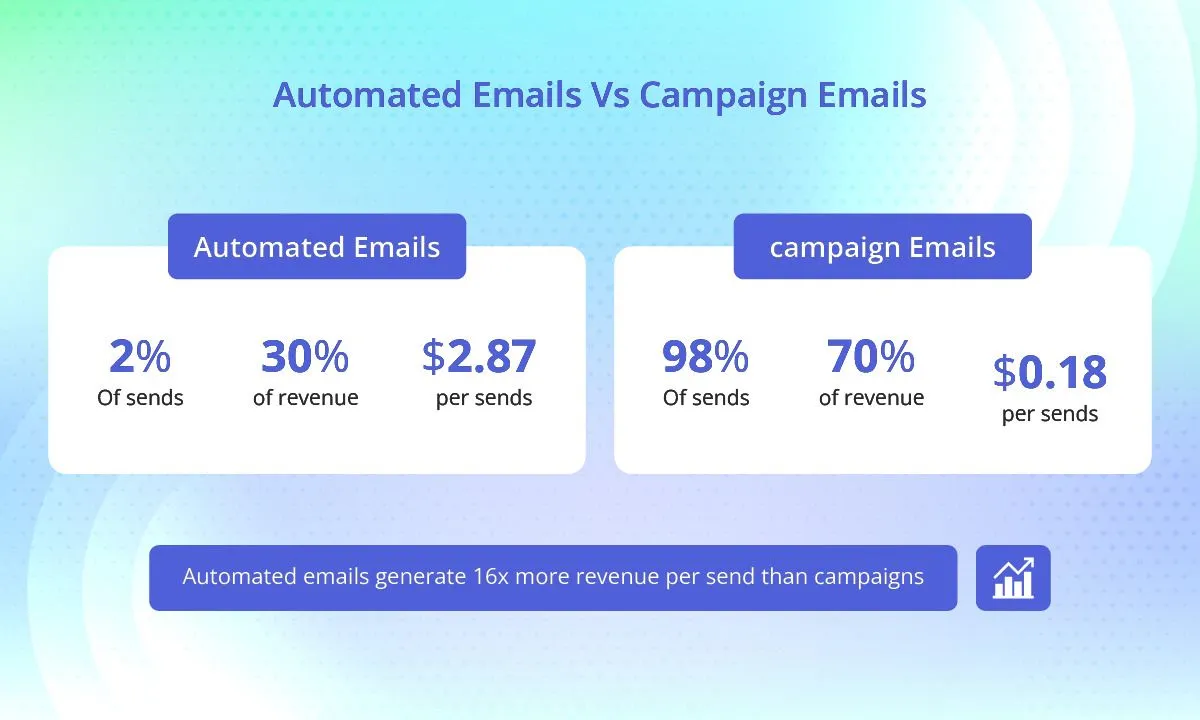
Automation consistently outperforms manual campaigns in both engagement and revenue contribution.
Automation Performance Benchmarks
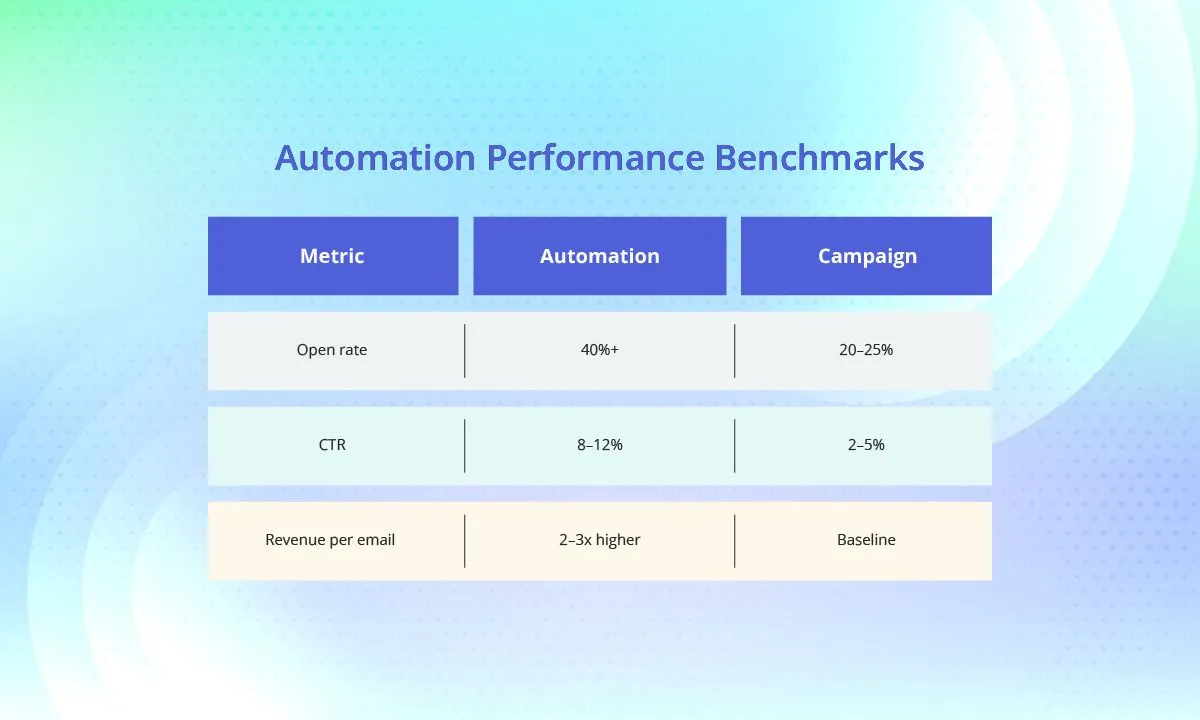
Lifecycle automation flows such as welcome series, abandoned cart, browse abandonment, and post-purchase upsell generate predictable and scalable revenue streams.
Campaign emails remain important for product launches, seasonal promotions, and flash sales, but they rarely match the sustained performance of behavior-triggered automation.
Timing and Frequency Statistics
Sending frequency significantly affects engagement and unsubscribe rates. Finding the optimal balance requires monitoring performance trends.
Frequency Insights
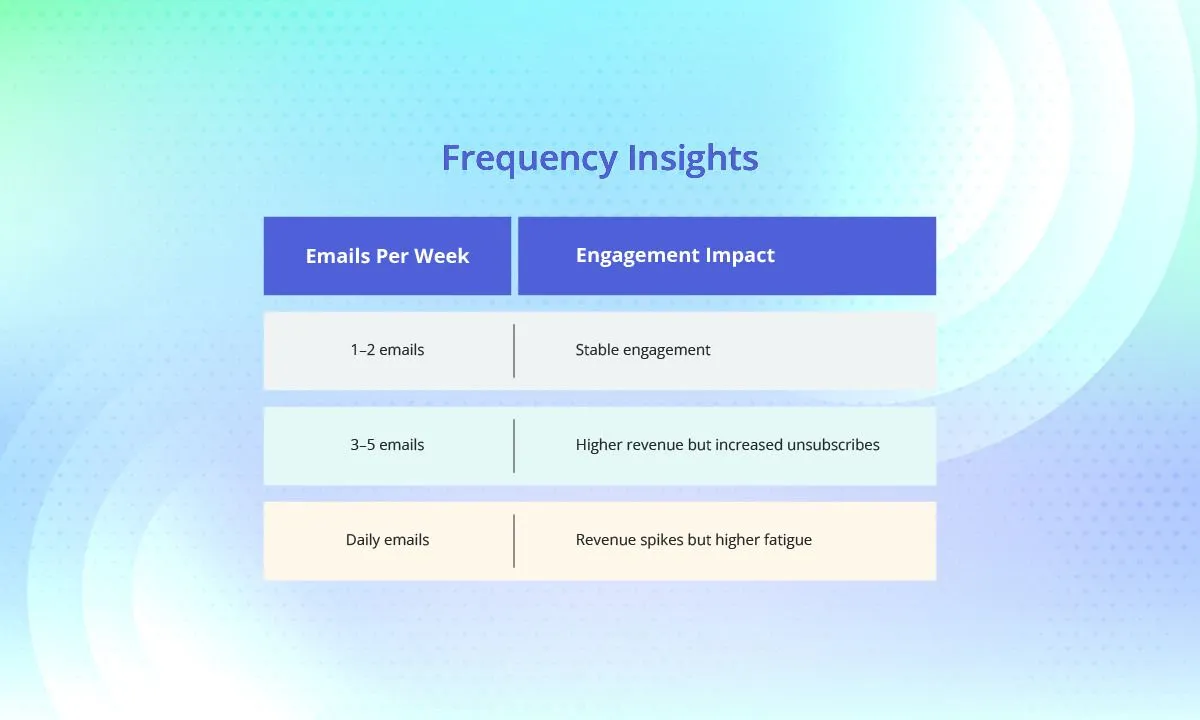
Brands that segment highly engaged subscribers can increase frequency for those segments without negatively impacting overall list health.
Timing also matters. Midweek emails often perform better than weekend sends for many retail brands, although this varies by niche.
Unsubscribe and Deliverability Statistics
List health directly affects deliverability and long-term profitability.
List Health Benchmarks
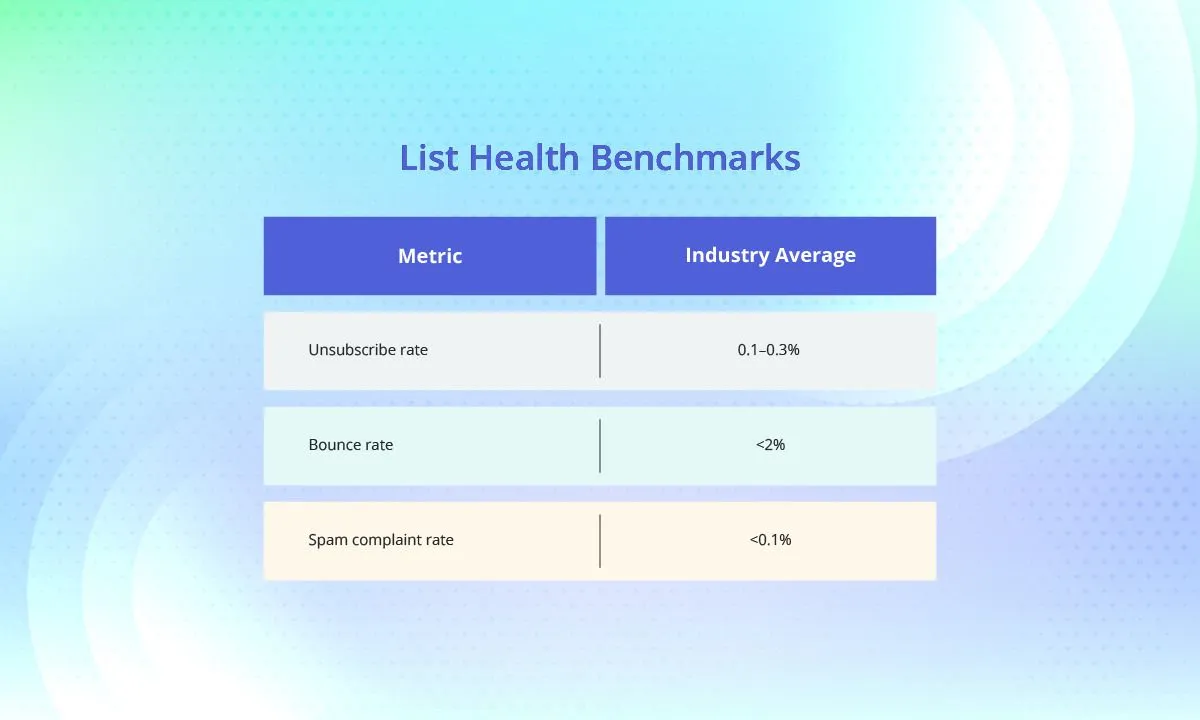
Maintaining clean lists, removing inactive subscribers, and implementing re-engagement campaigns help protect sender reputation. High spam complaint rates can severely damage inbox placement.
Deliverability optimization, including proper domain authentication and gradual list warming, is essential for maximizing campaign reach.
Revenue Per Subscriber and Customer Lifetime Value Statistics
E-commerce brands should track revenue per subscriber (RPS) and customer lifetime value (CLV) to measure long-term email effectiveness.
Revenue Benchmarks
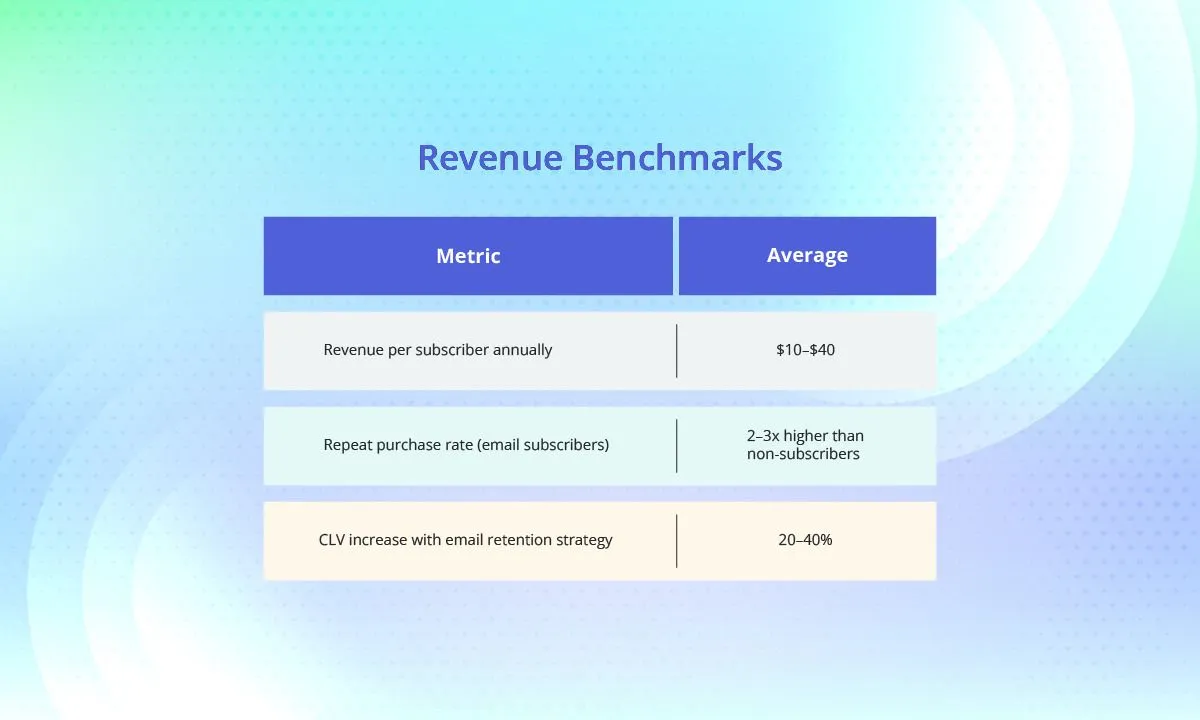
Subscribers are typically more valuable than non-subscribers because they receive consistent brand exposure and targeted promotions.
Retention-focused email strategies, including loyalty rewards and personalized recommendations, significantly increase lifetime value.
Black Friday and Seasonal Campaign Statistics
Seasonal campaigns amplify the impact of email marketing for e-commerce brands.
Holiday Campaign Insights
| Metric | Increase During Peak Season |
|---|---|
| Open Rate | +10–15% |
| Conversion Rate | +20–30% |
| Email-Driven Revenue | +40–60% |
During high-intent shopping periods, consumers actively seek promotional offers. Strategic segmentation and early campaign planning maximize seasonal revenue.
Key Takeaways from E-commerce Email Marketing Statistics
E-commerce email marketing statistics consistently reveal several strategic truths:
- Automation drives disproportionate revenue relative to campaign emails.
- Cart abandonment flows are the highest-converting automated sequence.
- Personalization significantly improves engagement and conversions.
- Mobile optimization is essential for revenue growth.
- Email remains one of the highest ROI channels in digital marketing.
Brands that treat email as a strategic revenue channel rather than a periodic promotional tool consistently outperform competitors.