


Last updated on
September 30, 2026
Email marketing for education continues to be one of the most reliable, measurable, and cost-effective communication channels available to universities and colleges.
Despite the growth of social media, search advertising, and messaging apps, email remains the primary digital touchpoint for academic institutions because it provides direct access to audiences, supports personalization, and aligns naturally with the structured nature of the student lifecycle.
From the first inquiry a prospective student makes to alumni engagement decades after graduation, email plays a central role in how institutions inform, guide, and build trust with their communities.
Unlike commercial brands, educational institutions are not simply selling products. They are nurturing long-term relationships built on credibility, transparency, and value. Email supports this relationship-driven approach better than any other digital channel.
Across the student lifecycle, email enables consistent communication with prospects, applicants, enrolled students, parents, faculty, alumni, and donors. It supports admissions marketing, student services, academic engagement, and advancement initiatives in a way that is both scalable and measurable. For institutions seeking to improve enrollment outcomes, retention rates, and alumni participation, a well-structured email strategy is no longer optional.
Email marketing for higher education refers to the strategic use of email campaigns to communicate with audiences connected to an educational institution. These communications can include recruitment messages, academic updates, operational announcements, engagement campaigns, and fundraising initiatives. The objective is not only to inform but also to guide recipients toward meaningful actions, such as applying, registering for events, accessing support resources, or staying engaged with the institution.
Higher education email marketing differs significantly from commercial email marketing. While businesses often focus on short sales cycles and immediate conversions, universities and colleges operate within longer decision-making timelines. A prospective student may engage with an institution for months or even years before enrolling. As a result, educational email marketing emphasizes nurturing, education, and trust rather than aggressive promotion.
Another key difference lies in the number of internal stakeholders involved. Admissions teams, marketing departments, student services, academic offices, and alumni relations often all rely on email to reach their respective audiences. This requires coordination, data governance, and clear messaging frameworks to avoid overlap or confusion. When executed correctly, email becomes a unifying channel that supports institutional goals across departments.
Email remains critical in higher education because it enables institutions to communicate at scale without sacrificing relevance. Compared to paid advertising or print communications, email offers a high return on investment while maintaining control over audience access. Institutions own their email lists, which reduces dependency on third-party platforms that can change algorithms or restrict reach at any time.
Trust is another major factor. Students, parents, and alumni expect official communication to arrive via email. Academic deadlines, policy updates, financial aid information, and event invitations are perceived as more credible when delivered through institutional email channels. This trust makes email an essential tool for both operational and marketing communication.
In the admissions process, email functions as a lead nurturing engine. Prospective students often submit an inquiry long before they are ready to apply. Through targeted email sequences, institutions can provide program information, campus highlights, student testimonials, and application guidance over time. This steady flow of relevant content keeps the institution top of mind.
Email is also essential for application reminders and deadline communication. Timely emails about incomplete applications, upcoming deadlines, or required documents can significantly improve completion rates. For competitive programs, these reminders often make the difference between losing and converting a qualified applicant.
Once students enroll, email supports ongoing engagement and retention. Academic updates, course registration reminders, campus events, and support resources are commonly delivered through email. When students receive clear, timely information, they are more likely to stay engaged and less likely to miss critical requirements.
Email also plays a preventative role in reducing student drop-off. Automated alerts about academic performance, attendance issues, or available support services allow institutions to intervene early. This proactive communication can improve student satisfaction and long-term retention outcomes.
The relationship between an institution and its graduates does not end at commencement. Email enables long-term engagement with alumni through newsletters, event invitations, and career networking opportunities. Consistent communication helps alumni remain connected to the institution’s mission and community.
For advancement teams, email is a primary channel for fundraising and donor outreach. Personalized donation appeals, impact stories, and campaign updates can be delivered efficiently to segmented alumni audiences. Over time, these emails help build trust and encourage ongoing financial support.
Higher education institutions serve multiple audiences, each with unique needs and expectations. Prospective students require informative and inspirational content that helps them evaluate programs and campus culture. Current students need operational clarity, academic guidance, and engagement opportunities. Faculty and staff rely on email for internal communication, policy updates, and collaboration.
Alumni and donors represent another critical audience, often requiring a balance of storytelling, institutional updates, and calls to action. Parents and guardians, particularly in undergraduate education, also expect regular communication related to academic progress, deadlines, and campus safety. Effective email marketing strategies recognize these differences and tailor messaging accordingly.
Admissions and recruitment emails are designed to move prospects from inquiry to enrollment. Common campaigns include inquiry follow-ups that acknowledge interest and provide next steps. Application status updates keep applicants informed and reduce uncertainty during the decision process.
Institutions also use email to promote virtual tours, open days, and information sessions. These campaigns allow prospects to experience campus life and academic offerings without geographic limitations. Clear calls to action and concise messaging are essential in these emails.
Student lifecycle emails support learners from acceptance through graduation. Orientation and onboarding sequences help new students understand academic expectations, campus resources, and key dates. These early communications set the tone for the student experience.
Ongoing lifecycle emails include academic alerts, registration reminders, and campus news. Event announcements, student organization updates, and support service promotions encourage involvement and help students feel connected to the institution.
Alumni emails often take the form of newsletters that highlight institutional achievements, faculty research, and alumni success stories. These messages reinforce pride and belonging. Advancement campaigns may focus on donations, scholarships, or capital projects, clearly explaining the impact of alumni support.
Career networking emails and reunion invitations further strengthen alumni relationships. By providing value beyond fundraising, institutions increase long-term engagement and loyalty.
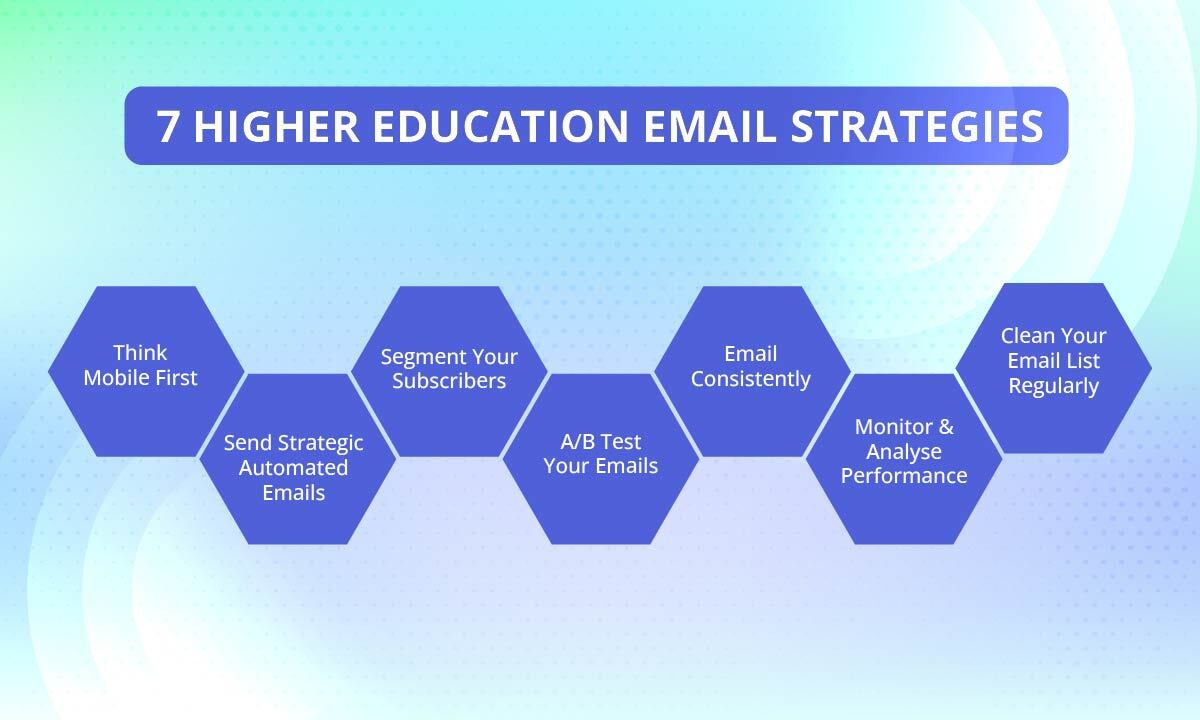
Personalization is critical in educational email marketing, but it must be executed responsibly. Segmenting audiences by program of interest, academic level, or lifecycle stage allows institutions to deliver more relevant content. For example, a prospective engineering student should receive different messaging than a humanities applicant.
Dynamic content enables personalization within a single campaign. Program-specific sections, personalized greetings, or location-based event information can be automatically inserted, improving engagement without increasing workload.
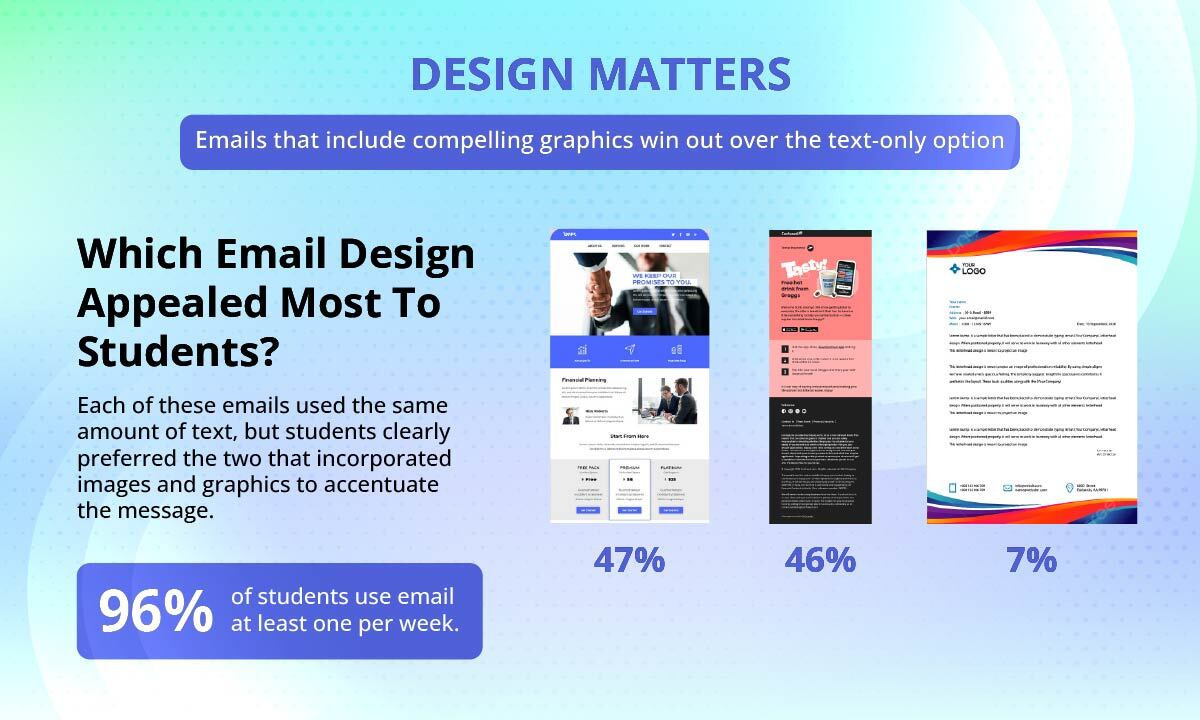
Students primarily read emails on mobile devices, making mobile-first design essential. Emails should use single-column layouts, concise copy, and clear calls to action that are easy to tap. Large fonts and sufficient spacing improve readability on small screens.
Buttons should be prominent, and critical information should appear near the top of the email. Testing emails across devices ensures consistent performance and accessibility.
Higher education institutions must comply with data protection and privacy regulations such as FERPA and GDPR. Consent management, data security, and transparent communication practices are essential. Emails should only be sent to recipients who have opted in or have a legitimate educational relationship with the institution.
Accessibility is equally important. Emails should follow accessibility guidelines, including appropriate color contrast, descriptive alt text for images, and readable font sizes. Accessible design ensures that all students can engage with institutional communication.
Sending too many emails can lead to inbox fatigue, while infrequent communication can reduce engagement. Institutions should establish clear guidelines for frequency and coordinate across departments to avoid over-messaging.
Timing also matters. Students often engage with emails outside of class hours, while alumni may respond better to early morning or evening sends. Analyzing engagement data helps identify optimal send times for different audiences.
Automation allows institutions to deliver timely, relevant communication without manual effort. Welcome and nurture sequences can be triggered when a prospect submits an inquiry or a student accepts an offer. These sequences ensure consistent messaging and reduce reliance on one-off campaigns.
Trigger-based emails respond to specific actions, such as application submissions, enrollments, or milestone achievements. Integrating email platforms with CRM and student information systems ensures data accuracy and enables more sophisticated automation workflows.
Measuring performance is essential for continuous improvement. Open rates provide insight into subject line effectiveness and sender reputation, while click-through rates indicate content relevance. Engagement metrics, such as time spent reading or link interactions, offer deeper insight into audience interest.
Conversion tracking is particularly important for admissions and events. Tracking applications started, forms completed, or registrations confirmed allows institutions to tie email activity directly to outcomes. Analytics should be used to refine segmentation, messaging, and timing over time.
Low engagement rates are a common challenge, often caused by generic messaging or excessive frequency. Improving segmentation and personalization can significantly enhance relevance. Data silos across departments also create inconsistency. Centralized platforms and shared governance models help address this issue.
Balancing personalization with privacy requires clear policies and transparent data use. Institutions should prioritize ethical data practices while still delivering meaningful communication.
Getting started begins with building or cleaning an email list to ensure accuracy and consent. Choosing the right email marketing platform is critical, particularly one that integrates with existing systems. Finally, institutions should develop a sustainable strategy that aligns email goals with broader enrollment, engagement, and advancement objectives.
Email marketing for education remains a foundational strategy for universities and colleges seeking to build lasting relationships with their communities. When executed with clarity, personalization, and respect for privacy, email supports every stage of the academic lifecycle. By investing in thoughtful strategy, automation, and measurement, educational institutions can use email not only to communicate, but to connect, engage, and grow.
Ayesha Ejaz is a passionate writer who loves diving into research to explore new topics and broaden her knowledge. With a keen interest in learning through writing, Ayesha crafts informative and engaging content across various subjects. You'll find her unwinding with music or challenging herself with word search puzzles when she's not writing.
Tags:


