


Last updated on
February 26, 2026
Email marketing continues to be one of the highest‑ROI digital channels available to modern organizations. As inboxes become more competitive and privacy regulations reshape data usage, success in 2026 will depend less on ad‑hoc campaigns and more on structured, well‑documented planning.
This guide explains why an email marketing plan is critical, how to create one step‑by‑step, and provides a practical email marketing plan template you can use to organize your 2026 strategy.
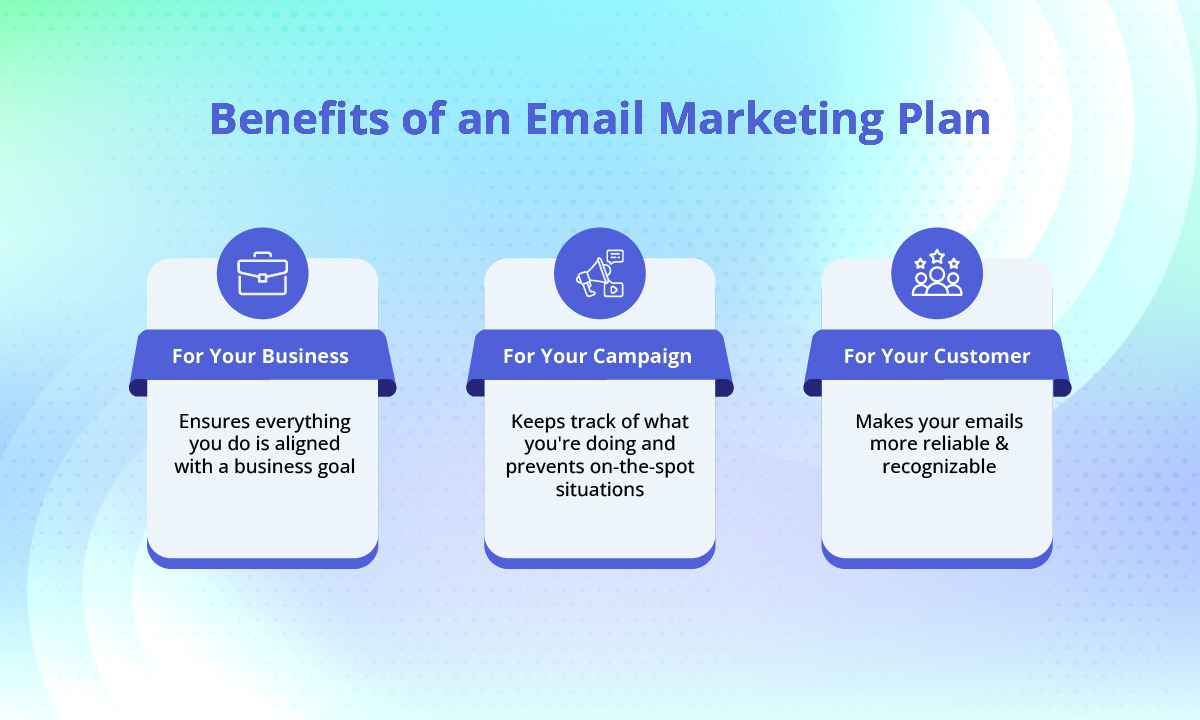
An email marketing plan acts as both a strategic blueprint and an operational reference. It aligns business goals with audience needs, campaign execution, and performance measurement. Without a documented plan, teams often rely on reactive decisions, fragmented campaigns, and inconsistent messaging.
Email programs carry inherent risks—deliverability issues, compliance failures, list fatigue, and brand inconsistency. A formal plan forces marketers to address these risks proactively by defining sending frequency, segmentation rules, consent practices, and escalation paths before campaigns go live.
By documenting processes in advance, teams reduce the likelihood of last‑minute errors that can negatively impact inbox placement or customer trust.
Short‑term campaigns can generate spikes in engagement, but sustained growth requires long‑term thinking. An email marketing plan supports lifecycle marketing, audience nurturing, and ongoing optimization. Instead of focusing only on individual sends, managers can map how subscribers progress over weeks, months, and years.
This long‑range approach is especially critical for 2026, as customer journeys become longer and more fragmented across channels.
A structured plan clarifies priorities. It identifies which audiences, products, or lifecycle stages deserve the most attention and investment. This prevents teams from spreading resources too thin across too many initiatives.
Clear focus areas also improve collaboration with sales, product, and customer success teams by establishing shared objectives.
Planning requires honest evaluation. Reviewing historical data during the planning phase reveals what has worked, what has underperformed, and where gaps exist. These insights guide smarter decisions about automation, content formats, and segmentation strategies.
Over time, this process builds institutional knowledge that strengthens the entire marketing function.
When priorities, metrics, and guardrails are documented, decision‑making becomes faster and more consistent. Teams can assess new ideas or requests against the plan rather than debating strategy from scratch each time.
For managers, this reduces friction, improves accountability, and supports more confident leadership.
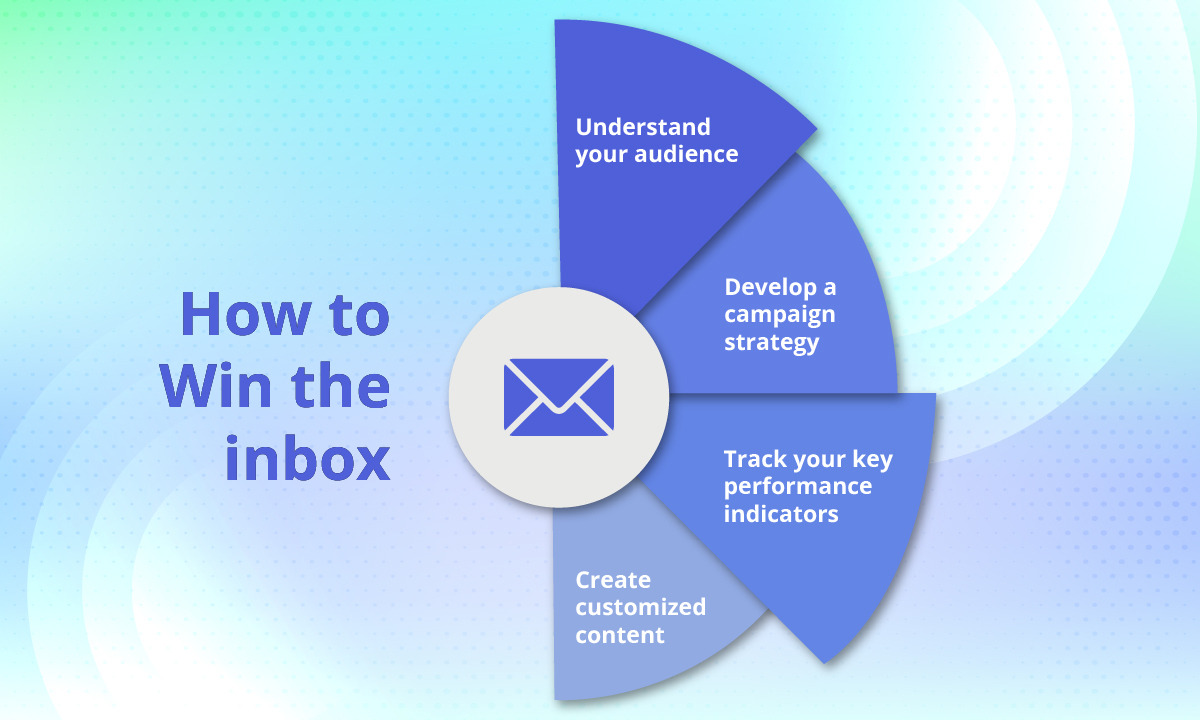
Building an email marketing plan is not a one‑time exercise. It is an iterative process that combines strategic thinking with operational detail. The steps below outline a practical framework suitable for enterprise and growing teams alike.
Every effective plan starts with clarity of purpose. Ask why email exists as a channel within your organization. Is it primarily a revenue driver, a retention tool, an education channel, or a combination of these?
Clearly articulating purpose prevents conflicting objectives and ensures campaign decisions align with broader business goals.
Research grounds your plan in reality. This includes:
For 2026 planning, research should also account for evolving privacy standards, AI‑assisted personalization, and inbox filtering behaviors.
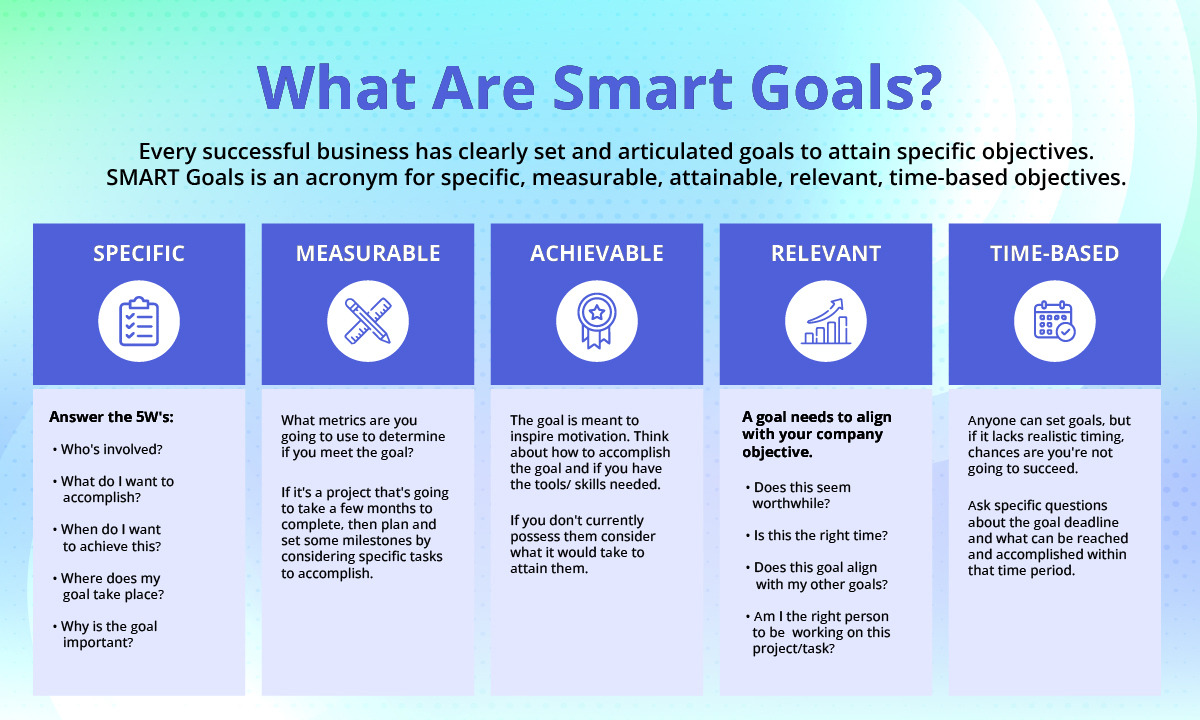
Goals must be specific and measurable to be actionable. SMART objectives ensure that success is clearly defined.
Example: Increase lifecycle email revenue by 15% year‑over‑year by Q4 2026.
Measurement criteria translate objectives into performance indicators. Common metrics include:
For 2026, email managers should also track engagement depth and long‑term subscriber value rather than relying solely on surface‑level metrics.
Audience definition goes beyond basic demographics. Effective plans document:
Clear audience definitions enable relevant messaging and reduce list fatigue.
Consistency builds trust. Your plan should articulate how brand voice, tone, and visual identity translate into email. This ensures alignment across campaigns, even when multiple team members or agencies are involved.
Brand documentation should cover subject line style, content length, imagery usage, and accessibility standards.
The strategy section connects goals to execution. It defines:
This is where high‑level intent becomes actionable direction.
Calendars bring structure to execution. A documented calendar outlines:
A calendar also helps prevent over‑mailing and supports cross‑team coordination.
A plan only delivers value if it is followed. Commitment involves executive buy‑in, clear ownership, and regular reviews. Successful teams revisit their plans quarterly to adjust tactics without losing strategic direction.
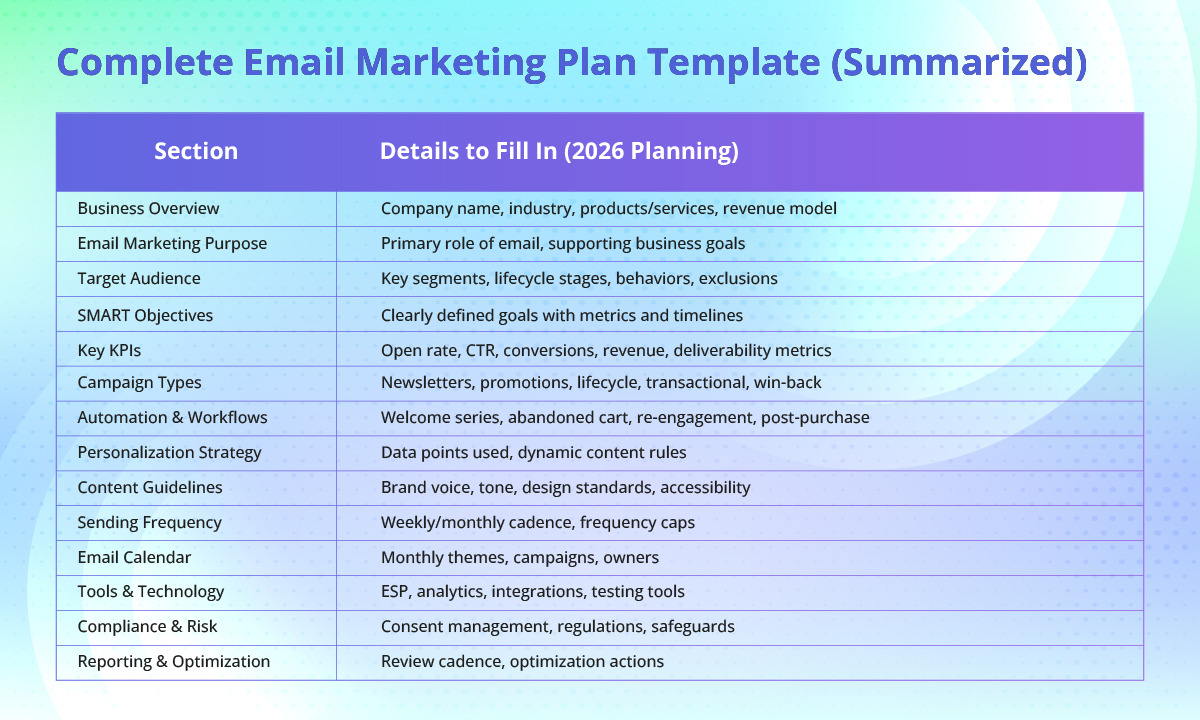
The following email marketing plan template is designed for email marketing managers planning their 2026 initiatives. It can be adapted for documents, spreadsheets, or Excel‑based planning workflows.
Defines the company’s core identity and commercial model.
Includes brand name, industry category, key offerings, and how the business generates revenue (e.g., subscriptions, one-time sales, SaaS, services).
Clarifies the primary function of email within the organization (e.g., revenue generation, retention, lifecycle nurturing).
Explains how email aligns with broader marketing objectives such as acquisition, brand awareness, or customer loyalty.
Specifies who receives emails, segmented by demographics, behavior, or lifecycle stage (e.g., new leads, active customers, churned users).
Includes trigger behaviors (e.g., cart abandonment) and suppression rules to avoid irrelevant or non-compliant sends.
Outlines measurable, time-bound objectives tied to business impact.
Each goal should define a clear metric, target benchmark, and deadline (e.g., increase email-driven revenue by 15% in Q2).
Defines how success will be tracked.
Primary KPIs (e.g., revenue per email, conversions) measure performance impact; secondary KPIs (e.g., open rate, CTR) measure engagement and deliverability health.
Describes campaign structure, automation flows, and lifecycle journeys.
Covers personalization tactics, segmentation logic, and testing methodology (A/B tests, subject lines, timing optimization).
Establishes tone, messaging consistency, and visual standards.
Includes accessibility best practices (e.g., alt text, contrast ratios) and outlines the review/approval workflow before sending.
Defines how often subscribers receive emails to prevent fatigue.
Includes frequency caps, recommended send days/times, and alignment with audience engagement patterns.
A structured annual roadmap of campaigns by month.
Details campaign themes, types (promotional, educational, automated), and assigned ownership for accountability.
Lists the email platform, automation tools, analytics systems, and CRM integrations.
Ensures proper data flow, segmentation accuracy, tracking capability, and performance reporting.
Outlines consent collection and data governance practices.
Addresses regulations (e.g., GDPR, CAN-SPAM) and deliverability protections such as authentication (SPF, DKIM, DMARC).
Defines reporting frequency and stakeholder involvement.
Describes how performance insights translate into testing, refinement, and continuous lifecycle optimization.
An email marketing plan template is more than a planning document, it is truly a strategic asset. Email marketing managers must navigate increased competition, stricter regulations, and more sophisticated subscriber expectations.
By investing time in structured planning, teams gain clarity, reduce risk, and unlock sustainable growth.
A well‑defined email marketing plan ensures that every campaign serves a purpose, every message adds value, and every decision is guided by data rather than assumptions.
For organizations serious about long‑term email performance, a documented plan is no longer optional; it is essential.
Ayesha Ejaz is a passionate writer who loves diving into research to explore new topics and broaden her knowledge. With a keen interest in learning through writing, Ayesha crafts informative and engaging content across various subjects. You'll find her unwinding with music or challenging herself with word search puzzles when she's not writing.
Tags:


