Mastering Email Cadence: Meaning, Best Practices, and Examples That Work

Ayesha Ejaz Last updated on
Crafting the perfect email isn't just about content but also timing. Enter email cadence: the strategic rhythm of sending emails that keeps your audience engaged without overwhelming them.
Whether you're a marketer nurturing leads, a sales rep pursuing prospects, or a business owner aiming to convert subscribers, understanding email cadence can transform your campaigns.
This guide'll break down everything from the basics to best practices, examples, tools, and common mistakes, helping you find your brand's perfect communication rhythm.
Why Email Cadence Is the Heartbeat of Your Campaigns
Imagine receiving three emails from the same company within 24 hours. Overwhelming, right? Now imagine receiving one thoughtful, timely email that speaks directly to where you are in your decision-making journey. Much better.
That difference? It's all about email cadence. Getting your email cadence right can mean the difference between engaging your audience or ending up in the spam folder. In a digital world full of noise, email cadence is your rhythm—your way of showing up consistently, meaningfully, and respectfully in your subscriber's inbox
What Is Email Cadence? (Meaning + Definition)
Let’s break this down like a conversation, not a marketing manual.
Think of email cadence as the natural rhythm you strike when communicating with someone over time. It’s not about flooding inboxes or disappearing for weeks. It’s the art of knowing when to send an email, how often to send it, and what it should say depending on where your recipient is in their journey.
Just like you wouldn’t text a friend ten times a day out of the blue—or wait three months to respond to a simple question—your emails need the right balance. When your cadence feels natural, your audience stays engaged. When it’s off, they tune you out or click ‘unsubscribe.’
At its core, email cadence blends three key elements: timing, frequency, and sequence. That’s your formula:
Email Cadence = Frequency + Timing + Sequence
This rhythm will vary depending on your audience type, the campaign goal, and the recipient's lifecycle stage. Whether you're onboarding a new user, nurturing a lead, or following up on a sales inquiry, mastering cadence helps you deliver the right message at the right time without becoming noise.
So, next time you build an email campaign, don’t just ask, “What should I say?” Ask, “When should I say it—and what comes next?”
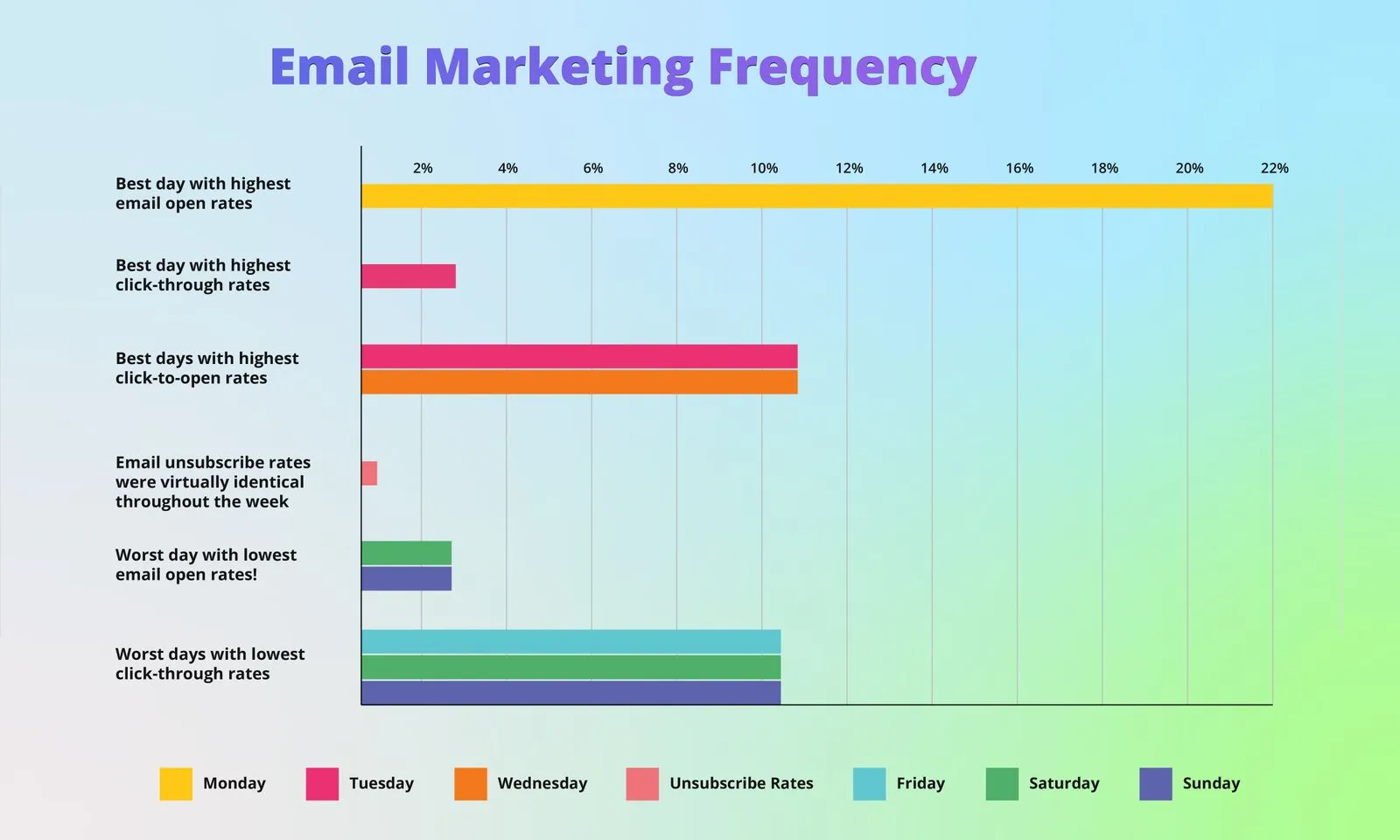
The Importance of an Effective Email Cadence Strategy
The right email cadence builds trust, fosters engagement, and drives conversions. Whether you're sending sales emails, newsletters, or onboarding sequences, a well-crafted cadence keeps your audience warm and receptive.
Without a cadence strategy, you risk:
- Sending too frequently and causing unsubscribes
- Sending too infrequently and being forgotten
- Misaligning your message with the buyer journey
Cadence is especially crucial in cold outreach and sales email sequences, where timing can make or break a deal.
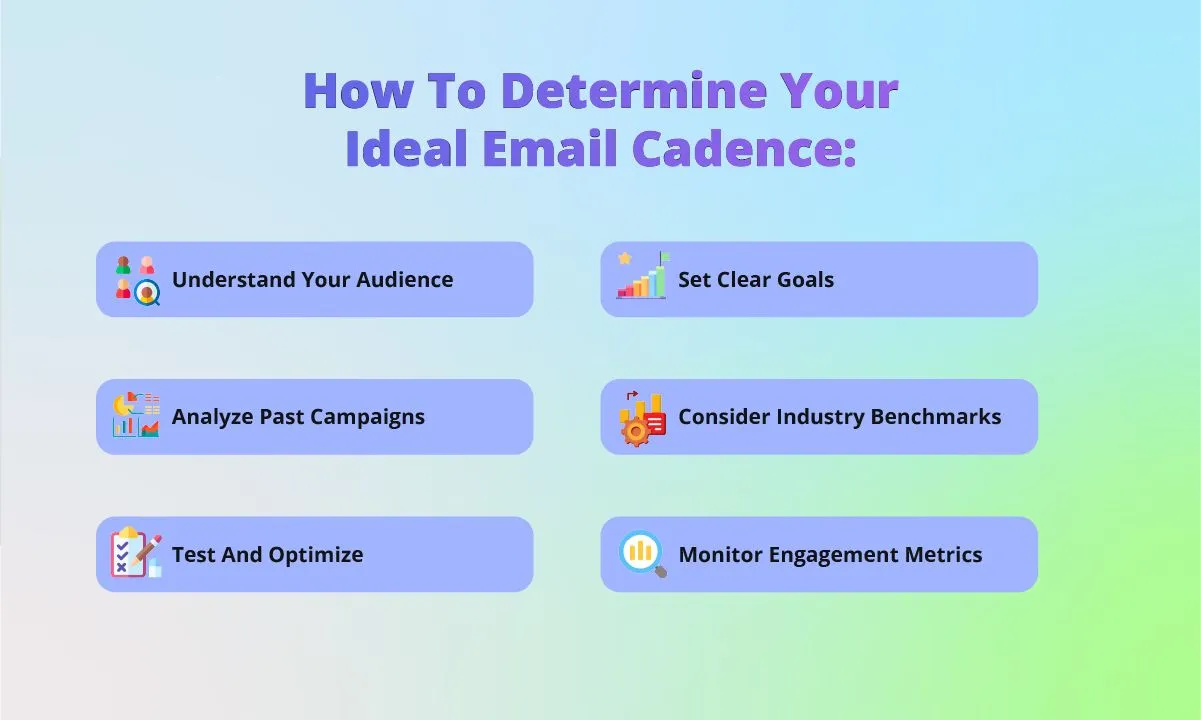
Email Cadence Best Practices You Shouldn’t Ignore
Getting your email cadence right isn’t about copying a formula—it’s about understanding your audience and creating a flow that feels like a natural conversation. If you treat email like a relationship, your cadence is how you stay in touch without overstepping.
Let’s review some best practices that keep your emails timely, welcome, and effective.
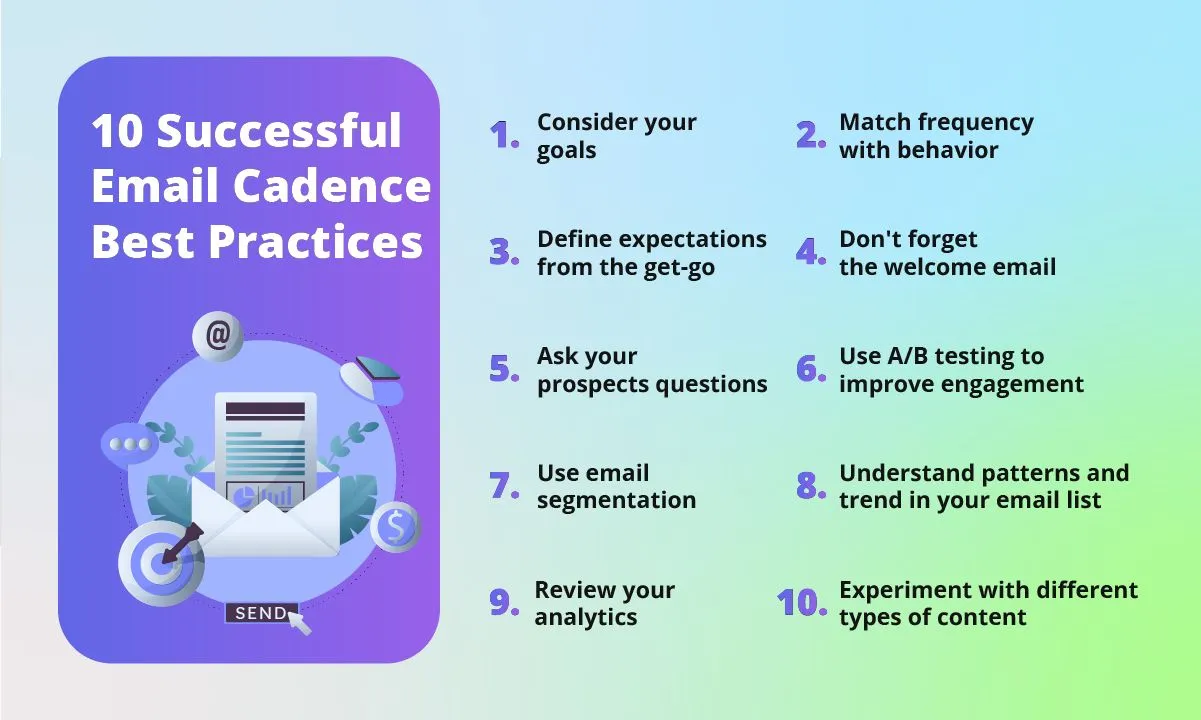
1. Know Your Audience & Intent
Before you even write your first email, ask yourself: Who am I talking to, and why? A first-time newsletter subscriber deserves a very different cadence than a sales-qualified lead or a loyal customer. Segmenting your list and understanding each person’s intent ensures you’re sending messages that resonate, not repel.
2. Set a Goal for Each Email
Aimless emails go straight to the trash. Every email you send should have a clear purpose. Whether you’re educating, converting, or re-engaging someone, define what success looks like for each message in your sequence—and guide your reader toward that goal.
3. Timing is Everything
There’s a fine line between being helpful and being annoying. While general advice says midweek mornings are best, what really matters is your audience’s habits. Watch your open rates and click data to find when your people are most responsive.
4. Consistency Beats Frequency
It’s better to show up like clockwork once a week than to bombard someone with emails three days in a row, then vanish for a month. Consistency builds trust and familiarity. Make your cadence feel like a dependable rhythm, not a marketing blitz.
5. Automate with Purpose
Automation can save time and scale your efforts, but don’t let it replace authenticity. Use automation tools to trigger personalized, timely emails based on behavior or lifecycle stage. And constantly review performance—what works today might flop tomorrow.
At the end of the day, the best cadence is the one your audience actually looks forward to. Pay attention, adapt often, and keep it human.
Real-World Email Cadence Examples (With Templates)
Let’s bring this concept to life with real, practical examples. Whether you're trying to convert leads, reconnect with cold prospects, or keep your current audience engaged, your cadence should feel purposeful, not pushy. Here are a few tried-and-true examples that you can model or adapt based on your goals:
Sales Email Cadence Example (B2B SaaS)
Selling to businesses often requires a careful mix of persistence and patience. Here’s a sample 7-touch sequence:
- Day 1 – Introduction email: Keep it concise, value-focused, and personal.
- Day 3 – Follow-up with a deeper dive into the problem you solve.
- Day 5 – Share a relevant case study, testimonial, or social proof.
- Day 7 – Soft CTA asking for thoughts or time for a quick call.
- Day 10 – Address common objections or FAQs.
- Day 14 – Final value email with a resource or incentive.
- Day 21 – Break-up email: respectful closure or nudge.
Cold Email Cadence Template (Outbound Prospecting)
These emails should warm up strangers without coming off as spammy:
- Day 1 – Personal introduction and reason for reaching out.
- Day 4 – Follow-up with a compelling insight or relevant question.
- Day 7 – Share a helpful article or case study to provide value.
- Day 10 – Light touch reminder or a non-pushy close.
Lead Nurturing Email Cadence (For Inbound Leads)
Nurturing is about education, building trust, and guiding leads toward action:
- Week 1 – Welcome email with brand introduction.
- Week 2 – Share a blog post, video, or explainer guide.
- Week 3 – Invite to a webinar, event, or free resource.
- Week 4 – Highlight customer stories or testimonials.
- Week 5 – Offer an exclusive promotion or incentive.
The beauty of these templates is that they’re flexible. Adjust the frequency, messaging, and length depending on your audience type, the complexity of your offer, and how warm your leads are. Test often, tweak regularly, and always prioritize adding value over making noise.
Tools to Help You Master Email Cadence
You don’t need to do it all manually. Plenty of powerful tools exist to help you build, test, and automate email cadences that actually get results. Here are some top options:
- Mailmunch: Designed with marketers in mind, Mailmunch offers amazing automation features, pre-built workflows, and behavior-based targeting to help you create personalized email sequences. It’s user-friendly and ideal for small to mid-sized teams looking to scale outreach without compromising quality.
- MailerLite: Offers intuitive drag-and-drop automation builders, time-zone-based delivery, and detailed analytics. Great for those new to automation or operating on a lean budget.
- HubSpot: Known for its comprehensive CRM and marketing suite, HubSpot allows you to craft sophisticated email sequences, run A/B tests, and dig deep into engagement analytics.
- Salesforce: Perfect for enterprise-level users. With native tools like Salesforce Engage and integrations with third-party platforms, you can create multi-touch cadences synced across sales and marketing teams.
Each of these email cadence tools offers a unique mix of features, but all share one goal: to help you deliver the right message, at the right time to the right audience, on autopilot.
Common Email Cadence Mistakes to Avoid
Even the most seasoned marketers can fall into rhythm traps regarding email cadence. Whether emailing too much, too little, or simply missing the mark with content and timing, these missteps can erode trust quickly. Here are the most common mistakes—and how to steer clear of them:
- Over-emailing or going silent: Bombarding your audience with daily emails is just as bad as disappearing for weeks. Find a balance that keeps you top-of-mind without becoming a nuisance.
- Lack of segmentation: Not all subscribers are alike, and sending the same message to everyone can result in irrelevance. Segment your list based on behavior, interests, or lifecycle stage for more targeted engagement.
- Ignoring engagement signals: High bounce rates, low open rates, and unsubscribes are your warning signs. Listen to your metrics—they’re telling you what your audience thinks.
- Over-relying on templates: Templates are helpful, but too much automation can feel impersonal. Customize your messages to maintain a human, conversational tone.
- Forgetting the buyer’s journey: Your cadence should shift depending on where your audience is—are they new leads, warm prospects, or loyal customers? A one-size-fits-all cadence won’t cut it.
Treat your cadence like a conversation to succeed: listen, respond thoughtfully, and pace yourself accordingly. The goal is to build a relationship, not just push a message.
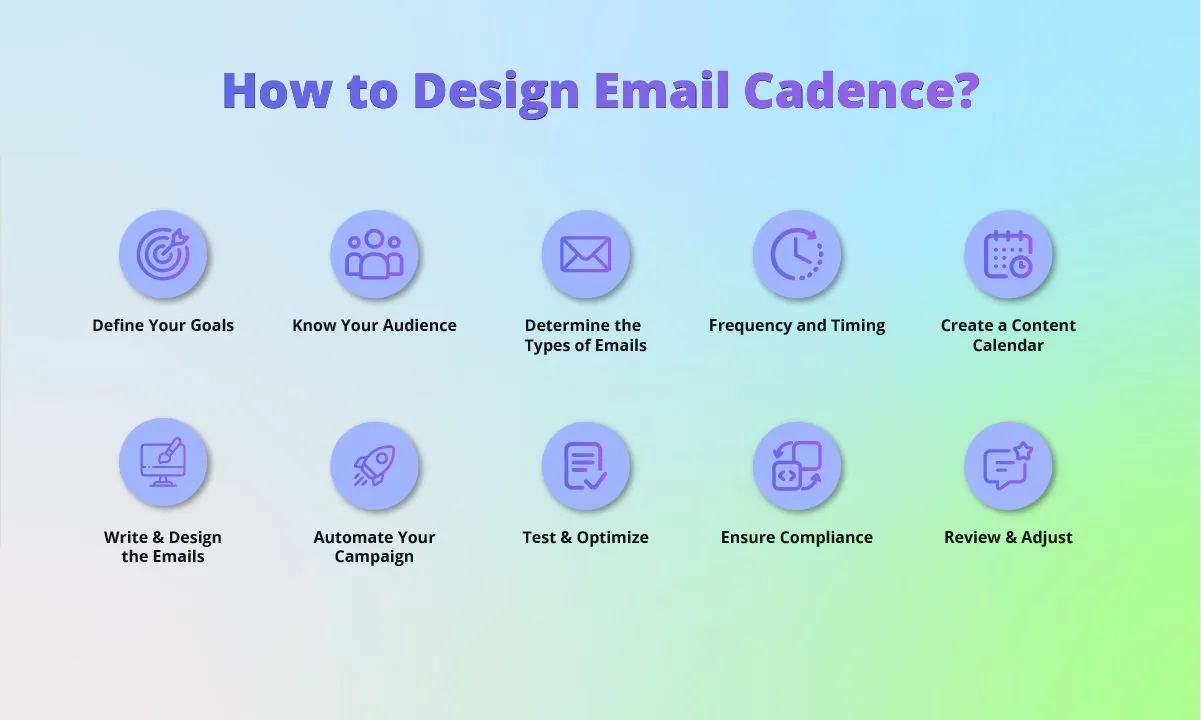
How to Create Your Own Email Cadence Strategy (Step-by-Step)
Creating a successful email cadence isn’t just about choosing a day and hitting send; it’s a deliberate strategy that blends personalization, timing, and value. Think of it like crafting a conversation with your audience over time.
Here’s how to build a cadence that delivers results and feels authentic at every step.
- Define Your Audience Segments
Not all subscribers are at the same stage in their journey. Some just found you. Others are ready to buy. Break your audience into meaningful groups: new signups, engaged leads, returning customers, and inactive users. Tailor cadence flows specifically to their behavior, needs, and goals.
- Map Out Clear Goals for Each Sequence
Every sequence needs a clear objective. Do you want to onboard new users, nurture cold leads, or drive webinar sign-ups? Be specific. Mapping out the end goal helps you reverse-engineer what kind of content, frequency, and timing will be most effective.
- Choose the Right Frequency and Timing
Cadence isn’t about emailing more; it’s about emailing smarter. A welcome series might be spaced every other day, while re-engagement campaigns might need a gentler weekly pace. Use A/B testing to see when your audience is most responsive. Tools like Mailmunch allow you to schedule smart sends based on user behavior and time zones.
- Create a Narrative With Your Content
Each email should naturally lead into the next. Rather than bombarding your audience with offers, guide them with stories, social proof, helpful tips, and CTAs that build trust. Your cadence should feel like chapters in a conversation, not standalone announcements.
- Automate the Workflow Thoughtfully
Leverage automation platforms like Mailmunch, MailerLite, or HubSpot to scale your email sequences without losing the human touch. Use conditional logic and behavioral triggers to adapt the cadence based on how subscribers engage or don’t.
- Track the Right Metrics
Open rate isn’t everything. Watch click-throughs, replies, unsubscribes, and conversion events. These insights show whether your cadence is hitting the mark or veering off course.
- Optimize Continuously
Email cadence isn’t a one-and-done task. Test subject lines, revise send times, remove underperforming emails, and double down on what works. Your audience evolves; so should your cadence.
A well-crafted cadence turns emails from white noise into welcome conversations. It’s about sending fewer, better emails with intention, empathy, and value.
Conclusion: Find Your Rhythm and Scale With the Right Cadence
Your audience doesn't want more emails. They want the right emails at the right time. Mastering your email cadence ensures you're showing up not just more often, but more meaningfully.
Remember: it’s not about flooding inboxes. It’s about creating a dialogue that respects your audience’s time, needs, and journey.
Build your ideal cadence with Mailmunch, and watch your engagement climb.
FAQs
What is the best email cadence for cold outreach?
A 4-5 email sequence spaced out over 10 to 14 days typically works well. Start with a personalized introduction, follow up with value-driven insights, and gradually build urgency or provide incentives. Keep the tone helpful and non-pushy to encourage replies instead of unsubscribes.
How do I determine the right frequency for follow-ups?
The ideal frequency depends on your audience's preferences and your campaign goals. Start with once every few days and test variations to see what yields the best engagement. Use metrics like open rates, click-throughs, and unsubscribes as guides.
Are there tools that automate email cadence?
Absolutely. Tools like Mailmunch, MailerLite, HubSpot, and Salesforce can help you design, schedule, and track email sequences. These platforms offer automation, personalization, and analytics to fine-tune your cadence strategy over time.
How does email cadence differ between industries?
Due to competitive sales cycles, B2B industries often need more frequent touchpoints over a shorter window. In contrast, B2C email cadence may focus on weekly or bi-weekly newsletters, promotional campaigns, or product updates, depending on seasonality.
Can I use Salesforce to manage email cadence?
Absolutely! Salesforce offers powerful tools like Salesforce Engage, specifically built to support email cadence strategies. You can automate follow-up emails, schedule campaigns based on user actions, and even personalize messaging depending on behavior. It’s a solid choice for growing businesses and large teams looking to keep their communication timely, organized, and highly effective.