Mastering Lead Management: Strategies to Turn Prospects into Paying Customers

Ayesha Ejaz Last updated on

In today’s fast-paced digital marketplace, businesses can’t afford to let potential customers slip through the cracks. Lead management is a crucial strategy that helps companies capture interest, build relationships, and convert leads into loyal customers.
But what does lead management involve? How does it support your sales funnel? And most importantly, how can you make the most of it, whether you're a small business or a large enterprise?
This guide dives deep into the lead management process, showing you exactly how to streamline lead flow, boost conversions, and create a sustainable growth system.
What Is Lead Management?
Defining Lead Management
At its core, lead management refers to the methodical process of tracking and guiding potential customers, known as leads, through their buyer journey. From the moment someone shows interest in your product or service (like signing up for a newsletter or attending a webinar), lead management ensures they’re nurtured with the right messages, at the right time, and in the right way.
A strong lead management CRM can automate many of these steps, but the human element, knowing when and how to engage, is equally important.
Importance of Lead Management in Sales and Marketing
Imagine your marketing team is generating hundreds of leads every month, but the sales team isn’t following up efficiently, or worse, they’re not following up. That’s a recipe for wasted time and missed revenue. This is where lead management systems come into play:
- Aligning sales and marketing: The handoff from marketing to sales becomes seamless when both teams share access to lead insights and pipeline updates.
- Boosting conversion rates and revenue: Well-managed leads get quicker, more relevant responses, leading to higher conversion.
- Enhancing customer experience: Timely communication and personalization improve trust and increase the likelihood of closing the deal.
The Lead Management Process: Step-by-Step
Understanding the journey from capturing a prospect’s interest to closing the sale is essential for building a scalable and successful sales funnel. The lead management process provides a structured pathway for doing just that.
Businesses can break it down into clear, actionable stages to ensure no lead is lost, mishandled, or overlooked.
Whether dealing with dozens or thousands of leads, this step-by-step process will help you organize your strategy, prioritize efforts, and move leads efficiently through the pipeline.
1. Lead Capture
Every journey starts with a single step. In lead management, that step is lead capture. Leads are typically collected through:
- Website sign-up forms
- Landing pages offering downloadable resources
- Paid advertisements
- Events or webinars
- Customer referrals
To automate this, many businesses use lead management software that integrates with their website and marketing campaigns, ensuring no lead is missed.
2. Lead Tracking
Once a lead is captured, the next task is to track their activity. Are they opening emails? Visiting product pages? Downloading case studies? This behavioral data is gold.
With tools like Salesforce lead management or Zoho CRM, businesses can monitor these interactions in real time and respond accordingly.
3. Lead Qualification
Not all leads are created equal. Some are just browsing; others are ready to buy. Lead qualification uses scoring systems to rank leads based on demographic and behavioral criteria. This allows sales teams to focus their time and energy on the leads most likely to convert.
4. Lead Distribution
Once a lead is deemed qualified, it should be sent to the appropriate sales rep. The best lead management systems automate this based on criteria like geography, industry, or product interest.
5. Lead Nurturing
If a lead isn’t quite ready to buy, don’t abandon them. Instead, engage with relevant and timely content:
- Email nurturing campaigns
- Personalized product recommendations
- Educational content, like guides or videos
This keeps your brand top-of-mind until they’re ready to make a purchase.
6. Lead Conversion
This is the moment of truth—when your lead becomes a paying customer. Successful conversion depends on timely follow-ups, persuasive demos, and offering the right incentives to close the deal.
Why Lead Management Is Crucial for Business Growth
Before diving into tools and techniques, it's essential to understand why lead management isn't just a "nice to have"—it's a business essential.
In today's competitive environment, having a consistent and data-driven process for managing leads gives firms an edge. It empowers teams to act on insights quickly, personalize outreach, and close more deals with less effort.
This section will explore the key business benefits of building a strong lead management foundation.
Here’s why businesses—from tech startups to real estate firms—rely on lead management tools to scale:
- Better pipeline visibility and forecasting: You can track exactly where each lead is in the sales funnel and predict future revenue.
- Shorter sales cycles: With timely responses and better qualification, deals close faster.
- Increased ROI: You invest less per conversion and maximize the returns on your marketing campaigns.
- Enhanced customer engagement: Personalized touchpoints build trust, which leads to long-term loyalty.
A 2023 Salesforce report showed that businesses using crm lead management tools are 33% more likely to exceed their revenue goals.
Key Features of a Good Lead Management System
Choosing the right lead management software is more than just finding a tool—it’s about finding a system that fits seamlessly into your business operations and scales with your needs.
It drives better results across your sales and marketing teams. A sound system is the central hub of all your lead-related activities, reducing manual work and boosting your team’s ability to act on opportunities faster.
Below are the must-have features defining an effective lead management system—each designed to improve your pipeline efficiency, collaboration, and overall conversion rate.
Centralized Lead Database
A unified view of all your leads means less time switching between platforms and more time making data-driven decisions. A centralized database stores vital information like contact details, communication history, engagement metrics, and buying behavior—all in one place.
Automated Lead Scoring and Qualification
With automated scoring, you can rank leads based on criteria such as behavior (email opens, website visits), demographics (industry, job title), and level of interest. This feature allows sales teams to prioritize high-quality leads and effectively tailor their outreach.
CRM Integration
Seamless integration with tools like Salesforce, Zoho CRM, or HubSpot ensures that your sales and marketing departments can always access up-to-date data. This helps prevent gaps in communication and enables more coordinated lead-nurturing and conversion efforts.
Real-time Reporting and Analytics
Instant insights into what’s working and what’s not help you optimize campaigns and sales strategies. Look for features that track KPIs like conversion rates, lead source performance, and sales rep response time.
Multichannel Lead Capture
Today’s leads don’t come from just one source. Whether through your website, social media, email campaigns, chatbots, or offline events, your lead management system should automatically capture and centralize leads from all relevant channels.
Custom Workflows and Automation
A brilliant system allows you to set up rules and workflows to automate repetitive tasks—automatic email replies, lead assignments, and follow-up scheduling. This saves time and ensures a consistent and timely approach to lead handling.
Common Lead Management Challenges (and How to Solve Them)
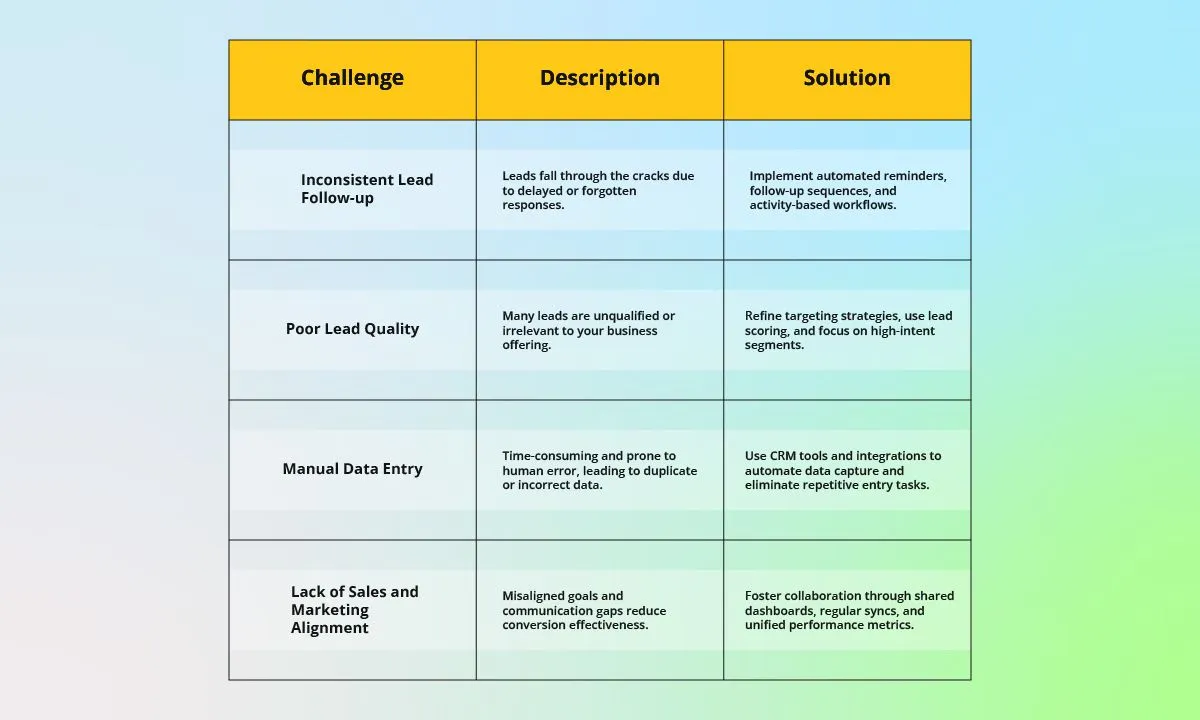
Even the best strategies can fall short when confronted with real-world complications. Lead management can become increasingly complex as businesses scale and customer expectations evolve. Several recurring issues can hinder success, from missed follow-ups to poor lead quality.
The good news? Most of these hurdles can be avoided or resolved with the right solutions. Below is a detailed table of common challenges and actionable fixes to keep your lead pipeline healthy and productive.
Best Practices for Effective Lead Management
Knowing the theory behind lead management is only half the battle—the real success lies in how effectively you implement it. Best practices ensure that your team is aligned, your tools work efficiently, and your leads move smoothly through the pipeline.
These tried-and-tested strategies help businesses keep leads engaged and increase the likelihood of conversion at every touchpoint. Whether you’re just starting or looking to refine your approach, here are the essential best practices to elevate your lead management game.
Align Sales and Marketing Teams
Sales and marketing alignment is crucial. Without it, leads might be mismanaged, ignored, or communicated inconsistently. When both teams operate with shared goals, KPIs, and definitions (like what qualifies as a lead), the lead handoff becomes seamless and more efficient.
Use a CRM and Marketing Automation Software
Manual follow-ups and disconnected data can lead to lost opportunities. By leveraging a lead management crm alongside marketing automation tools, you can automate repetitive tasks, reduce manual errors, and keep all your team members on the same page.
Continuously Optimize Lead Scoring
Lead scoring is not a one-and-done activity. As your business grows, so will your understanding of what makes a quality lead. Regularly evaluate and update your scoring system based on conversion data, customer feedback, and sales outcomes.
Personalize Nurturing Campaigns
Generic messages don’t resonate in today’s market; email marketing has become more personalized. Personalization based on user behavior, pain points, and stage in the funnel can significantly improve engagement. Segment your audience and tailor your emails, content, and offers to meet their needs.
Monitor KPIs and Conversion Rates
What gets measured gets improved. Monitor key performance indicators such as time-to-contact, open and click rates, MQL-to-SQL conversion rates, where the average MQL to SQL rate is 13%, and deal velocity closely. Use this data to make informed decisions and optimize weak areas.
Train Teams on Lead Handoff Protocols
One of the most common failure points in lead management is the transition between marketing and sales. Ensure both teams understand the handoff process, including lead statuses, timelines for follow-up, and expectations. Role-play scenarios and create documentation to reinforce these standards.
How to Choose the Right Lead Management Software
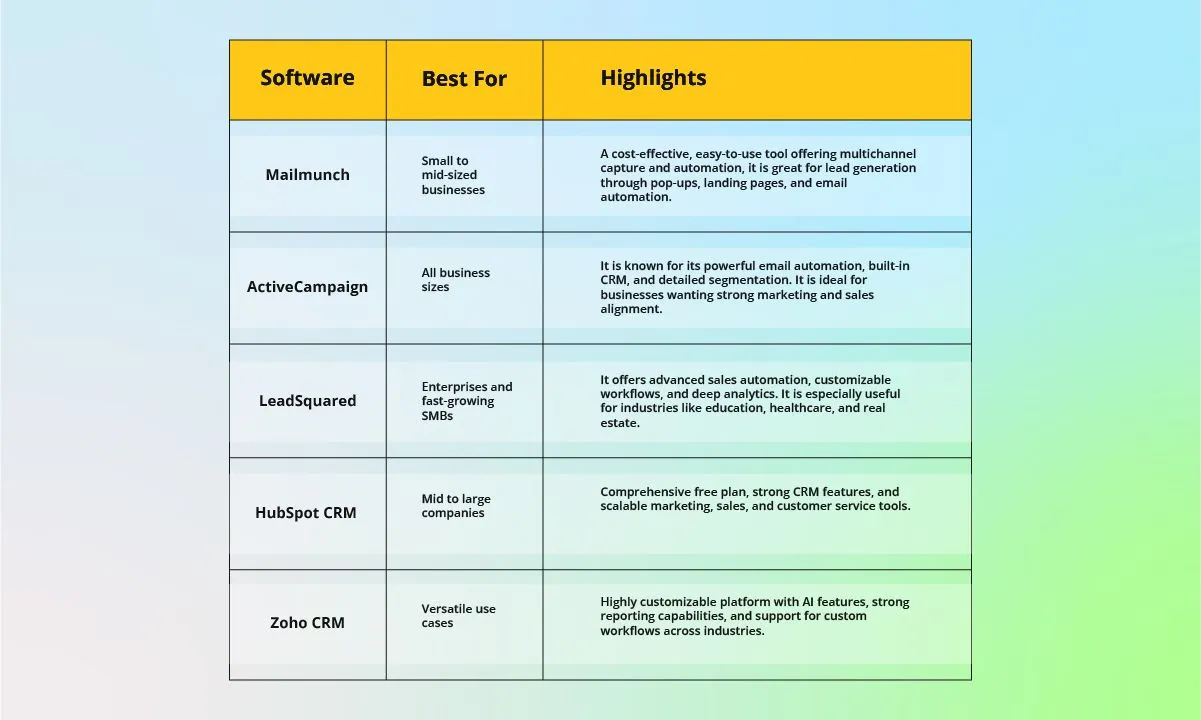
With dozens of tools on the market, selecting the right lead management software can feel overwhelming. However, the right platform can supercharge your team's productivity, streamline your workflows, and help you close more deals. Whether you're a small business looking for a budget-friendly tool or a large enterprise with complex needs, it’s important to evaluate your options carefully. Here’s a breakdown of what to look for and how top solutions stack up.
Factors to Consider
- Scalability: Choose software that can grow with your business and adapt to increasing lead volume.
- Ease of Use: A user-friendly interface means your team will adopt it faster and use it more effectively.
- Integration Capabilities: Ensure the software integrates seamlessly with your existing CRM, email marketing tools, and customer service platforms.
- Support and Training: Reliable onboarding, documentation, and customer support are essential, especially if your team is new to lead management platforms.
Comparison of Top Tools
Final Thoughts: Make Lead Management Your Sales Superpower
The difference between a growing business and a stagnant one often lies in how it manages its leads. With the right strategy and the right lead management software, you can turn cold prospects into warm conversations—and eventually, happy customers.
Whether you're a solo entrepreneur or managing a sales team of 50, investing in an innovative, scalable lead management solution is one of the most impactful moves you can make.