Professional Email Examples: Templates for Every Workplace Situation

Ayesha Ejaz Last updated on
Email remains one of the most important communication tools in the workplace. Whether you're applying for a job, requesting information, following up after a meeting, introducing yourself to a client, or responding to a colleague, writing a professional email can influence how you're perceived.
A well-written email demonstrates professionalism, builds trust, and helps you communicate your message clearly. On the other hand, poorly written emails can create confusion, delay decisions, or leave a negative impression.
The good news? Writing professional emails doesn't have to be difficult.
Whether you're a student, employee, freelancer, business owner, or job seeker, these professional email examples will help you communicate with confidence.
What Is a Professional Email?
A professional email is a formal or semi-formal message used for business, academic, or workplace communication. It follows proper email etiquette, maintains a respectful tone, and clearly communicates its purpose.
Unlike casual messages, professional emails are:
- Clear and concise
- Respectful
- Grammatically correct
- Action-oriented
- Easy to read
Professional emails are commonly used for:
- Job applications
- Client communication
- Internal company updates
- Meeting requests
- Networking
- Customer support
- Sales outreach
- Follow-ups
- Project collaboration
Anatomy of a Professional Email
Most professional emails follow the same structure.
1. Subject Line
The subject line should immediately explain why you're writing.
Examples:
- Project Update – June 2026
- Meeting Request for Thursday
- Follow-Up on Marketing Proposal
- Interview Thank You
- Request for Budget Approval
Avoid vague subjects like:
- Hi
- Question
- Important
- Hello
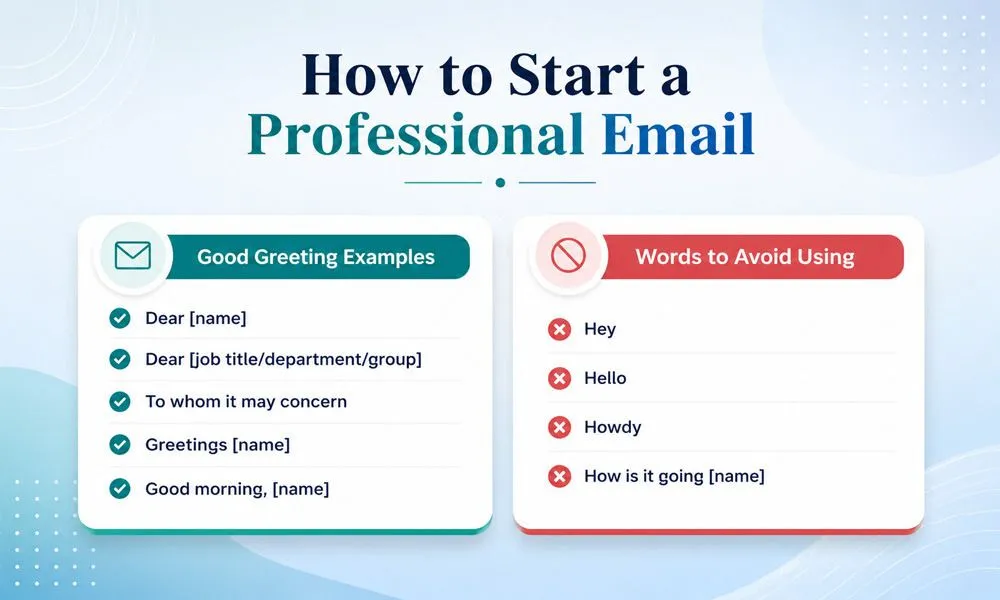
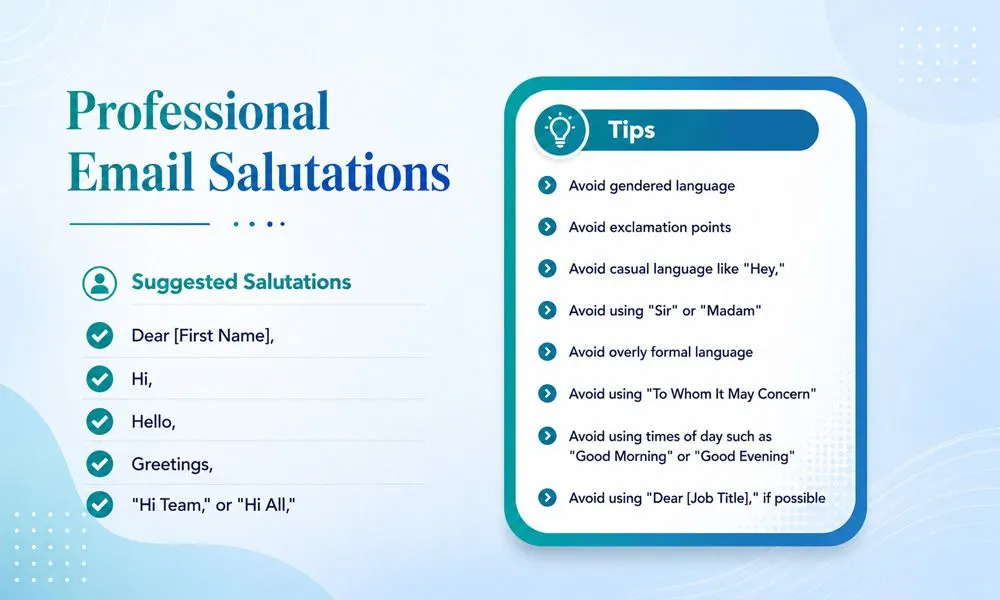
2. Greeting
Address the recipient respectfully.
Examples:
- Dear Ms. Smith,
- Dear Mr. Ahmed,
- Hello Sarah,
- Hi Michael,
If you don't know the recipient:
- Dear Hiring Manager,
- Dear Customer Support Team,
- Hello Marketing Team,
3. Opening
Begin with a polite introduction.
Examples:
I hope you're doing well.
Thank you for your time.
I hope your week is going well.
Thank you for meeting with me yesterday.
4. Body
State your reason for writing immediately.
Instead of long paragraphs, break your content into smaller sections or bullet points whenever appropriate.
5. Closing
End by telling the recipient what action you'd like them to take.
Examples:
I look forward to hearing from you.
Please let me know if you have any questions.
Thank you for your consideration.
I appreciate your time.
6. Professional Sign-Off
Examples include:
Best regards,
Kind regards,
Sincerely,
Thank you,
Best,
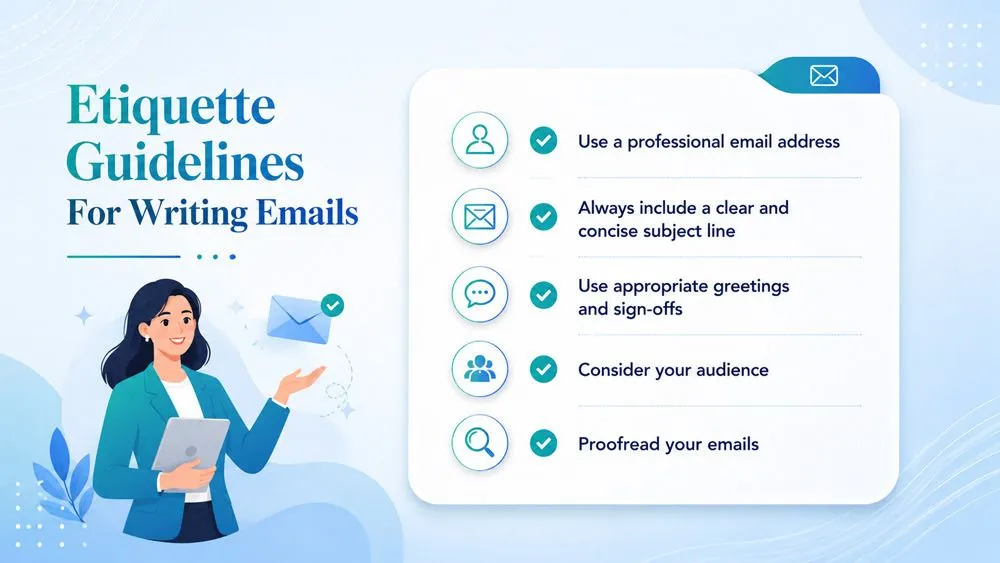
Professional Email Writing Tips
Before jumping into templates, keep these best practices in mind.
Keep It Brief
Busy professionals often scan emails rather than read every word. Aim to communicate your purpose within the first few sentences and avoid unnecessary background information.
Focus on One Main Goal
Each email should have a clear objective. If you're asking for multiple things, organize them into bullet points so they're easy to review.
Use Professional Language
Maintain a respectful tone. Avoid slang, excessive punctuation, or overly casual phrases that may not fit a business setting.
Proofread Before Sending
Typos, grammatical mistakes, and incorrect names can affect your credibility. Review your email before hitting send.
Include a Clear Call to Action
Let the recipient know what you'd like them to do next whether that's scheduling a meeting, approving a document, or replying with additional information.
Professional Email Example 1: Job Application Email
Subject: Application for Marketing Manager Position
Dear Hiring Manager,
I hope you're doing well.
I am writing to express my interest in the Marketing Manager position at your company. With more than five years of experience leading digital marketing campaigns, content strategy, and email marketing initiatives, I believe I can make a meaningful contribution to your team.
Attached are my resume and cover letter for your review.
Thank you for considering my application. I appreciate your time and look forward to the opportunity to discuss my qualifications further.
Kind regards,
Emily Johnson
Professional Email Example 2: Interview Thank You Email
Subject: Thank You for Today's Interview
Dear Mr. Davis,
Thank you for taking the time to speak with me today about the Content Strategist position.
I enjoyed learning more about your team and the exciting projects you're working on. Our discussion reinforced my enthusiasm for the opportunity and how my experience aligns with your goals.
Thank you again for your consideration. I look forward to hearing from you.
Best regards,
Emily Johnson
Professional Email Example 3: Meeting Request
Subject: Meeting Request to Discuss Q3 Marketing Strategy
Hello Sarah,
I hope you're having a great week.
I'd like to schedule a meeting to discuss our upcoming Q3 marketing initiatives and review campaign priorities.
Would you be available on Tuesday or Wednesday afternoon? Please let me know what works best for your schedule.
Thank you, and I look forward to speaking with you.
Best,
James Wilson
Professional Email Example 4: Follow-Up After No Response
Subject: Following Up on My Previous Email
Hi David,
I wanted to follow up on the email I sent last week regarding our partnership proposal.
I understand you're busy, but I wanted to check whether you've had an opportunity to review the information. Please let me know if you need any additional details.
Thank you for your time, and I look forward to your response.
Best regards,
Jessica Lee
Professional Email Example 5: Request for Information
Subject: Request for Additional Project Information
Dear Ms. Carter,
I hope you're doing well.
I'm currently reviewing the project requirements and would appreciate clarification regarding the timeline and expected deliverables.
Having this information will help ensure that our team plans accordingly and delivers the project on schedule.
Thank you in advance for your assistance.
Kind regards,
Michael Brown
Professional Email Example 6: Client Introduction
Subject: Looking Forward to Working Together
Hello Mr. Thompson,
My name is Sophia Adams, and I'll be your primary point of contact for your upcoming project.
I'm excited to work with you and help ensure a smooth and successful experience from start to finish.
If you have any questions before we begin, please don't hesitate to reach out.
Best regards,
Sophia Adams
Why These Emails Work
Although each example serves a different purpose, they share several characteristics:
- A descriptive subject line that sets expectations
- A polite greeting that establishes professionalism
- A clear explanation of the email's purpose within the opening sentences
- Concise paragraphs that are easy to scan
- A specific next step or call to action
- A courteous closing that leaves a positive impression
Following this structure helps recipients quickly understand your message and makes it easier for them to respond promptly.