The Upside Down Marketing Funnel: A Customer-First Framework for Email-Driven Growth

Ayesha Ejaz Last updated on
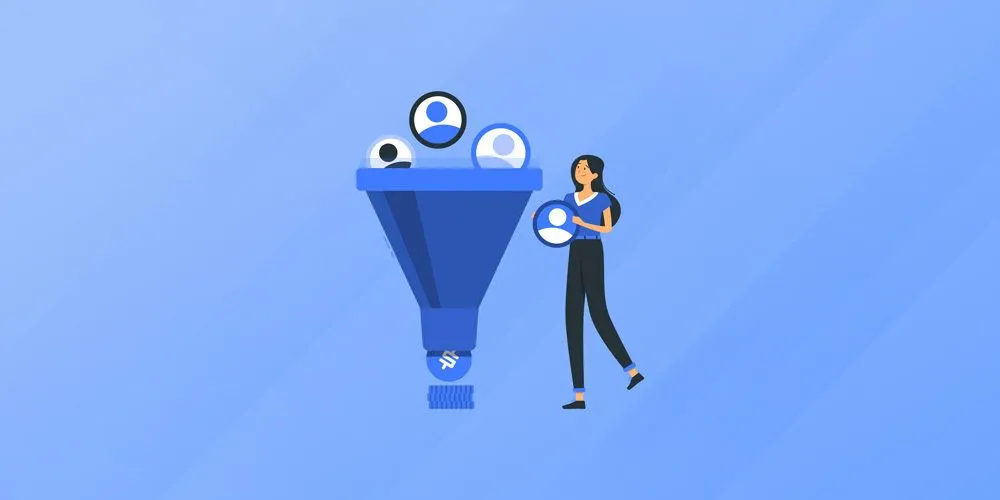
For decades, marketers have relied on a predictable structure to guide their strategy: attract as many people as possible into the top of the funnel, nurture those prospects through the middle, and hope enough will convert at the bottom. This approach fueled the rise of mass advertising, top-funnel social media campaigns, and endless “awareness tactics” designed to get attention first and build relationships later.
But the landscape has changed dramatically.
Today’s customers behave differently, interact differently, and make decisions differently. They demand personalization. They expect relevance. They compare every brand to the best experiences they’ve ever had. And they are far more likely to buy based on the recommendation of another customer than a brand-run campaign. Email marketers see this shift clearly in their engagement metrics: retention campaigns perform exponentially better than cold outreach, lifecycle flows outperform one-off promotions, and customer-centric experiences consistently lead to higher lifetime value.
In this environment, the traditional funnel no longer reflects how real-world growth happens.
Enter the Upside Down Marketing Funnel a model that flips the traditional structure and places your existing customers at the top instead of the bottom. It’s a funnel built on advocacy, retention, trust, and relationship-driven engagement. And for email marketing executives and CRM managers, it represents one of the most strategic ways to drive long-term, sustainable revenue.
What Is an Upside Down Marketing Funnel?
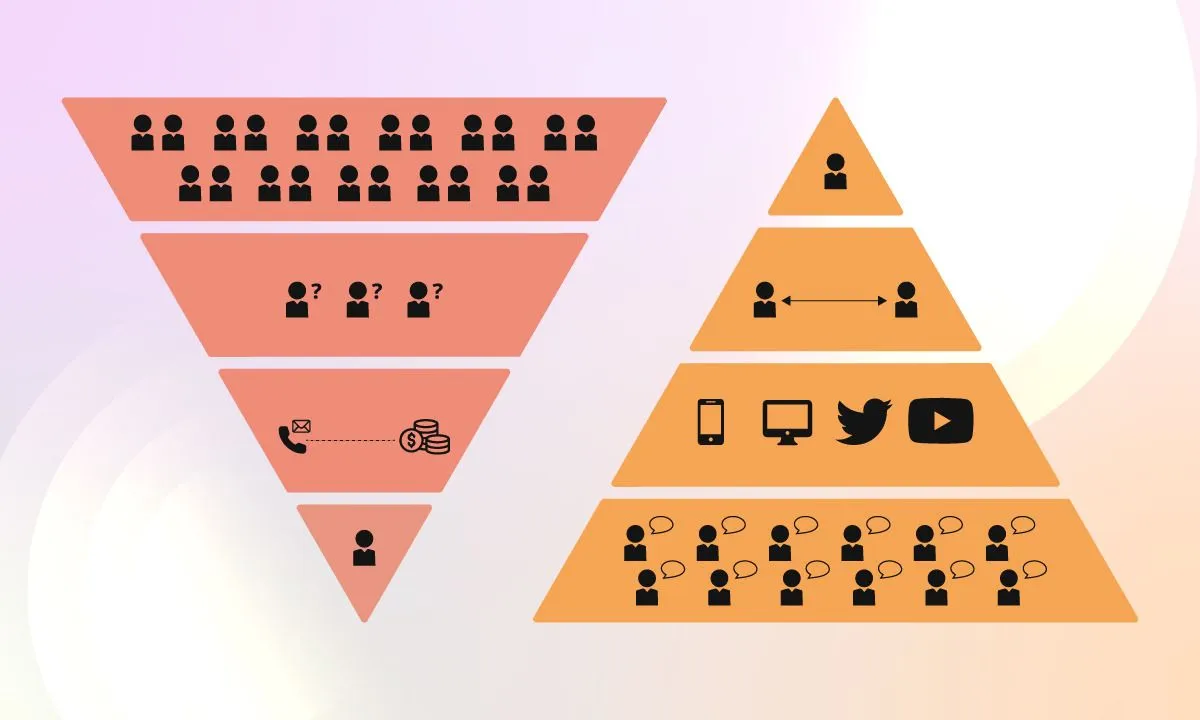
The Upside Down Marketing Funnel often called the inverted funnel challenges the assumption that awareness must always come first. Instead, it starts with your existing customers and uses their loyalty to create a new kind of top-funnel momentum.
In this model:
- Advocacy sits at the top.
- Retention is the core stage of influence.
- Conversions arise from strong relationships.
- Awareness becomes the final outcome, not the starting point.
This approach resembles how modern businesses actually grow:
- A delighted customer writes a glowing review.
- A subscriber shares your email with a colleague.
- A long-term user recommends your solution in a social post.
- A repeat customer talks about their positive experience publicly.
This is authentic, credible, high-trust awareness, driven without a single advertising dollar.
The inverted funnel recognizes that your existing customers hold the power to fuel sustainable growth. Email is the primary engine of this model because it’s direct, personal, and behavior-driven, making it the perfect channel for retention and advocacy.
Why Modern Marketers Are Adopting the Inverted Funnel
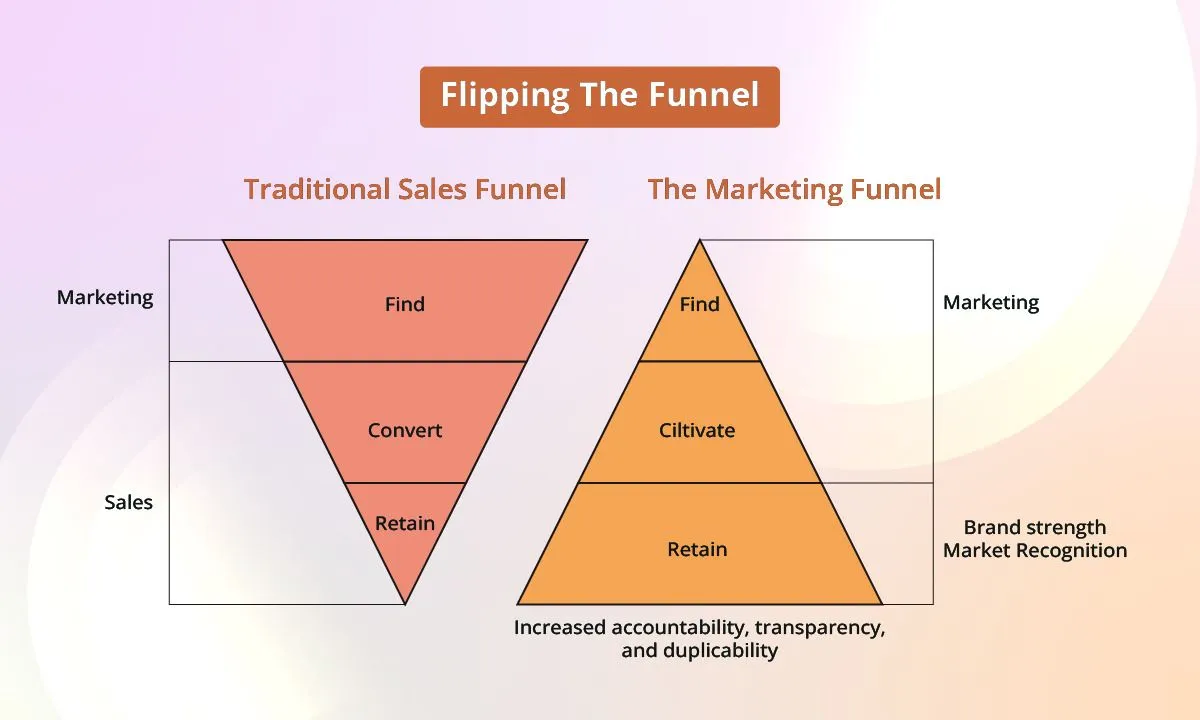
Shifting from awareness-first to customer-first isn’t just a strategic preference it’s a necessity driven by real market conditions.
1. Customer Acquisition Costs Are Increasing
Every year, it becomes more expensive to acquire a new customer. Paid ads deliver diminishing returns. Competition grows. Audiences become saturated.
Retention, on the other hand, remains steady and cost-effective.
2. Trust Is Now the Most Valuable Currency
People don’t trust ads the way they used to. But they trust:
- their peers
- authentic experiences
- honest reviews
- expert recommendations
- organic content
- credible opinion leaders
In an email-centric ecosystem, trust is earned through thoughtful communication, consistent value, and personalized engagement.
3. The Line Between Upper and Lower Funnel Is Blurred
In the traditional model, upper funnel refers to awareness, while lower funnel refers to conversion. But modern buying journeys don’t always follow linear paths.
A customer might start by reading a review, then join your list, then make a purchase within days — bypassing most traditional funnel stages.
The upside down funnel acknowledges this flexibility and aligns your efforts with how customers actually behave.
4. Retention Has Become the True Growth Driver
For subscription businesses, repeat buyers, and long-term relationships, retention is everything. And email is the primary channel for nurturing that retention.
The inverted funnel gives retention the central role it deserves.
How the Upside Down Funnel Works
The inverted funnel has four distinct stages. Unlike the traditional model, these stages represent a relationship sequence rather than a persuasion sequence.
Stage 1: Advocacy (Top of the Inverted Funnel)
In the upside down model, the journey begins with the customers who already know and love your brand. These advocates:
- share your products with others
- write reviews
- engage with your emails
- promote you on social media
- defend your brand publicly
- buy repeatedly
Why start here? Because their authentic enthusiasm is more influential than any paid campaign you could run.
Email marketing amplifies advocacy by:
- automating review requests
- sending referral opportunities
- promoting loyalty tiers
- delivering VIP-only updates
- rewarding engagement with early access
Customer love becomes the driving engine for bringing new people into your world.
Stage 2: Retention & Relationship Building
Retention is where the majority of the revenue happens. And for email marketers, it’s the stage where your automation strategy has the most impact.
Retained customers:
- buy again
- cost less to nurture
- require less persuasion
- offer deeper data insights
- strengthen your overall brand reputation
Email plays a vital role through:
- onboarding sequences
- welcome emails
- post-purchase nurturing
- replenishment reminders
- cross-sell and upsell flows
- personalized product recommendations
- milestone and anniversary campaigns
Mailmunch’s behavior-based automation ensures customers receive messages precisely when they’re most relevant.
In the Upside Down Funnel, retention isn’t the destination it’s the bridge between advocacy and conversion.
Stage 3: Conversion Happens Naturally
When customers feel understood, remembered, and valued, conversions occur more organically. There’s less friction, less convincing, and less resistance.
In B2B, conversions rely on:
- trust
- track record
- relevance
- authority
- clarity
In e-commerce, conversions depend on:
- engagement
- personalization
- timing
- urgency
- ease of purchase
In SaaS, conversions grow through:
- onboarding
- successful usage
- product education
- support
- renewal incentives
Email drives all of these conversion moments with purpose-driven messaging and automated flows like:
- abandoned cart emails
- limited-time offers
- nurture sequences
- reactivation messages
- upgrade prompts
The inverted funnel reframes conversion as a byproduct of relationship-driven engagement rather than a forced stage of persuasion.
Stage 4: Awareness as the Final Outcome
In a traditional funnel, awareness requires significant ad budget. You spend heavily in hopes that visibility will lead to conversions.
But in the Upside Down Funnel, awareness emerges organically from previous stages.
- Advocacy drives conversations.
- Retention drives social proof.
- Conversions drive momentum.
By the time new prospects encounter your brand, they’ve likely already seen:
- a review
- a mention
- a referral
- user-generated content
- a testimonial
- a shared email
This builds trust long before they ever reach your website — and without significant advertising spend.
Visualizing the Upside Down Funnel
To conceptualize the inverted structure, imagine the funnel flipped so the widest stage (advocacy) sits at the top, and awareness — the smallest stage — sits at the bottom.
A simple representation looks like this:
- Advocacy
- Retention
- Conversion
- Awareness
This visual reflects the mindset shift: your most valuable customers drive the very top of your growth engine.
Email nurtures every layer of this model, making it the most efficient channel for executing the Upside Down Funnel.
Funnel Marketing Strategy for Implementing the Upside Down Model
Implementing the Upside Down Funnel requires intention, structure, and focus. For email marketing executives and managers, the strategy revolves around automating experiences across all four stages.
Here’s how to bring it to life:
1. Build Strong Onboarding
Welcome sequences should:
- educate
- guide
- inspire
- segment customers quickly
- set expectations
- highlight benefits
2. Prioritize Retention-Focused Automation
Retention is built through meaningful touchpoints delivered consistently.
Effective retention flows include:
- post-purchase emails
- how-to guides
- usage tips
- personalized product suggestions
- educational content
- loyalty rewards
- re-engagement sequences
3. Collect Feedback & Close the Loop
Customer feedback is essential to growing advocacy.
Ask customers for:
- reviews
- testimonials
- product ratings
- insights on experience
- suggestions
Mailmunch’s automation makes gathering feedback effortless.
4. Upgrade Segmentation Practices
Instead of blasting broad lists, categorize customers by:
- engagement
- lifecycle position
- purchase history
- browsing behavior
- email interactions
5. Activate Advocacy Opportunities
Advocacy should be easy, accessible, and rewarding.
Offer:
- referral incentives
- shareable content
- early access to launches
- exclusive benefits for loyal customers
Applying the Upside Down Funnel to B2B, E-Commerce, and SaaS
B2B Marketing Funnel
B2B buyers rely heavily on trust, credibility, and value. Long sales cycles are driven more by relationship quality than awareness.
The inverted funnel supports B2B by:
- leveraging client success stories
- using retained customers to drive referrals
- nurturing accounts through email sequences
- providing personalized content based on behavior
A B2B buyer brought in through advocacy often bypasses months of traditional nurturing.
E-Commerce Marketing Funnel
Retention is one of the biggest revenue drivers in e-commerce. Repeat customers:
- buy more often
- spend more per purchase
- refer others more readily
The inverted funnel strengthens:
- post-purchase messaging
- personalized recommendations
- loyalty and VIP rewards
- abandoned cart flows
- UGC-driven advocacy
Email automation amplifies every part of the e-commerce customer journey.
SaaS & Digital Products
SaaS businesses thrive on long-term customer relationships. Onboarding, adoption, and support are critical for reducing churn and increasing lifetime value.
The inverted funnel aligns perfectly with SaaS by:
- elevating retention as the core profit driver
- boosting advocacy through strong customer outcomes
- creating built-in awareness from user communities
- supporting upsells and expansions through targeted emails
The more successful your customers are, the stronger your growth engine becomes.
Key KPIs for an Upside Down Funnel
To execute this model effectively, email marketing executives must monitor the metrics that reflect customer experience and loyalty.
| Category | KPIs |
|---|---|
| Advocacy KPIs | Referral rate Review frequency User-generated content volume NPS-inspired sentiment metrics |
| Retention KPIs | Churn rate Repeat purchase rate Subscription renewal rate Email engagement metrics Active subscriber health score |
| Conversion KPIs | Conversion rate by segment Cart recovery performance Lead-to-customer ratio |
| Awareness KPIs | Branded search volume Organic traffic Share-driven email signups |
Benefits of Switching to the Upside Down Marketing Funnel
Shifting your strategy delivers measurable benefits:
| Benefit | Description |
|---|---|
| Lower Acquisition Costs | You rely less on paid ads and more on satisfied customers. |
| Higher Customer Lifetime Value | Retention becomes the central performance driver. |
| Better Use of Email Marketing | Automation and segmentation perform best in a retention-first framework. |
| Stronger Brand Loyalty | Deep relationships translate into long-term advocacy. |
| Sustainable, Organic Growth | Awareness becomes authentic, organic, and cost-efficient. |
Is the Upside Down Funnel Right for Your Business?
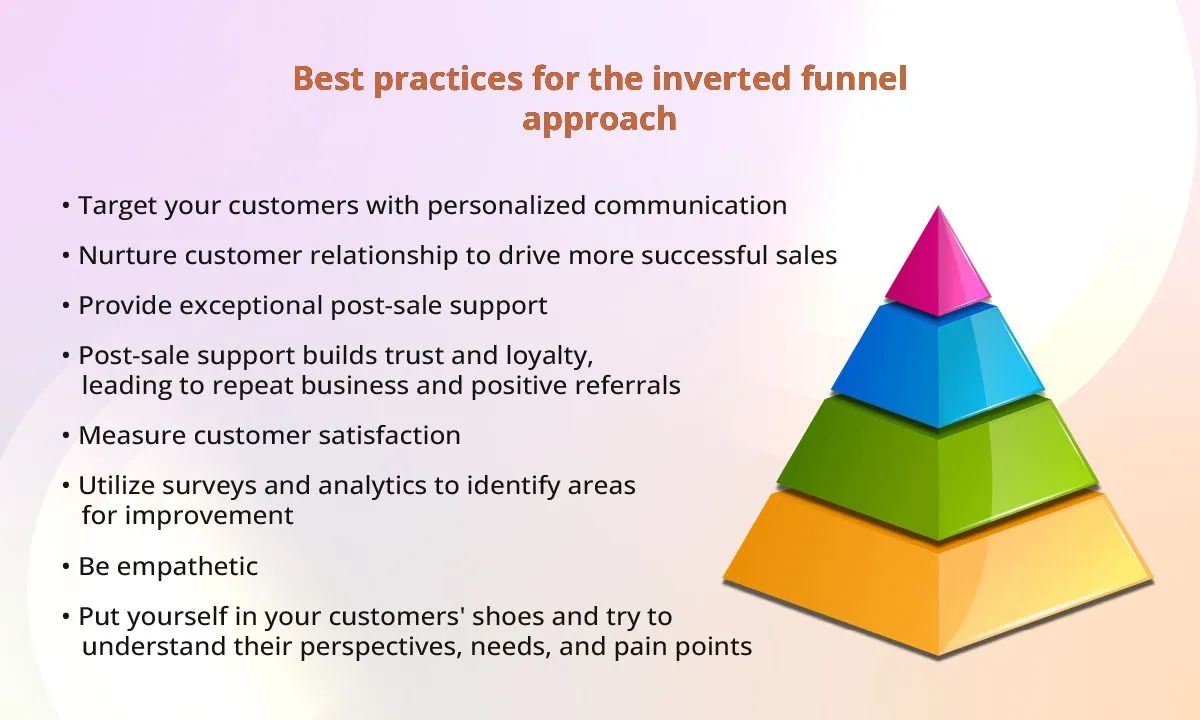
The inverted funnel model isn’t a universal solution, but it delivers exceptional results for certain types of businesses. It’s especially effective for companies that:
- Rely on repeat purchases
Businesses with recurring revenue or frequent buying cycles benefit the most because nurturing existing customers directly fuels revenue. When customers come back again and again, retention becomes a far more efficient growth engine than acquisition. - Have long sales cycles
If your product or service requires time, research, or multiple touchpoints before purchase, building trust early and consistently re-engaging customers is essential. The upside-down funnel helps streamline this journey and improves conversions over time. - Depend heavily on customer trust
Brands in finance, health, education, or any industry where credibility drives decisions can leverage this model to deepen relationships. A retention-first approach ensures customers feel supported before and after buying. - Use email as a core marketing channel
Email is one of the strongest tools for lifecycle marketing. Companies already investing in automation, segmentation, onboarding flows, and personalized messaging get immediate performance improvements by placing retention at the center. - Want to grow sustainably
For teams looking to reduce reliance on paid ads and avoid rising customer acquisition costs, this model supports long-term, cost-efficient expansion. It builds a self-sustaining growth loop fueled by loyalty and advocacy.
If your strategy includes lifecycle automation, customer success, post-purchase engagement, or community-driven growth, the upside-down funnel is not just a match—it’s likely the framework that will help you scale with more efficiency and predictability.
Conclusion: Build a Customer-First Funnel with Mailmunch
The Upside Down Marketing Funnel reflects how real customer relationships work today. It prioritizes loyalty over reach, retention over fleeting attention, and long-term relationships over short-term conversions.
For email marketing executives and managers, this model turns your most powerful asset, your existing customers, into the driving force behind sustainable growth. And with Mailmunch’s automation, segmentation, and lifecycle tools, executing the inverted funnel is both simple and scalable.
When you make retention and advocacy the center of your strategy, awareness takes care of itself.