Customer Segmentation – What It Is, Why It Matters, and How to Get It Right

Ayesha Ejaz Last updated on

In a world where customers expect more than just a product, they want an experience. Businesses need to understand what their customers want and who they truly are. That’s where customer segmentation steps in.
Customer segmentation is more than just a marketing tactic; it’s the key to creating meaningful, lasting relationships with your audience. Whether you're a new entrepreneur or running an established brand, customer segmentation can help you stop guessing and start connecting.
This guide walks you through the what, why, and how of this essential marketing approach, using real-life examples and practical strategies.
What is Customer Segmentation?
Before diving into strategies and tools, let’s take a step back and look at the big picture. Customer segmentation is more than a technical marketing term—it’s a practical approach to treating people like people.
It’s about asking, “Who are my customers, really?” and using the answers to shape how you communicate, what you offer, and where you show up.
It doesn’t matter if you're new to marketing or looking to refine your approach, understanding customer segmentation is the first step toward delivering experiences that resonate personally?
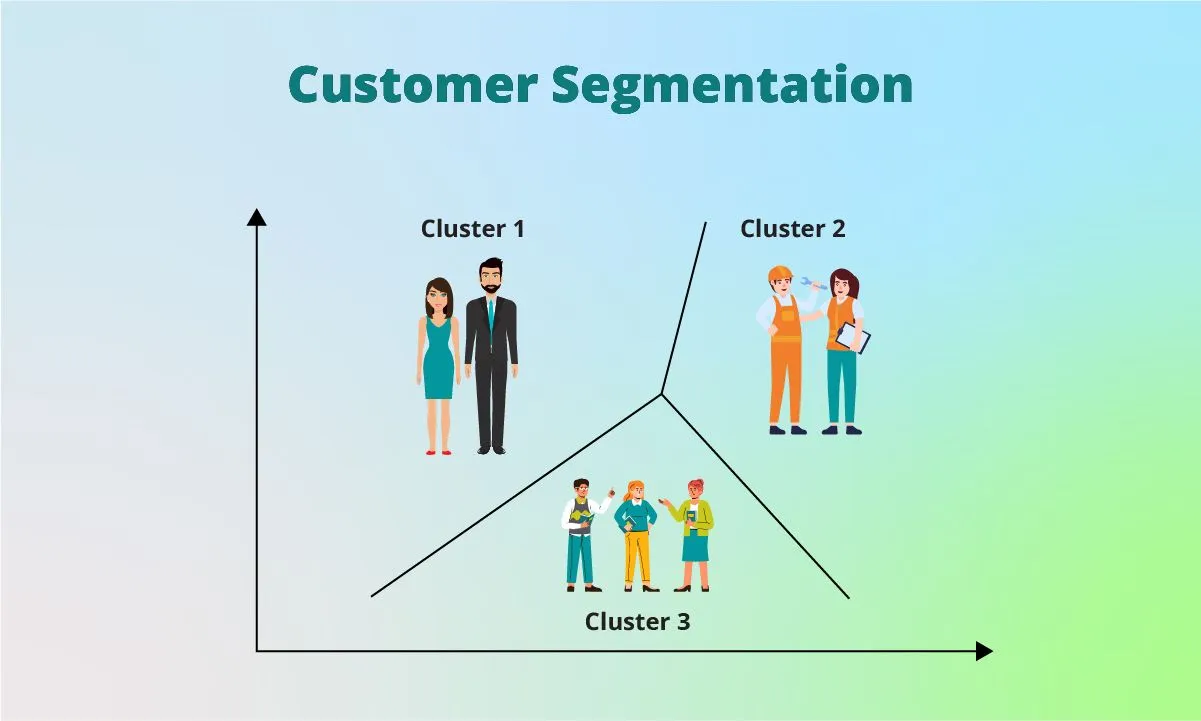
Customer Segmentation
Imagine trying to talk to every customer the same way. It doesn’t work. People are different, and customer segmentation helps you recognize and act on those differences.
Segmentation divides your customer base into smaller, more manageable groups based on behavior, demographics, or interests.
Instead of broadcasting a general message, segmentation lets you personalize your communication so it lands exactly where it should—with the right people.
Importance of Customer Segmentation
When you treat your customers like individuals rather than data points, you build trust. That’s why customer segmentation is so powerful.
Businesses that master segmentation see more loyal customers, stronger engagement, and campaigns that work.
With tools like AI and machine learning, it’s easier than ever to group your audience in meaningful ways based on how they shop, browse, and engage.
Types of Customer Segmentation
Getting segmentation right means knowing the different ways to break down your audience. Each type of segmentation gives you a unique lens to understand your customers better.
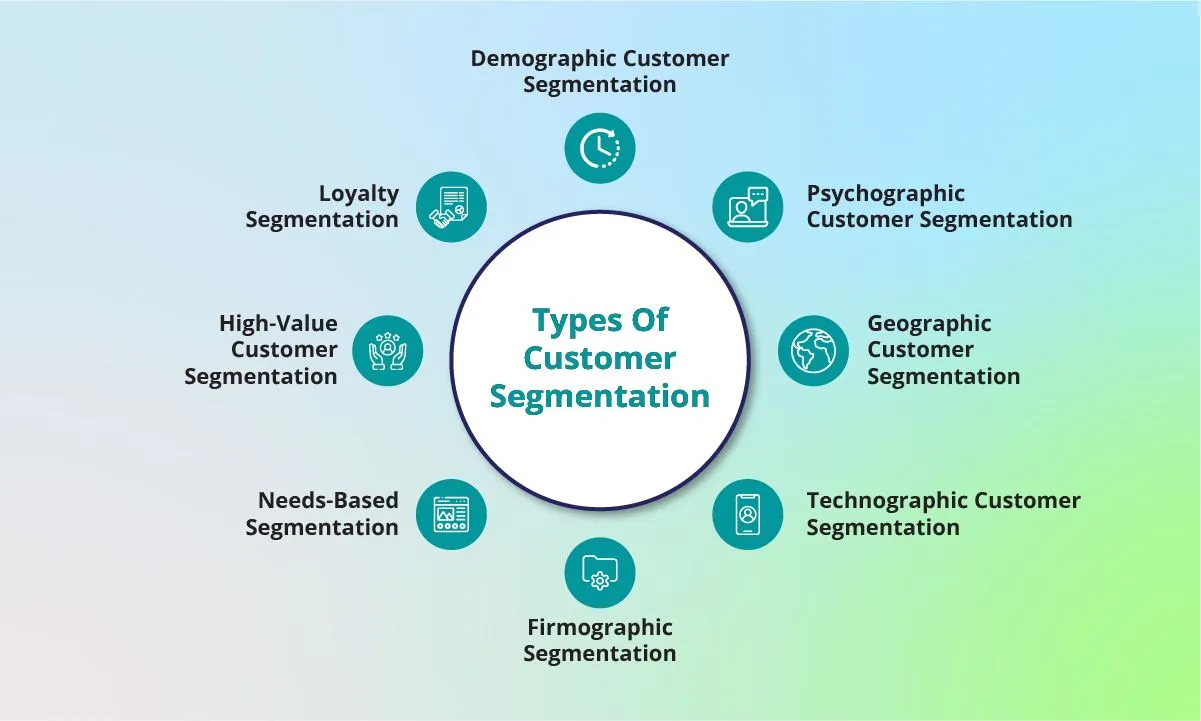
Demographic Segmentation
Think of this as the basics: age, gender, income, job title, and education level. This kind of segmentation is a great place to start and often reveals strong patterns, especially in retail and direct-to-consumer businesses.
Geographic Segmentation
Where someone lives can say a lot about what they value. With geographic segmentation, you’re tapping into preferences shaped by culture, climate, or community, whether your customer is in a bustling city or a small town.
Behavioral Segmentation
This one’s all about actions. What do people buy? How often? Do they open your emails? Behavioral segmentation turns user activity into powerful insights, mainly for SaaS businesses and digital platforms.
Psychographic Segmentation
Here you’re diving into what makes your customers tick, by which we mean their attitudes, values, and lifestyles. This helps you build brand messaging that goes beyond products and into emotional resonance.
B2B Customer Segmentation
Selling to other businesses? Your approach needs to change. B2B customer segmentation focuses on factors like industry type, company size, buying cycle stage, and who’s making the decisions. The right segmentation can mean the difference between a stalled pitch and a signed contract.
Retail Customer Segmentation
Retailers live and die by customer behavior. Segmenting based on shopping frequency, average spend, and seasonal preferences helps stores create more timely and appealing promotions. This, in turn, helps retailers identify items and areas to improve to gain the buyers' attention.
Customer Segmentation Models and Frameworks
Customer segmentation models are your compass if you're a business owner looking to make smarter marketing decisions.
They help transform raw customer data into clear, actionable insights that guide you toward more targeted campaigns and efficient resource allocation.
Think of these frameworks as your strategy toolkit—each one helping you identify your best customers and how to speak to them in a way that drives loyalty, purchases, and long-term growth.
Whether trying to reduce churn, upsell to high-value clients, or better understand your audience, using the right model can sharpen your focus and maximize your marketing ROI.
Here are three of the most effective models you can use today: There’s no one-size-fits-all. These frameworks structure your strategy, depending on your business needs and customers' behavior.
RFM (Recency, Frequency, Monetary) Model
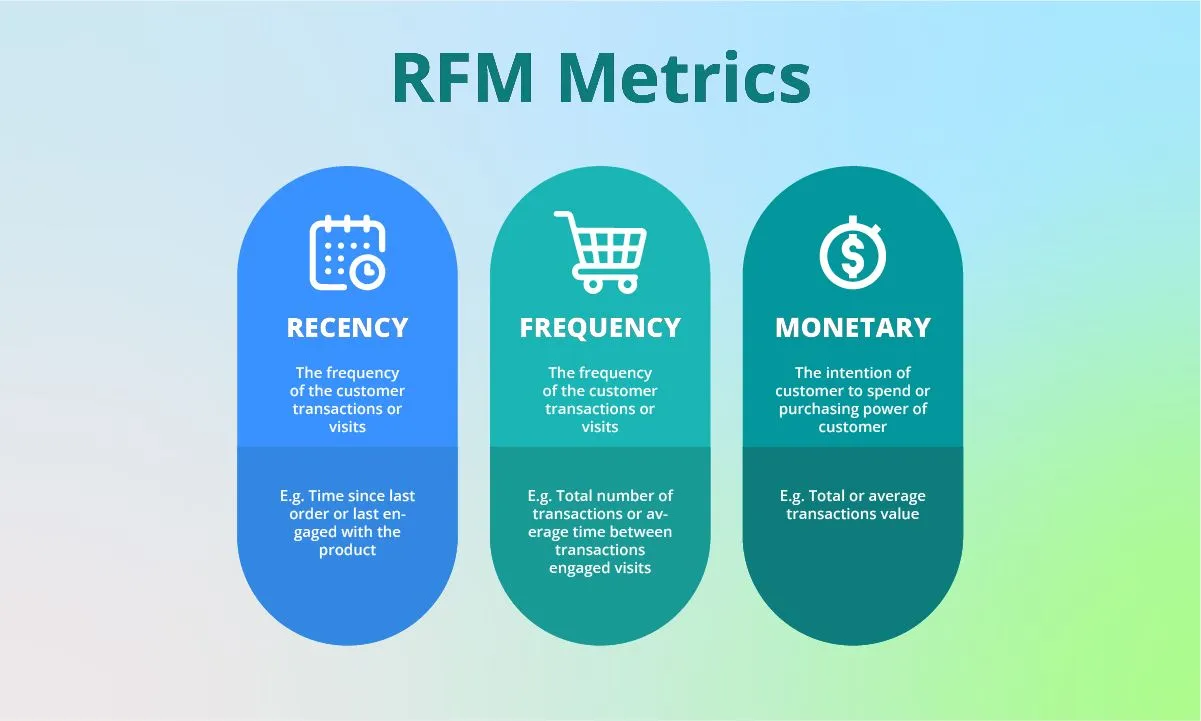
The RFM model is a favorite among marketers because it's straightforward yet incredibly effective. This model segments your customers based on three key behaviors:
- Recency: When was the last time a customer made a purchase?
- Frequency: How often do they buy from you?
- Monetary: How much do they spend on average?
If you're a business owner trying to identify your high-value customers quickly, RFM gives you a clear snapshot. For instance, a customer who has purchased recently, buys frequently, and spends a lot is someone you want to keep engaged with loyalty rewards or exclusive offers. Conversely, a customer who hasn't purchased in a while might be a good fit for a re-engagement campaign.
With RFM, you're not just guessing who matters most—working from real, actionable data. Plus, it’s easy to implement using tools like spreadsheets, CRMs, or marketing platforms with built-in scoring systems. This model can be your launchpad for more intelligent segmentation and profitable customer relationships. This tried-and-true model tells you who your most valuable customers are based on when they last bought, how often they purchase, and how much they spend. Simple, practical, and actionable.
CLV (Customer Lifetime Value) Model
When you're running a business, it's tempting to focus all your attention on getting new customers, but what about those already with you?
The CLV model is designed to help you identify and nurture those customers who are most likely to stick around and deliver long-term value.
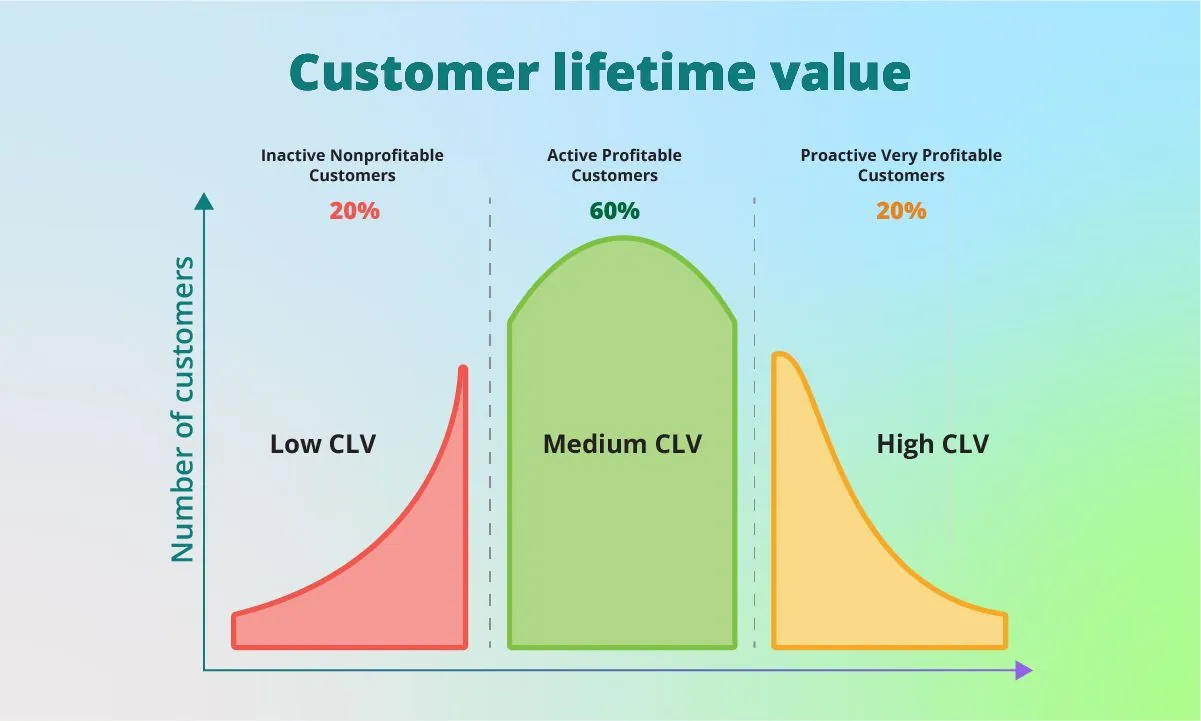
Customer Lifetime Value (CLV) measures the total revenue a customer is expected to generate throughout their relationship with your brand. By segmenting your audience based on their CLV, you can prioritize your marketing efforts, budget, and support resources in a way that maximizes impact.
For example, if data shows that a specific segment of customers tends to make repeat purchases over two years and refers others to your business, those customers are gold. You can reward them with loyalty programs, exclusive access, or upsell opportunities that match their preferences.
Meanwhile, you can also create strategies to increase the CLV of less engaged segments by improving onboarding, support, or personalization.
For any business aiming to scale sustainably, CLV isn't just a metric—it's a mindset. It shifts your focus from short-term wins to building relationships that pay off over time.
Not all customers bring the same value over time. CLV modeling helps you focus on the people likely to stick around and spend more, so you can invest in the most important relationships.
AI-Powered Models
As customer data becomes increasingly complex, AI-powered segmentation models offer business owners a more innovative, scalable solution to targeting the right audience at the right time.
Instead of relying on traditional manual methods, AI uses advanced algorithms to quickly and with surprising accuracy identify trends and behaviors across vast amounts of customer data.
Why Business Owners Should Consider AI Segmentation:
- Advanced Pattern Recognition: AI can detect micro-segments within your audience by analyzing thousands of data points like purchase history, website activity, interaction time, device used, and even social media behavior.
- Real-Time Personalization: AI models update themselves continuously. This means your campaigns stay relevant and respond instantly to customer behavior changes—no lag time, no outdated data.
- Scalability: Whether you have hundreds or millions of customers, AI adapts to your business size and goals, making it ideal for scaling personalized experiences.
- Improved ROI: Targeted, AI-driven segments perform better across email campaigns, ads, and product recommendations, helping you reduce wasted spending and maximize conversions.
How You Can Use AI-Powered Segmentation in Your Business:
- Launch personalized product recommendations based on real-time customer interests.
- Trigger automated emails when customers show signs of churn.
- Identify high-LTV customers early and target them with loyalty programs.
- Segment based on engagement trends to refine ad targeting.
In short, AI segmentation isn't just for tech giants anymore. With affordable tools available, any business owner can tap into data-backed decision-making that once required an entire analytics team. It’s fast, intelligent, and tailored to modern customers' behavior, giving you an edge in a competitive market.
How to Conduct Customer Segmentation Analysis
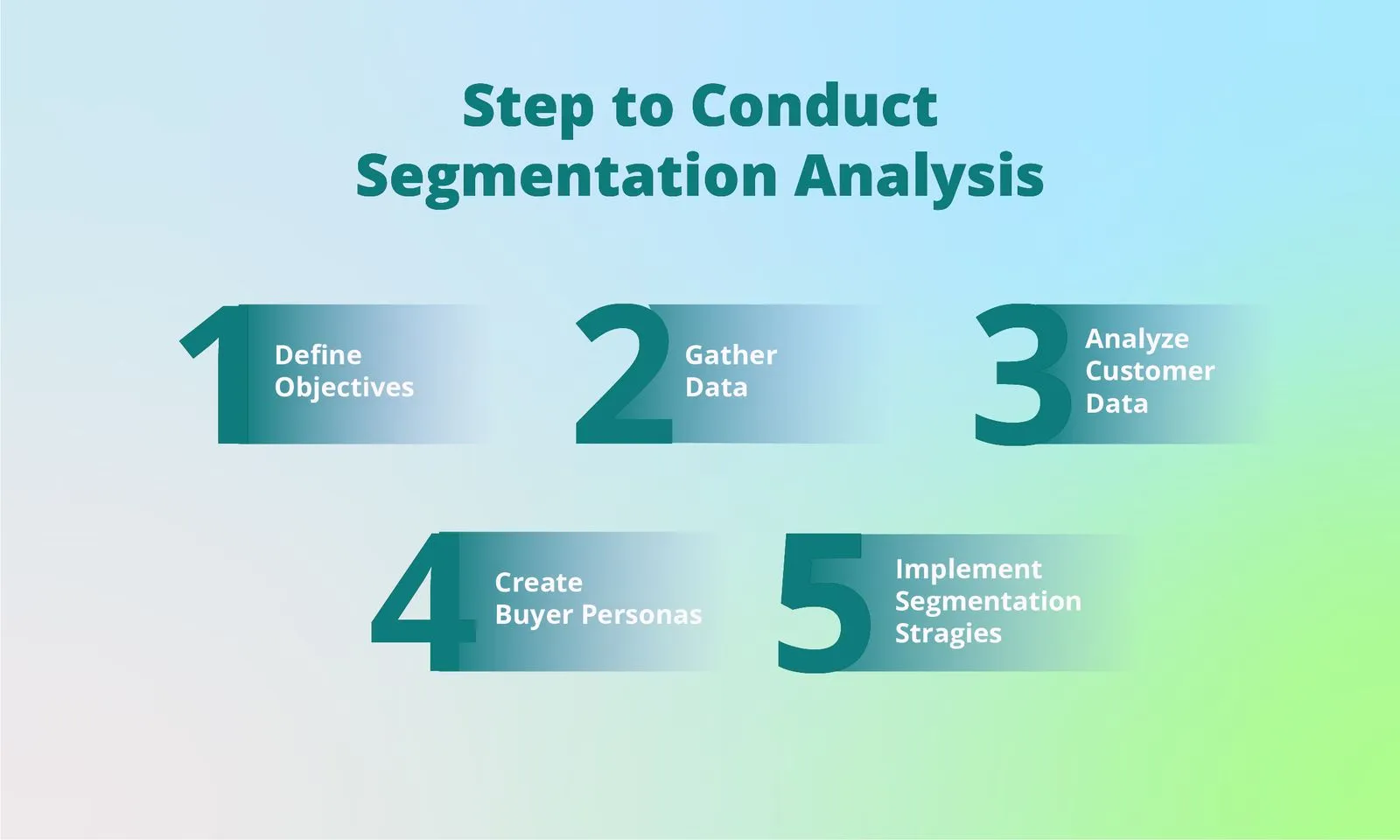
Every analysis requires certain steps to be followed to ensure that the analysis is done in a correct and cohesive manner.
Here are the four crucial steps you need to follow to ensure that your customer segmentation analysis is conducted properly.
Step 1: Gather First-Party and Behavioral Data
First, you must gather industry data and analyze market trends over time. You can collect this data annually or quarterly to get an idea of your service's clients/customers.
This data collection allows you to create a robust buyer persona, which is important because you want to know who your customers are and what they want to purchase.
You should ask what products/services are attracting customers and whether your company is catering to their needs and desires.
Step 2: Define Your Segmentation Goals
Based on the data you have received, such as the demographics of your customers and their behaviour, you can define your segmentation goals.
By examining the data provided, you can identify which type of audience you would like to cater your services to and which customers are loyal to your brand.
Segmentation in this step of the analysis can be rough, as you are going to refine your segments more as the analysis progresses.
Step 3: Apply Statistical or Machine Learning Models
Once you’ve set clear goals, it’s time to put data to work. Applying statistical and machine learning models helps uncover natural groupings within your audience that might not be obvious at first glance.
Statistical Models:
- K-Means Clustering: Groups customers based on similarities in behavior, demographics, or engagement levels.
- Hierarchical Clustering: Builds a tree of customer relationships based on data proximity.
- Decision Trees: Useful for classifying customers based on a series of decision rules (e.g., high spenders vs. low spenders).
These techniques are ideal for businesses with structured data that want interpretable, rule-based groupings.
Machine Learning Models:
- Supervised Learning (e.g., Logistic Regression, Random Forest) helps predict outcomes like churn risk or likelihood to convert based on labeled training data.
- Unsupervised Learning (e.g., Neural Networks, DBSCAN): Detects complex patterns across high volumes of customer data, ideal for discovering hidden micro-segments.
Business Owner Takeaway:
You don’t have to be a data scientist to benefit from these models. Many CRM and marketing automation platforms offer built-in segmentation tools powered by machine learning.
Even spreadsheet-based tools can perform basic clustering with the correct setup. Using these models, you go beyond intuition and begin segmenting based on objective evidence, setting yourself up for more intelligent targeting, better messaging, and measurable impact.
You don’t need to be a data scientist. Tools like AI segmentation platforms or simple spreadsheet models can help you find patterns and groupings.
Step 4: Validate Segments with Testing & Research
To validate your customer segmentation, you can check how customers react to changes you make to your business, such as a change in pricing, an email advertisement, or the introduction of new products.
To learn about customer engagement with your changes, you can interview customers, conduct surveys, or offer a feedback option on your website.
These methods provide more evidence and information about your customers.
Real-World Customer Segmentation Examples
Seeing customer segmentation in action can help bring its value into focus. Many well-known brands have transformed their marketing strategies and improved customer loyalty through smart, data-driven segmentation techniques.
Here are a few real-world examples that highlight how effective segmentation can be:
e-Commerce and Retail
Amazon uses behavioral segmentation to track and predict user interests. By analyzing browsing history, previous purchases, and even wish lists, it serves hyper-personalized recommendations that significantly increase average order value.
Sephora, a leading beauty retailer, segments customers by purchase behavior and preferences. Their Beauty Insider loyalty program uses tiered segmentation to offer rewards, early access, and personalized product recommendations based on individual customer profiles.
A smaller skincare brand noticed that younger customers preferred bundled product sets, while older customers tended to purchase individual items. By running age-based email campaigns with customized offers, they boosted conversion rates by over 20%.
SaaS and B2B
Dropbox segments users based on usage patterns. Light users are nudged with feature tips to boost engagement, while power users receive tailored offers for team collaboration plans. This approach has helped Dropbox increase feature adoption and reduce churn.
HubSpot targets different personas in their marketing: small business owners, marketing managers, and enterprise users, with segmented content, onboarding workflows, and product recommendations. Each segment experiences a tailored journey based on their needs.
A time-tracking SaaS platform found freelancers engaging mainly with solo productivity tools, while agency teams used advanced reporting features. To serve each group more effectively, they developed different onboarding experiences.
Hospitality and Travel
Airbnb segments hosts and guests differently. Guests see property recommendations based on past stays, budget, and location searches.
Hosts receive personalized updates and tips based on listing performance and market demand.
A global hotel chain segmented guests into vacationers and business travelers. They offered extended-stay packages and remote work amenities to digital nomads, while promoting weekend getaway deals to leisure travelers, resulting in a measurable increase in bookings.
Healthcare and Finance
Mint, the personal finance app, uses segmentation to recommend financial tips, tools, and offers. For example, a college student might receive budget tips, while a high-income professional might see investment opportunities.
American Express segments customers based on card usage and travel habits. Frequent travelers are offered perks like airport lounge access, while high spenders receive invitations to exclusive events or early product access.
A fintech startup used behavioral segmentation to identify users who frequently missed payment deadlines. They introduced personalized nudges, reminder notifications, and flexible repayment options, cutting late payments by 15%.
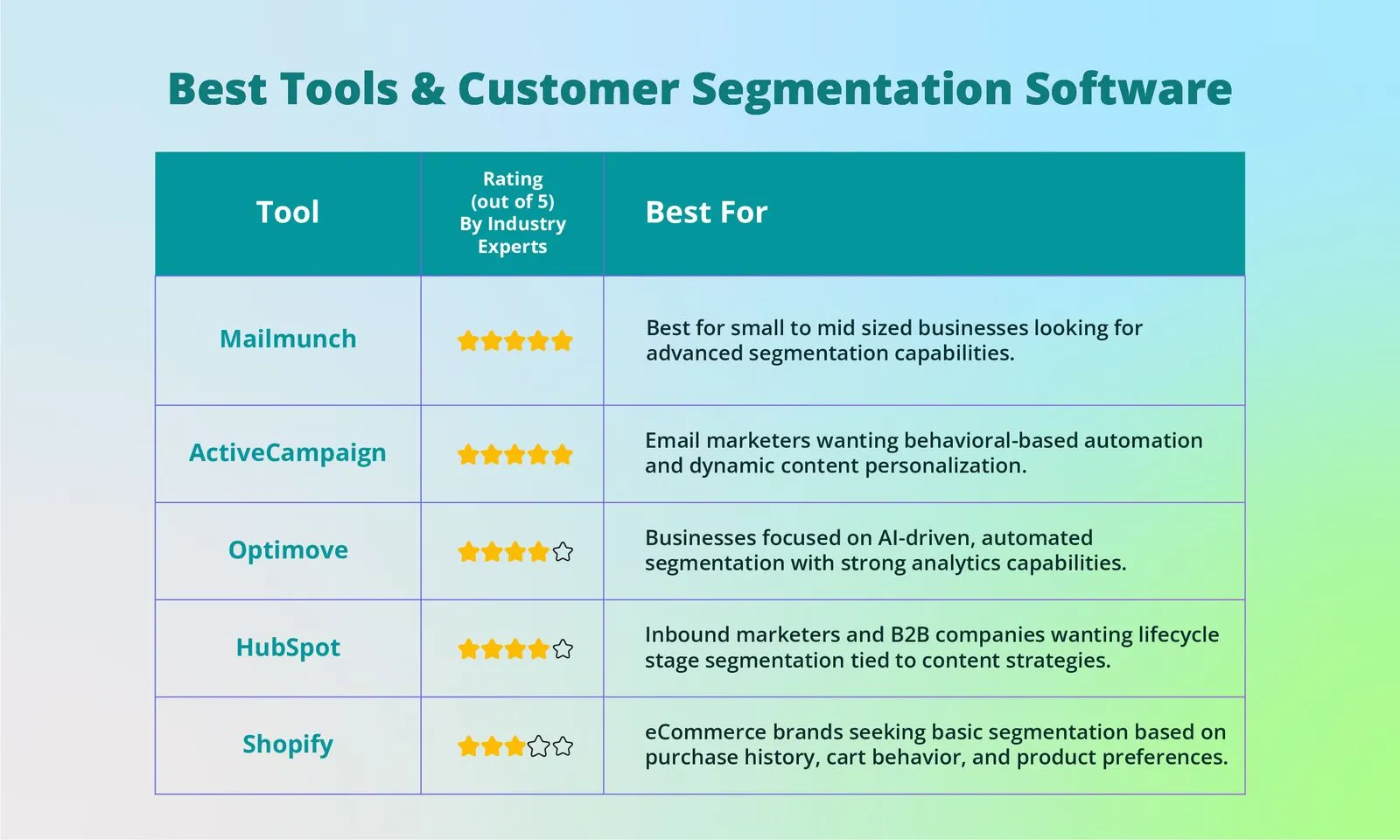
Best Tools and Customer Segmentation Software
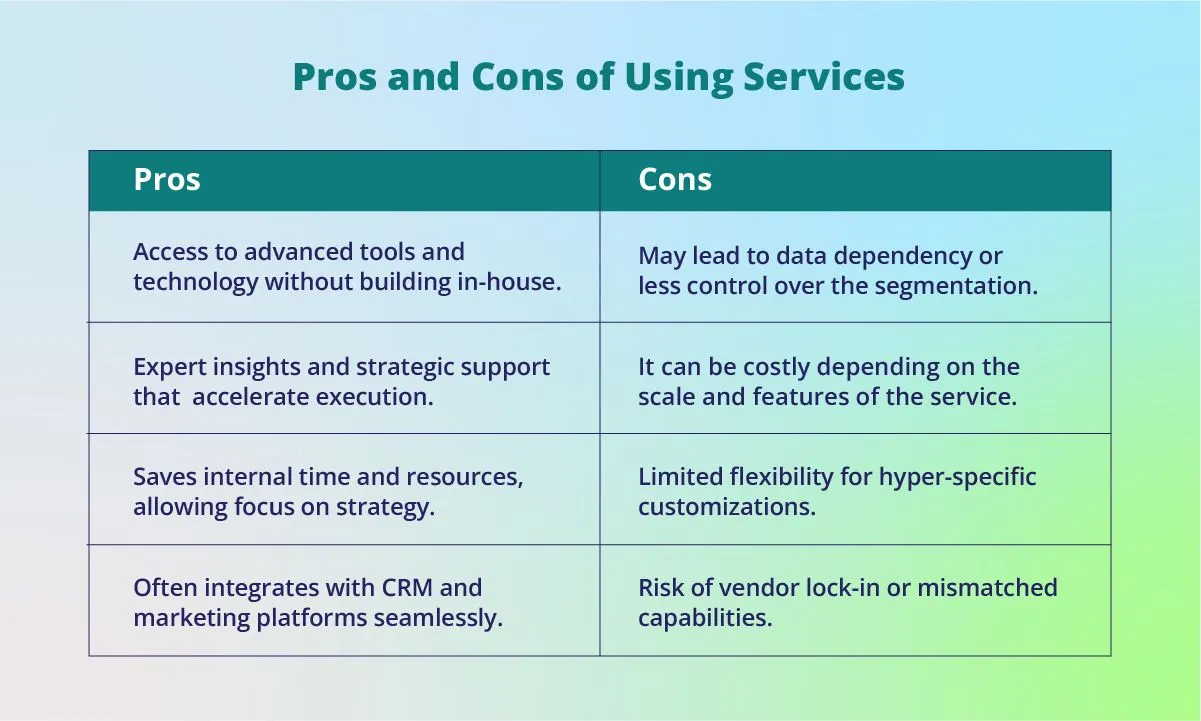
Pros and Cons of Using Services
What to Look for in a Vendor
Choosing the right vendor is important, as they are the people and services you will be interacting with the most. So, before you choose a vendor, here are a few things you should consider.
- Real-Time Updates: Ensure the platform can automatically update segments as new data becomes available, allowing you to react quickly to changing customer behaviors.
- User-Friendly Dashboards: Look for an intuitive interface that allows marketers and non-technical teams to manage and analyze customer segments easily.
- Multichannel Support: The best platforms support email, SMS, push notifications, and web personalization so you can engage customers where they are.
- Machine Learning Capabilities: Opt for solutions that offer AI-driven insights and predictive segmentation to help you get ahead of customer needs before they even surface.
- Customizable Workflows: Flexibility is key; choose vendors that let you tailor segmentation rules and triggers to suit your unique marketing strategy.
- Integration Compatibility: Confirm that the service integrates smoothly with your existing tools, such as CRMs, analytics platforms, and e-commerce systems, to maintain a unified data flow.
Challenges in Customer Segmentation
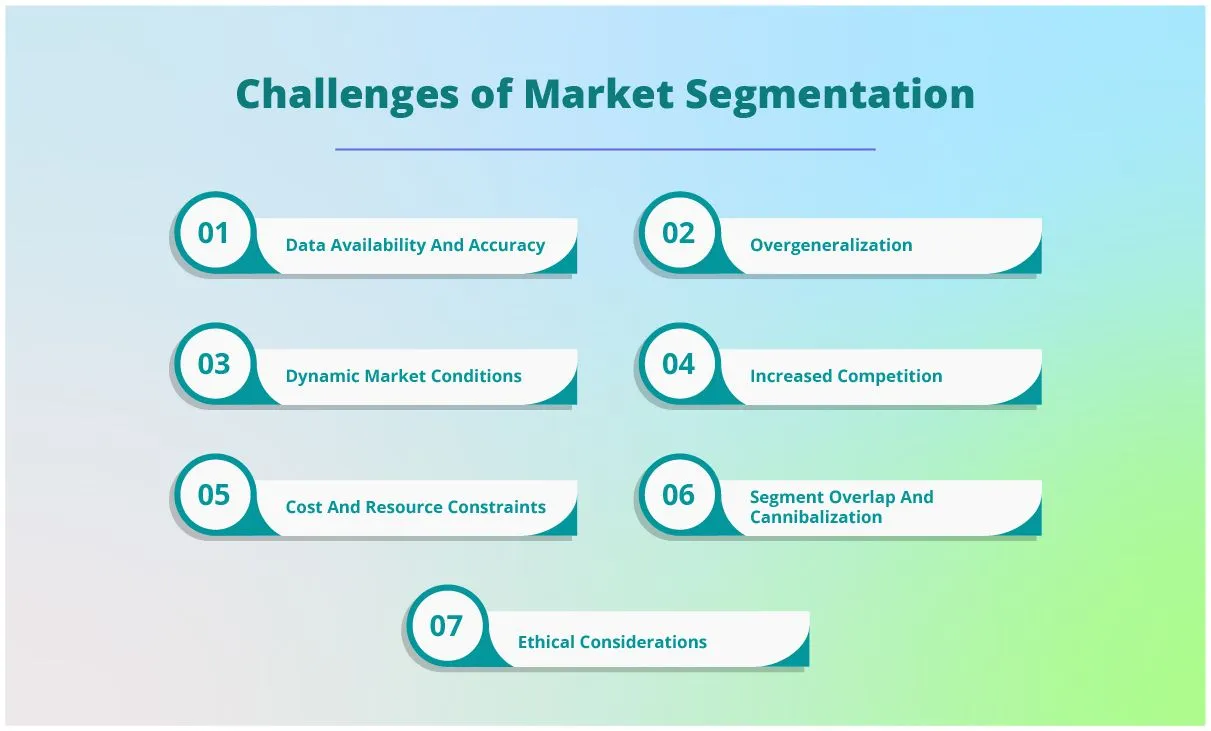
While customer segmentation offers significant rewards, executing it effectively isn’t always straightforward.
Business owners and marketing managers often encounter several practical challenges, especially as their customer base and data complexity grow.
Here are some of the most common hurdles:
- Poor Data Quality: Inaccurate, outdated, or incomplete customer data can lead to misleading segments. Without reliable data, your segmentation strategy loses its foundation.
- Data Silos Across Departments: When marketing, sales, and customer support teams use disconnected systems, it becomes difficult to get a unified view of your customers.
- Over-Segmentation: Creating too many micro-segments can make it hard to scale campaigns and stretch internal resources too thin.
- Lack of Clear Objectives: Segmenting without a defined goal, such as boosting conversions or reducing churn, can result in directionless campaigns that fail to deliver ROI.
- Limited Access to Technology: Small businesses or non-technical teams may struggle to access or operate advanced segmentation tools or machine learning platforms.
- Privacy and Compliance Concerns: Data protection regulations like GDPR and CCPA require responsible and transparent management of customer data.
- Difficulty Measuring Success: Without proper tracking and attribution models, it can be hard to assess which segments are truly delivering business results.
- Resistance to Change: Teams used to blanket marketing tactics may resist shifting to a more targeted, data-driven approach, requiring cultural change and internal buy-in.
Understanding these challenges is the first step toward overcoming them. By addressing these pain points early on, businesses can ensure their customer segmentation strategies are built to scale and succeed.
Conclusion
Customer segmentation isn’t just for big companies or marketing pros; it’s for anyone who wants to understand their audience better and make smarter decisions.
By grouping your customers into meaningful segments, you can connect with them in ways that actually matter.
Don’t aim to reach everyone with one message. Instead, speak directly to your customer segments, because when your message feels personal, your results speak for themselves.
Start building more innovative marketing campaigns with intelligent customer segmentation today.
FAQs
What is customer segmentation in simple terms?
In the simplest of terms, customer segmentation is the art of grouping people who share similar characteristics so you can better understand and serve them.
What are the most common types of customer segmentation?
The most common and significant customer segmentation types are:
- Demographic
- Geographic
- Behavioral
- Psychographic
- B2B
What are customer segmentation models used for?
Customer segmentation helps organize your data and strategy so you can identify your most valuable customers and how to connect with them.
What tools can help with customer segmentation?
Platforms like Mailmunch, ActiveCampaign, Optimove, HubSpot, and Shopify all offer powerful segmentation features.
Is customer segmentation only for large businesses?
Not at all. It doesn’t matter if you have 100 customers or 100,000, segmentation can help you grow faster and smarter.