Customer Lifecycle Segmentation: Strategies to Maximize Customer Value and Engagement

Ayesha Ejaz Last updated on
In a world where consumers expect tailored experiences at every touchpoint, simply knowing who your customers are isn’t enough anymore.
You need to understand where they are in their journey with your brand. Enter Customer Lifecycle Segmentation, a more innovative, intuitive way to connect with your audience at every step of their experience.
Rather than relying solely on demographics or assumptions, lifecycle segmentation helps businesses use real-time behavioral data to meet customers with precisely what they need, when they need it.
Whether nurturing a curious lead, encouraging a second-time buyer, or winning back a disengaged customer, this approach enables marketers to humanize communication and drive real results.
What is Customer Lifecycle Segmentation?
Definition of customer lifecycle segmentation
Customer Lifecycle Segmentation is the practice of grouping your audience based on their stage of relationship with your brand. These stages often include awareness, consideration, purchase, retention, and advocacy.
It’s not just about knowing who your customer is; it’s about learning how they feel, what they need, and what actions they will likely take next.
Customer segmentation vs. lifecycle segmentation
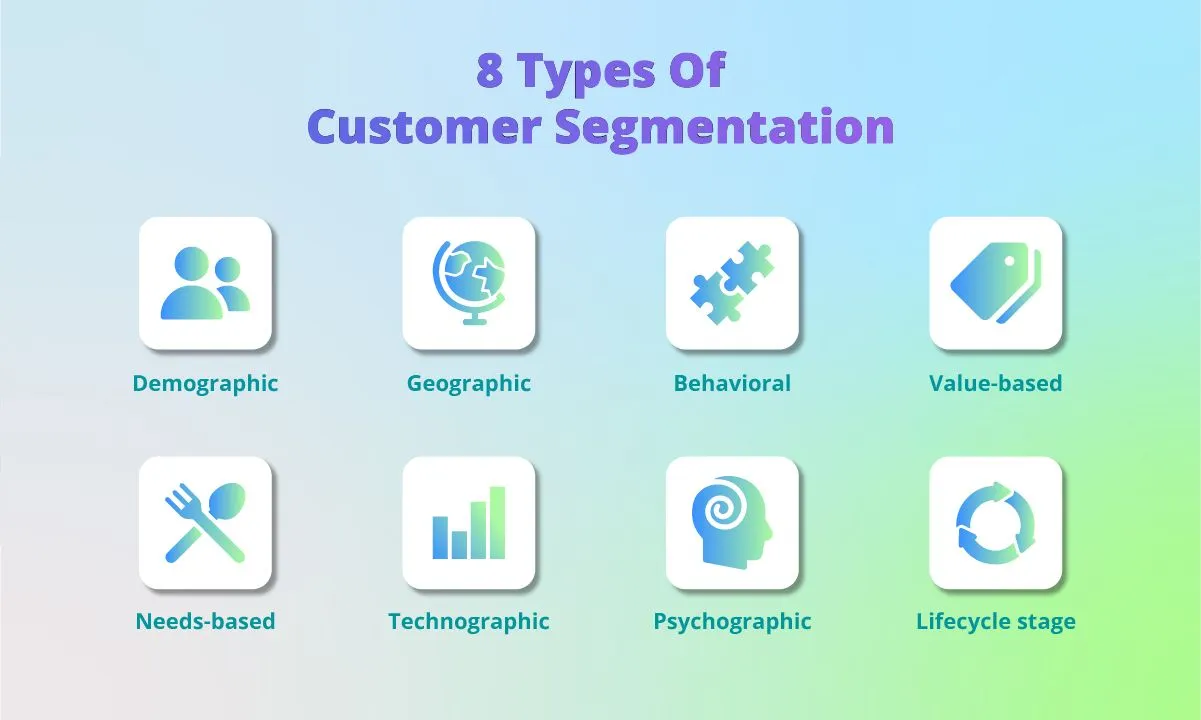
Traditional segmentation may tell you that a customer is a 35-year-old woman living in Seattle. But lifecycle segmentation tells you that she just abandoned a cart, opened your last email, and hasn’t bought anything in 30 days. Which would you rather act on?
While demographic segmentation tells you who someone is, lifecycle segmentation tells you what they’re doing and why it matters now.
Why lifecycle-based segmentation is crucial for modern marketers
Marketing without context is like trying to sell umbrellas on a sunny day. Lifecycle segmentation provides the context. It allows you to craft campaigns that feel intuitive and timely because they are. This strategy helps reduce churn, increase customer satisfaction, and improve conversion rates across the board.
Understanding the Customer Lifecycle Journey
Before you can effectively segment your audience, you need to grasp the full arc of the customer lifecycle.
This journey is more than just a series of transactions; it reflects how individuals discover, evaluate, purchase from, and stay connected with your brand.
Understanding the emotional and behavioral drivers behind each stage allows marketers to create experiences that feel personal, intentional, and relevant at every turn.
Overview of the five core stages of the customer lifecycle
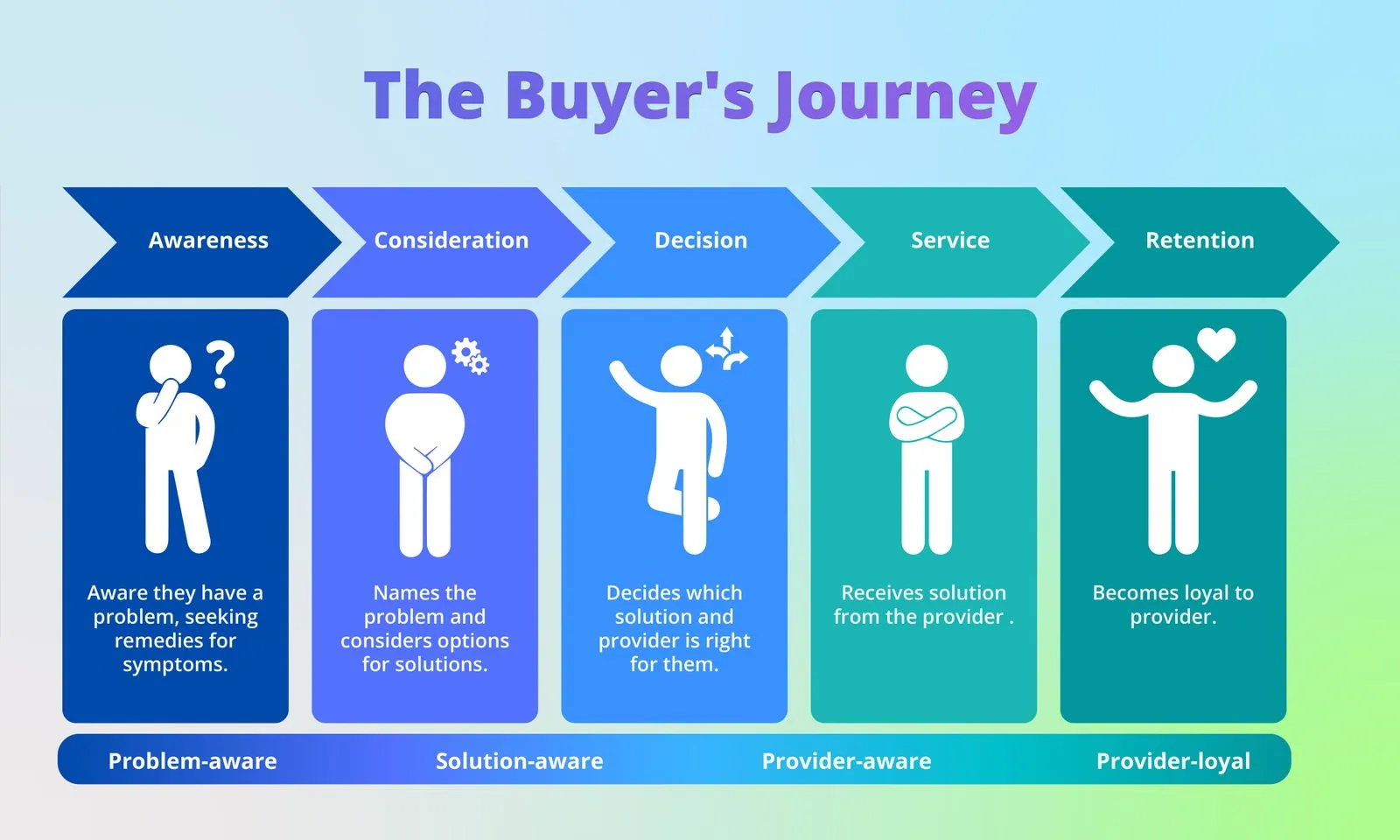
Awareness
This is where everything begins. Customers are just discovering your brand—often through search engines, ads, or social media. Your job here is to be visible, helpful, and memorable.
Consideration
Now your customers are evaluating if your product or service is the right fit. They might be reading reviews, exploring pricing, or comparing options. Nurture them with social proof, case studies, and relevant content.
Purchase
The decision has been made. Make this moment count by providing a seamless checkout process, clear communication, and thoughtful follow-up emails that confirm their choice.
Retention
Once a customer buys, the journey is far from over. Now is the time to deliver exceptional service, personalized recommendations, and rewards that make them feel valued.
Advocacy
Happy customers don’t just come back—they bring others with them. Encouraging referrals, gathering testimonials, and creating shareable moments helps turn fans into ambassadors.
How customers transition between stages
Customers don’t always follow a neat, linear path from awareness to advocacy. Their real-life journeys are complex and influenced by personal preferences, external circumstances, and interactions with your brand.
Some may breeze through from first touch to checkout in a day, while others may revisit your website several times before committing.
Specific actions—opening an email, clicking a product, making a purchase, or even going silent—can trigger transitions between stages.
These micro-moments offer clues about where a customer is mentally and emotionally; savvy marketers use them to shift messaging accordingly.
For example, someone who opens multiple emails but hasn’t clicked might need a more compelling call to action. A customer who purchased last month but hasn’t returned might benefit from a check-in or an exclusive offer. Understanding and responding to these subtle cues in real time allows brands to stay relevant, helpful, and top-of-mind.
This is where the power of lifecycle segmentation truly shines: by keeping pace with the customer’s evolving behavior and needs, rather than assuming every journey looks the same.
Why Customer Lifecycle Segmentation Matters
In an era where customer expectations are sky-high and attention spans are fleeting, sending generic messages no longer cuts it. Businesses that want to stand out must understand their customers and their journey. This is where customer lifecycle segmentation becomes a game-changer.
By identifying where a customer is in their relationship with your brand, you can communicate in a timely, thoughtful, and personalized way. It's not about flooding inboxes with offers; it's about meeting people where they are and offering real value. Let’s explore why this matters more than ever.
Improved targeting and personalization
When you understand where someone is in their journey, your messaging becomes less about selling and more about helping. This shift builds trust and encourages long-term loyalty.
Higher ROI from segmented campaigns
According to industry benchmarks, segmented email campaigns can result in open rates that are 14.31% higher and click-through rates that are 100.95% higher compared to non-segmented campaigns. Furthermore, marketers have seen up to a 760% increase in revenue from email campaigns that utilize targeted segmentation. These figures aren’t just impressive—they’re a compelling case for why segmentation is no longer optional in modern marketing.
Real-time marketing automation enablement
Today’s marketing isn’t just about planning—it’s about reacting in real time. With customer lifecycle marketing automation, businesses can create dynamic workflows that adjust automatically based on customer behavior.
If customers browse a product but don’t buy, they can instantly receive a follow-up email highlighting related products or offering a discount. A gentle nudge can be sent within hours if they abandon a cart.
These automated actions go beyond basic responses; they’re part of a broader, more intelligent ecosystem where customer data triggers personalized journeys. The key advantage? Speed and relevance. By responding immediately to a customer’s behavior, you maintain momentum in their journey, build trust, and increase the chances of conversion.
Platforms like Mailmunch, Klaviyo, and Omnisend seamlessly integrate with e-commerce, CRM, and analytics tools. This way, your campaigns don’t just run on autopilot—they adapt and improve continuously, offering a truly responsive experience that feels human, not robotic.
With customer lifecycle marketing automation, you’re not stuck sending batch-and-blast emails. You’re building responsive journeys that evolve with the customer.
Key Data Points for Segmenting the Customer Lifecycle
To build meaningful lifecycle segments, you need the right data—but not just any data. It has to reflect how your customers behave, interact, and respond to your brand across multiple channels. By weaving together these different types of data, you can create a much richer and more accurate picture of who your customers are and what they need next.
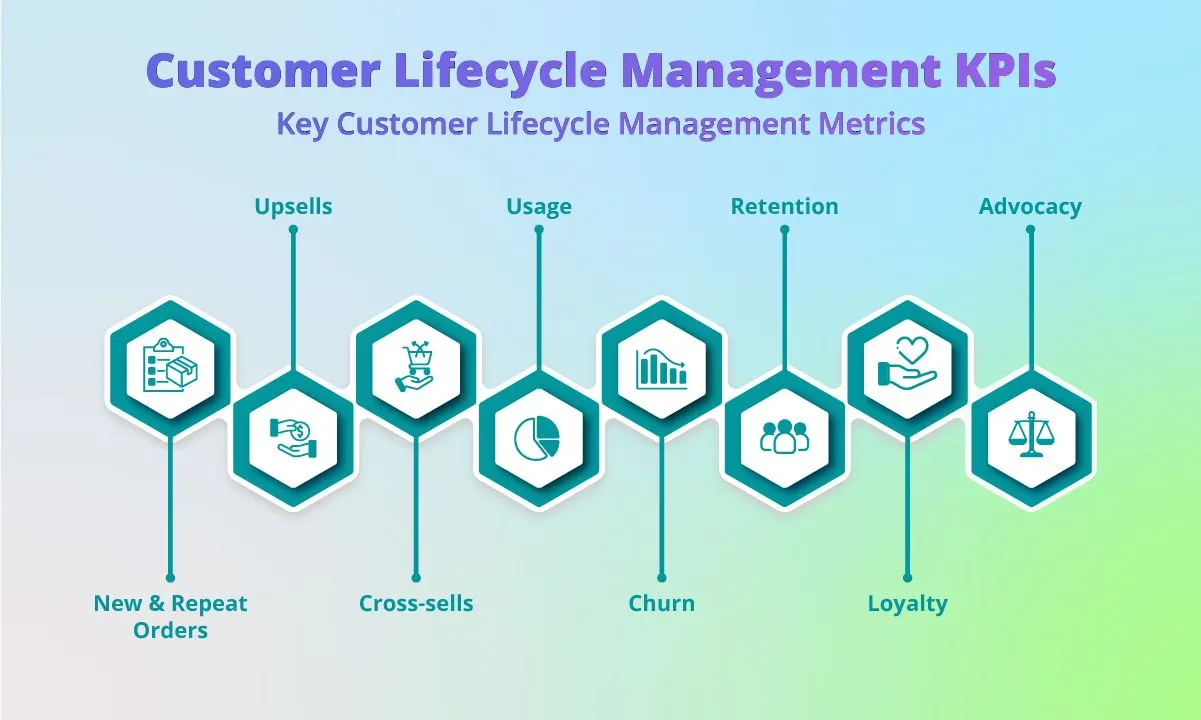
Engagement data (clicks, opens, time on page)
Engagement data tells you how active a customer is in their relationship with your brand. Are they opening your emails? Clicking through on links? Spending time on your website or social channels? These behaviors give insight into how interested they are and what content resonates most. Think of it as the customer's way of signaling their level of curiosity or enthusiasm.
Behavioral data (purchases, browsing patterns)
Behavioral data zooms in on what your customers are actually doing. Have they viewed a product page multiple times? Added items to their cart without purchasing? These small actions speak volumes. They help marketers recognize patterns, predict intent, and step in with the right message at just the right time.
AI and predictive modeling in segmentation
Artificial intelligence is like having a crystal ball for customer behavior. Tools like Otis can analyze historical trends and real-time activity to forecast who might churn, who’s likely to convert, and which customers could be nudged into higher-value tiers. This kind of predictive insight allows marketers to be proactive instead of reactive, creating timely and intuitive experiences.
Role of psychographic and demographic data
While engagement and behavior show what a customer is doing, psychographic and demographic data offer context around who the customer is and why they might be behaving that way. Psychographics tap into motivations, interests, values, and lifestyle choices, while demographics include age, gender, income level, and location. Combined with behavioral insights, these data points bring empathy and personalization into your segmentation strategy.
Ultimately, the magic of customer lifecycle segmentation happens when these data types come together. It’s like assembling pieces of a puzzle: the more accurate and diverse your inputs, the more precise the whole picture becomes and the better you can serve your customers.
Customer Lifecycle Segmentation Strategies by Stage
Segmenting your audience based on lifecycle stages is where strategy meets empathy. It's not just about targeting; it's about timing, tone, and relevance.
Each phase of the lifecycle represents a different mindset, need, and expectation. By tuning into these nuances, marketers can build campaigns that feel more like conversations and less like sales pitches.
Let’s break down actionable segmentation tactics tailored to each key stage of the customer journey.
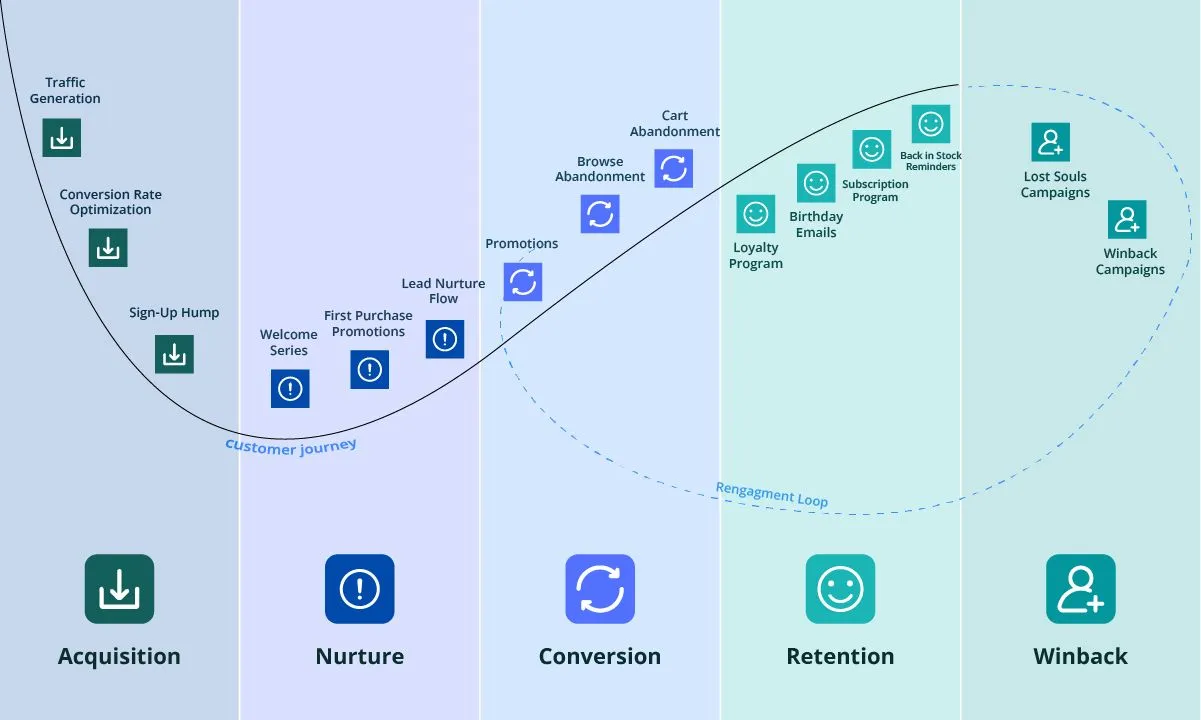
Awareness Stage
Welcome Campaigns
Make a great first impression. Your welcome emails should educate, excite, and invite the customer to learn more.
Lead Magnets
Offer value upfront—think downloadable guides, tools, or discounts—in exchange for contact information.
Consideration Stage
Product Education
Help customers make informed decisions with product demos, how-to videos, and side-by-side comparisons.
Social Proof
Let others speak for you. Share reviews, testimonials, and influencer content that validates your offerings.
Purchase Stage
Transactional Emails
Confirmation emails aren’t just receipts—they’re opportunities to express gratitude, set expectations, and introduce next steps.
Cross-Sell and Upsell
Use what you know about a customer's purchase to suggest complementary or upgraded items.
Retention Stage
Loyalty Programs
Reward returning customers with points, perks, or early access. Show them they’re more than just a transaction.
Replenishment Reminders
Selling consumables? Use automation to remind customers when it’s time to restock.
At-Risk / Lapsed Stage
Win-Back Campaigns
Don’t give up on disengaged customers. Reconnect with offers, personalized messages, or surveys that ask what went wrong.
Re-Engagement Surveys
Sometimes, the best way to learn is simply to ask. Use surveys to gather feedback and reignite interest.
Advocacy Stage
Referral Programs
Encourage loyal customers to bring their friends along. A well-crafted referral program can turn happy users into your best marketers.
Testimonials and UGC
Invite customers to share their stories. Authentic content builds credibility and inspires others to engage.
Customer Lifecycle Management Tools & Software
Choosing the right software for managing customer lifecycle segmentation isn’t just about bells and whistles—it’s about finding a platform that grows with your business and helps you deliver meaningful, personalized experiences at scale.
Whether you're a small startup or an established enterprise, the right tools can help you turn data into insights and insights into action.
Overview of Leading Tools
There’s no shortage of lifecycle management tools on the market, but Mailmunch has emerged as a powerful, all-in-one platform that balances simplicity with robust automation. Known for its user-friendly interface and advanced segmentation capabilities, Mailmunch helps businesses of all sizes automate their email marketing based on real-time customer behavior.
In addition to Mailmunch, other standout platforms include Klaviyo, recognized for its ecommerce integrations, Omnisend, which offers multichannel workflows ideal for lean teams, and Otis, which excels in AI-driven personalization and predictive analytics. Each of these tools brings something unique to the table, but Mailmunch’s blend of affordability, accessibility, and feature-rich performance makes it especially attractive for growing brands looking to implement lifecycle segmentation quickly and effectively.
These platforms are designed not just to organize your customer data but to help you act on it in real time. They support the creation of dynamic, behavior-triggered campaigns that respond to customers' actions instantly, increasing both engagement and revenue potential.
Features to Look For
When evaluating tools, prioritize features that will empower your marketing efforts:
- Real-time data processing: The ability to act on live customer behavior as it happens.
- AI-powered insights: Predict customer churn, lifetime value, or optimal send times using machine learning.
- Seamless integrations: Make sure the software plays nicely with your ecommerce platform, CRM, and analytics tools.
- Automation & templates: Pre-built workflows and customizable templates save time and reduce human error.
- Scalability: Ensure the platform can grow with you as your customer base and segmentation needs evolve.
Benefits of Lifecycle Software
The biggest benefit of using customer lifecycle marketing software is that it takes the guesswork out of marketing. Instead of asking, "What should I send this customer next?"—you already know, because the data tells you.
You’ll be able to:
- Personalize campaigns at scale without sacrificing quality
- React quickly to behavioral signals like cart abandonment or disengagement
- Automate repetitive tasks so your team can focus on strategy
- Gain deeper visibility into what’s working and where there’s room to improve
In short, lifecycle software allows you to be proactive instead of reactive. It turns static customer lists into living, breathing journeys—and that’s where true marketing magic happens.
Building a Customer Lifecycle Map
Mapping out the customer lifecycle is crucial in creating a truly customer-centric marketing strategy. A customer lifecycle map gives you a visual overview of how customers move through their journey, from first discovery to brand loyalty and advocacy. It’s more than just a flowchart; it’s a strategic framework that aligns your team on what customers experience, what they expect, and where there are opportunities to improve.
What is a Customer Lifecycle Map?
A customer lifecycle map is a structured visualization of each phase in the customer journey and the key interactions or touchpoints that occur along the way. This tool helps you see your business from the customer's perspective, identifying critical moments of engagement, friction, or opportunity. By laying everything out, you better understand how each stage connects and what customers need to progress.
Steps to Create One
- Define Your Customer Personas – Start with a clear picture of your ideal customer(s). What are their goals, pain points, and behaviors? Use real data and feedback wherever possible.
- Map out the Lifecycle Stages—Identify the typical stages your customers go through (e.g., awareness, consideration, purchase, retention, advocacy).
- Identify Relevant Touchpoints and Emotional Triggers – Pinpoint customer interactions at each stage, such as emails, ads, product pages, or customer service inquiries. Note what emotions they may be feeling—uncertainty, excitement, frustration, etc.
- Align Content and Messaging to Each Phase – Ensure your content strategy supports the customer’s needs at each touchpoint—educational blogs during awareness, testimonials during consideration, personalized thank-yous post-purchase, etc.
Using Maps to Identify Gaps
Once your map is complete, it's time to use it. Use it to uncover friction points—moments where customers might get confused, lose interest, or feel undervalued. Are there stages where communication is weak or where too many people drop off? Is there a lack of personalization in your follow-ups? These insights allow you to refine your lifecycle segmentation strategy and build smoother, more satisfying customer experiences.
A well-crafted lifecycle map improves marketing effectiveness and helps align your entire organization around the customer journey, from sales to support to product development.
Best Practices for Lifecycle Segmentation Success
| Practice | Explanation |
|---|---|
| Maintain Clean Data | Garbage in, garbage out. Accurate segmentation starts with accurate data. |
| Automate Intelligently | Let automation do the heavy lifting, but keep it human. Balance scale with empathy. |
| Continuous Feedback Loop | Use feedback to refine your content and strategy. The goal is to evolve with your customer. |
| Test and Optimize | What worked yesterday might not work tomorrow. Continuously test your messaging, timing, and offers. |
Common Mistakes to Avoid
Even the best intentions can go awry without a thoughtful strategy in place. While lifecycle segmentation has the potential to transform how you engage with customers, missteps in execution can undermine your efforts. Avoiding these common mistakes ensures your segmentation strategy remains sharp, relevant, and effective.
Over-Segmentation
More segments aren’t always better. While creating micro-groups for every customer nuance might seem helpful, it often leads to scattered messaging, fragmented workflows, and a loss of overall campaign clarity. Instead, focus on meaningful segments that align with business goals and lifecycle impact. Keep it simple, actionable, and scalable.
Ignoring Behavioral Triggers
One of the most potent aspects of lifecycle segmentation is its responsiveness. Failing to act on key behavioral cues like product views, cart abandonment, or email engagement can result in missed opportunities to build trust or drive conversions. Customers expect brands to pay attention. Timely, relevant follow-ups based on behavior show that you're listening—and they often yield the best results.
Static Segmentation
What worked six months ago may no longer apply today. Your messaging will quickly feel outdated or irrelevant if your customer segments are fixed and don't evolve based on new data or changing behaviors. Dynamic segmentation keeps your campaigns fresh and allows you to respond in real time to customer needs rather than relying on old assumptions. Think of segmentation as a living process, not a one-and-done task.
Conclusion
Customer lifecycle segmentation isn’t just another marketing tactic—it’s a lens through which to see your customers more clearly. By understanding their journey and delivering the right message at the right time, you don’t just increase conversions. You build lasting relationships.
In an age where customers crave connection and relevance, this strategy isn’t optional; it’s essential.
Start segmenting your audience based on lifecycle data and drive growth with more innovative, personalized marketing campaigns. Explore Mailmunch Today.
FAQs
What is customer lifecycle segmentation?
It’s the process of organizing your customers based on their current relationship with your brand to tailor your communication and experiences accordingly.
How is it different from general segmentation?
General segmentation is about who the customer is; lifecycle segmentation is about where they are and what they need.
Which tools support lifecycle marketing strategies?
Top tools include Mailmunch, Klaviyo, Omnisend, Otis, and Lifecycle Insights, all offering automation, analytics, and AI-driven insights.
Can it improve my email marketing campaigns?
Absolutely. Lifecycle-based targeting leads to higher engagement, fewer unsubscribes, and more conversions.