Re-Engagement Campaigns: A Guide to Winning Back Inactive Subscribers

Ayesha Ejaz Last updated on
Every email list has a quiet group. Subscribers who once opened, clicked, and engaged but slowly drifted away. This is normal, but ignoring them can quietly hurt your performance over time. This is where re-engagement campaigns play a critical role.
Re-engagement campaigns help brands reconnect with inactive subscribers, rebuild interest, and clean up their lists in a meaningful way. When done right, they improve deliverability, boost engagement, and even recover lost revenue.
In this guide, we will walk through what re-engagement campaigns are, how they work, when to use them, and how to create campaigns that feel personal rather than pushy.
Re-Engagement Campaigns: What Are They and How Do They Work?
Re-engagement campaigns are targeted email or messaging efforts designed to reconnect with subscribers who have stopped interacting with your brand. These users may not have opened emails, clicked links, or taken any action for a set period of time.
Instead of continuing to send regular campaigns to an unresponsive audience, re-engagement campaigns pause and ask a simple question in different ways. Are you still interested?
These campaigns typically work by:
- Identifying inactive subscribers based on engagement data
- Sending tailored messages that acknowledge the gap
- Offering value, reminders, or choices to re-opt in
- Removing contacts who remain inactive after the campaign
This process helps you focus on subscribers who genuinely want to hear from you while keeping your list healthy.
Importance of Re-Engagement Campaigns
Re-engagement campaigns are not only about winning people back. They are also about protecting your long-term email performance.
Benefits of Re-engagement Campaigns
Improved Email Deliverability
Inactive subscribers hurt your sender reputation. Re-engagement campaigns help reduce ignored emails, which improves inbox placement over time.
By identifying and removing contacts who no longer engage, you signal to email providers that your messages are relevant. This leads to better inbox visibility for subscribers who actually want to hear from you.
Higher Engagement Rates
When you focus on people who still care, your open and click rates naturally improve.
Re-engaged subscribers are more likely to interact with your content, reply to emails, and take action. Over time, this creates healthier engagement metrics across all your campaigns.
Stronger Customer Relationships
A thoughtful re-engagement message shows that you respect your audience’s preferences and time.
Instead of pushing promotions, you invite subscribers back on their terms, which builds trust. This approach strengthens long-term relationships rather than short-term results.
Lower Marketing Costs
Re-engaging existing subscribers is often more cost-effective than acquiring new ones.
You already have context, permission, and past data, which reduces acquisition spend. This allows marketing budgets to focus on nurturing and retention instead of constant list growth.
Better Segmentation and Insights
You learn who is still interested, what content resonates, and when users disengage.
Re-engagement campaigns reveal patterns in behavior that help refine future messaging. These insights lead to smarter segmentation and more relevant communication going forward.
When to Use Re-Engagement Campaigns
Knowing when to use re-engagement campaigns is just as important as knowing how to create them.
You should consider launching a re-engagement campaign when:
- Subscribers have not opened or clicked emails for 60 to 90 days
- Open rates steadily decline over time
- You are preparing for a major product launch or seasonal campaign
- Email deliverability metrics begin to drop
- You want to clean your list without deleting contacts blindly
For industries like finance, timing is especially important. Banking customer re-engagement campaigns often focus on trust, security, and value rather than urgency or discounts. These campaigns work best when framed as helpful check-ins rather than sales pushes.
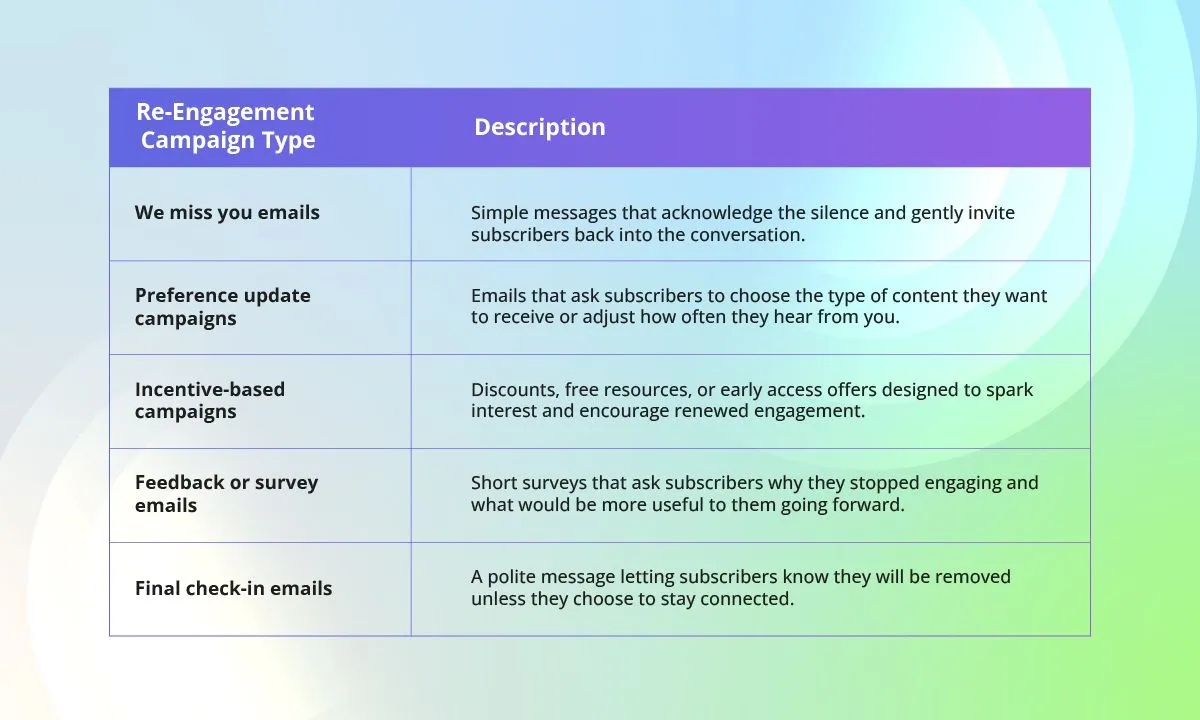
Common Examples of Re-Engagement Campaigns
Re-engagement campaigns can take many forms depending on your audience and goals.
Some common examples include:
Creating a Great Re-Engagement Campaign
A successful re-engagement campaign is built on empathy and relevance. It should feel like a friendly conversation, not a warning or ultimatum. The goal is to remind subscribers why they connected with you in the first place and give them an easy, respectful way to re-engage.
1. Segment Your Inactive Audience
Not all inactive subscribers are the same, and treating them as one group often leads to poor results.
Start by segmenting based on:
- How long they have been inactive, such as 30, 60, or 90 days
- Past engagement levels, including opens, clicks, or purchases
- The type of content or products they previously showed interest in
For example, a subscriber who stopped engaging last month may just need a gentle reminder, while someone inactive for six months may need a stronger value incentive or a preference reset. Segmentation ensures your message feels relevant rather than random.
2. Keep the Message Simple
Re-engagement emails work best when they are easy to understand and quick to act on.
Avoid long explanations or multiple calls to action. Focus on:
- One clear message
- One clear action
Whether you are asking subscribers to read new content, update preferences, or confirm interest, keep the path straightforward. A simple message reduces friction and increases the likelihood of a response.
3. Personalize Where Possible
Personalization helps your message feel intentional rather than automated.
This does not have to be complex. Even small touches can make a difference, such as:
- Using the subscriber’s name
- Referencing a past download, signup, or product category
- Highlighting content similar to what they engaged with before
When subscribers feel seen and understood, they are more likely to reconnect with your brand.
4. Offer Real Value
Subscribers will only re-engage if there is a clear benefit for them.
Ask yourself what would genuinely help or interest your audience right now. This could include:
- Useful content such as guides, tips, or updates
- Exclusive access to features, tools, or insights
- A special offer or incentive, used thoughtfully and not as pressure
- Better control over email frequency or content topics
The value should feel helpful, not transactional. Re-engagement works best when it reminds subscribers that staying connected is worth their time.
5. Make Opting Out Easy
Respect is a key part of long-term engagement.
Always give subscribers a clear and simple way to opt out if they are no longer interested. Making this process easy builds trust and protects your sender reputation.
A clean list with engaged subscribers will always perform better than a large list filled with inactive contacts. Letting people leave gracefully shows confidence in your brand and respect for your audience.
Re-Engagement Campaign Templates
While every brand has its own voice, most re-engagement campaigns follow a few proven structures.
Friendly check-in template
A warm message that acknowledges inactivity and highlights what the subscriber has missed.
Template
Hi there,
We noticed it’s been a while since you last opened one of our emails, so we wanted to check in.
A lot has happened since then. We’ve shared helpful tips, new resources, and updates designed to make your experience even better. If now is not the right time, that’s completely okay. We just wanted to make sure you’re still interested in hearing from us.
If you’d like to stay connected, simply click below and we’ll keep the good stuff coming.
[Yes, keep me subscribed]
Thanks for being part of our community,
Y/N
Preference reset template
An email inviting users to update interests or reduce email frequency.
Template
Hello,
We want to make sure our emails are useful, not overwhelming.
If your interests have changed or you’d like fewer emails, you can update your preferences in just a moment. Choose the topics you care about, adjust how often you hear from us, or pause emails for now.
Your inbox, your rules.
[Update my preferences]
Thanks for sticking with us,
Value reminder template
A campaign that reinforces why subscribers signed up in the first place.
Template
Hi,
You joined us to get insights, tools, and ideas that help you grow and stay ahead. That’s still exactly what we’re here to deliver.
From practical guides to proven strategies, we’re focused on sharing content that makes a real difference, not noise.
If you’d like to start receiving these updates again, just click below.
[Show me what’s new]
We’d love to have you back,
Last chance template
A respectful final email explaining that the subscriber will be removed unless they take action.
Template
Hi,
We haven’t heard from you in a while, and we want to respect your inbox.
If you’d still like to receive emails from us, you can confirm with one click below. Otherwise, we’ll quietly remove you from our list so you only hear from brands you truly want updates from.
[Yes, I want to stay]
Thank you for the time you’ve spent with us,
Conclusion
Re-engagement campaigns are not about forcing attention. They are about reopening conversations that once mattered. When done with care, they help brands rebuild trust, improve performance, and maintain a healthy relationship with their audience.
By understanding when to use re-engagement campaigns, focusing on the benefits of re-engagement campaigns, and creating messages that feel human and helpful, you turn silence into opportunity.
Inactive subscribers are not lost forever. Sometimes, they just need the right reason to come back.