Email Marketing Analytics: A Practical Guide for 2026

Ayesha Ejaz Last updated on

If you work in email marketing, you’ve probably noticed something: the channel is still powerful, but it's also getting noisier, more competitive, and far more data-driven. Gone are the days when you could send a newsletter, glance at the open rate, and call it a day.
Today, email marketing analytics sit at the heart of every smart campaign. They help you understand your audience, spot patterns, predict behavior, optimize timing, and most importantly turn email into a reliable revenue engine.
This updated 2026 guide breaks analytics down in a way that’s approachable and practical. Whether you’re managing lifecycle flows, running newsletters, or overseeing a multi-channel growth strategy, this guide shows you exactly how to use Mailmunch's analytics to make better decisions and improve performance.
What Email Marketing Analytics Actually Mean (and Why Marketers Care)
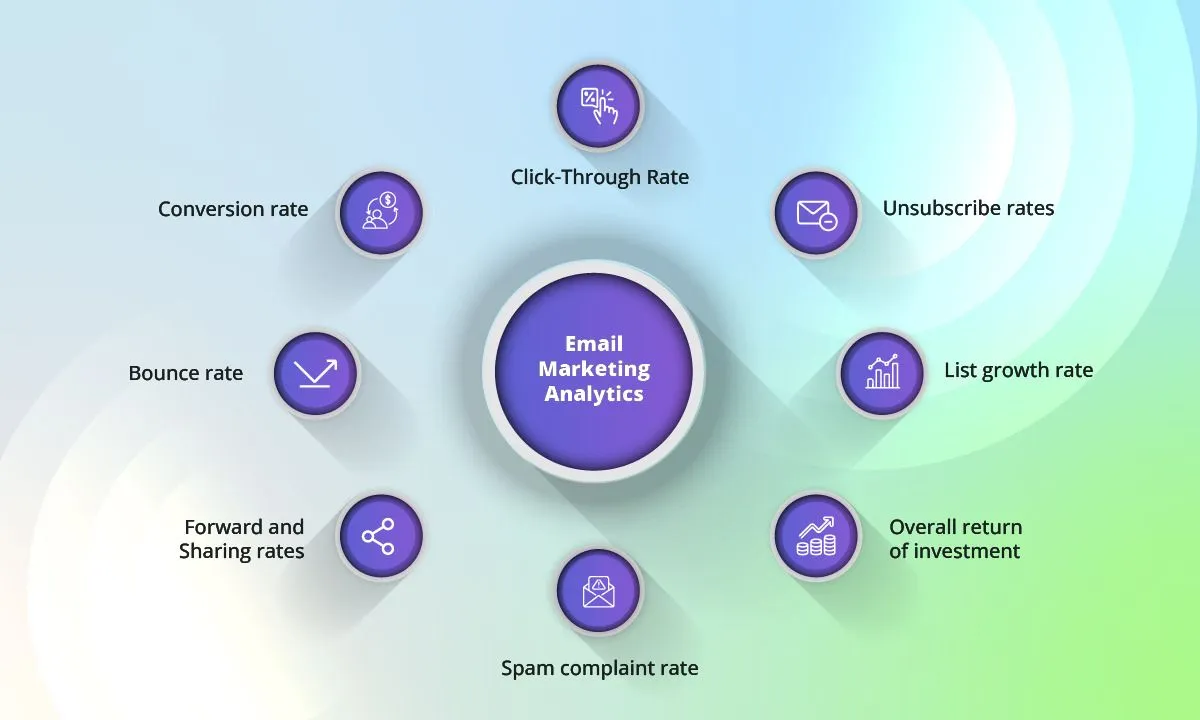
When we talk about email marketing analytics, we’re essentially talking about everything that helps you understand what happens after you hit “send.”
It’s the story behind:
- Who opened
- Who clicked
- What content resonated
- Who dropped off
- What drove conversions
- What generated revenue
- And what you should do next
With Mailmunch, this goes far beyond the basics. You get detailed engagement insights, heatmaps, predictive recommendations, deliverability indicators, and revenue attribution all in one clean dashboard.
Analytics aren’t just “numbers.” They’re your roadmap for building emails people actually look forward to.
Why Email Analytics Matter Even More in 2026
Email hasn’t lost its power if anything, it’s become more valuable. What has changed is what subscribers expect and how much competition brands face every time they hit “send.” In 2026, analytics aren’t just a nice-to-have; they’re the difference between emails that blend into the noise and emails that actually get opened, read, and acted on.
Here’s why analytics matter more today than ever before:
1. The Inbox Is Louder Than Ever
The volume of content landing in people’s inboxes has exploded.
Between AI-generated emails, automated sequences, branded newsletters, creator updates, and endless promos, subscribers are overwhelmed.
And when the noise level rises, the tolerance for irrelevant emails drops.
Analytics become your navigational system in this chaos. Without data:
- you don’t know what resonates
- you don’t know what’s causing people to tune out
- you don’t know which messages get buried
- you don’t know when your content fatigue is kicking in
Brands that rely on intuition instead of insights struggle to stay visible. Brands that rely on analytics keep improving with every send.
2. Personalization Is Non-Negotiable
Generic emails simply don’t work anymore.
Subscribers know when something isn’t meant for them and they disengage faster than ever.
Analytics give you the clarity to personalize in a way that actually feels good to the subscriber, not forced.
With the right insights, you can understand:
- what each segment actually cares about
- what content formats perform best for different groups
- when subscribers are most active
- what types of offers convert (and which don’t)
- who’s ready to buy versus who needs more nurturing
This kind of data-driven personalization builds trust, boosts conversion, and keeps your list healthy long-term.
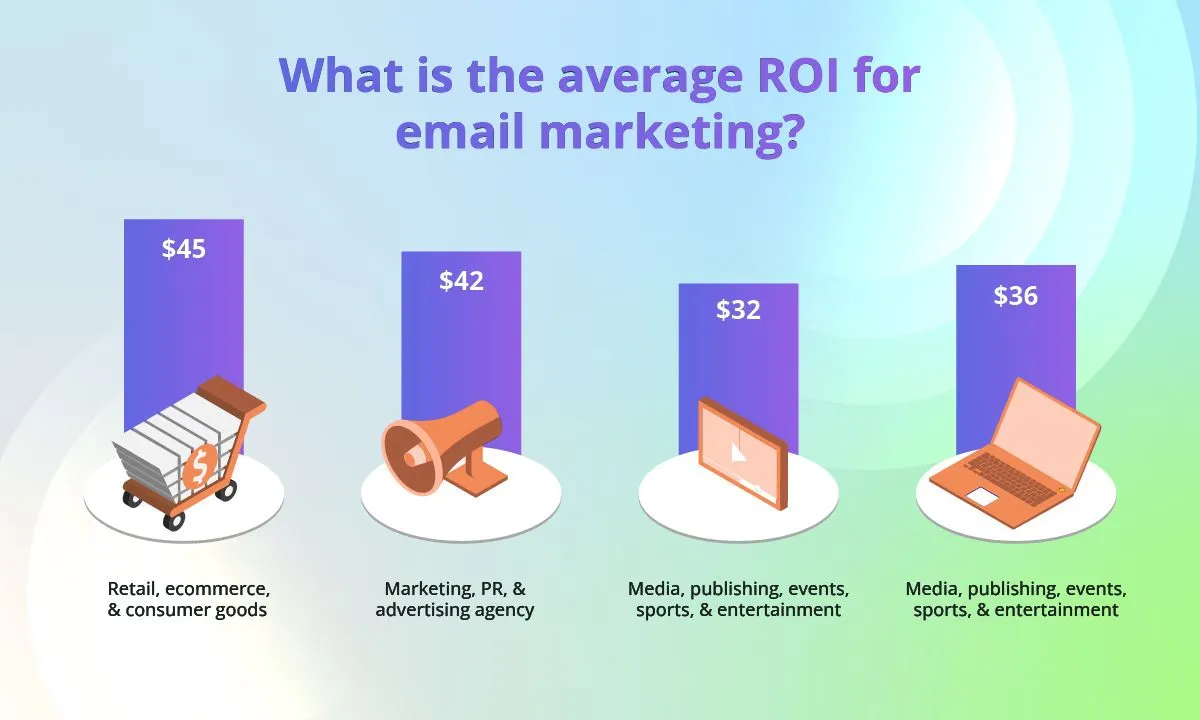
The Core Email Metrics Every Marketer Should Understand
Some metrics form the foundation of your analytics strategy. They help you measure the health of your campaigns and spot issues early.
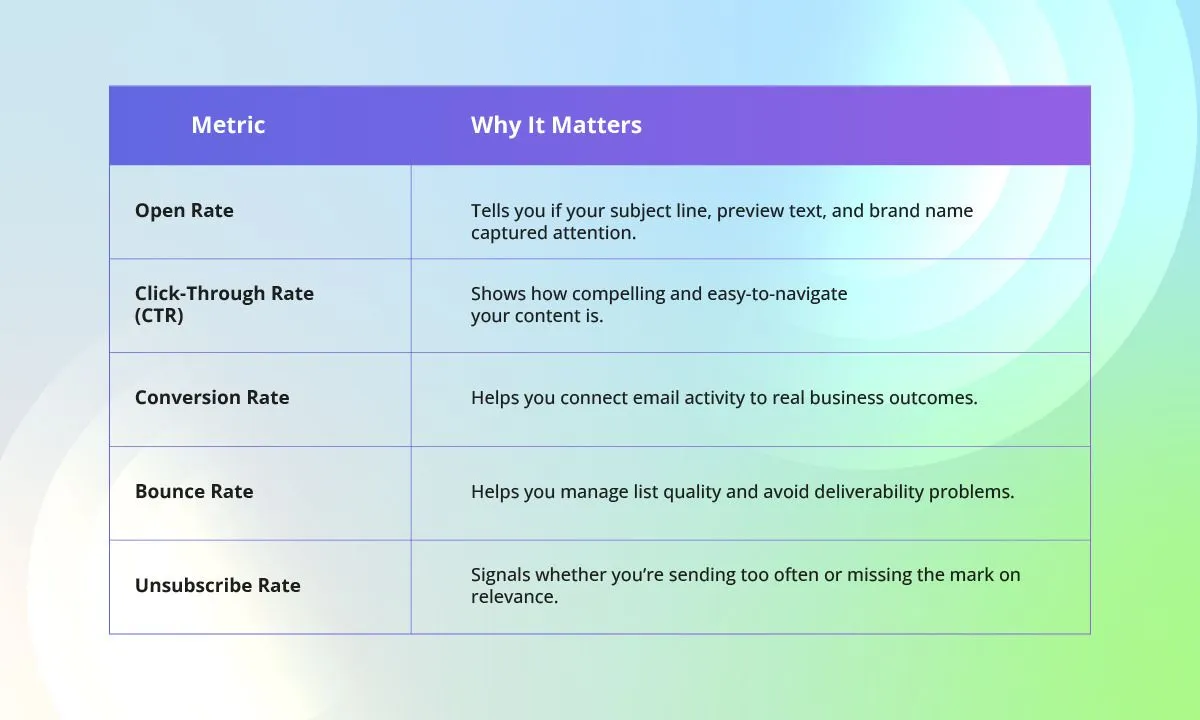
These aren’t just numbers, they each tell a different part of the story.
Taking Your Email Marketing to the Next Level With Advanced Metrics
Once you’ve mastered the core metrics, the real magic happens when you start exploring advanced analytics. These deeper insights are what separate email programs that “send newsletters” from email programs that actually drive revenue, retention, and long-term audience engagement.
Mailmunch gives you access to the kinds of metrics that help you make smarter strategic decisions not just tactical tweaks. Here’s a closer look at the advanced data that truly elevates your email marketing.
Revenue Per Email
This is one of the most telling metrics you can track.
It cuts through vanity metrics like open rate and shows the real financial impact of every campaign or automation flow.
With Mailmunch, you can see:
- which emails generate the most revenue
- how different segments convert
- which automations bring in consistent sales
- the revenue trend across weeks or months
It’s the most reliable way to justify your email strategy to stakeholders and prioritize what’s actually working.
Engagement Scores
Instead of looking at opens here and clicks there, Mailmunch combines key behaviors into a single engagement score.
Actions like:
- opens
- link clicks
- conversion events
- repeated interactions
are weighted to show who’s warming up, who’s cooling off, and who’s becoming inactive.
This is incredibly helpful when you’re building lifecycle segments or trying to predict churn before it happens.
Subscriber Lifetime Value (LTV)
If retention matters for your brand — ecommerce, subscription, membership, services — this metric is a must.
Mailmunch helps you understand:
- how email contributes to customer spend over time
- which segments produce the highest-value customers
- which journeys or flows nurture long-term loyalty
- how repeat interactions correlate with revenue
LTV helps you shift from short-term “send and hope” to long-term growth planning.
Heatmaps and Click Patterns
This is where layout and content strategy become data-driven instead of guesswork.
Mailmunch heatmaps show:
- which parts of your email users pay the most attention to
- which links get clicked
- where people drop off
- whether your CTA placement is helping or hurting performance
These visual insights help you optimize your designs, reorder content, refine CTA strategy, and test formats with confidence.
Deliverability Signals
If you want your emails to land in the inbox consistently, you have to monitor the health of your sender reputation, and Mailmunch gives you the data to stay ahead of issues.
Deliverability insights include:
- spam complaint trends
- inbox placement patterns
- domain and IP reputation indicators
- detailed bounce categories
- sudden engagement dips that might signal filtering
Tracking these signals helps protect your entire email program so your campaigns stay visible and effective.
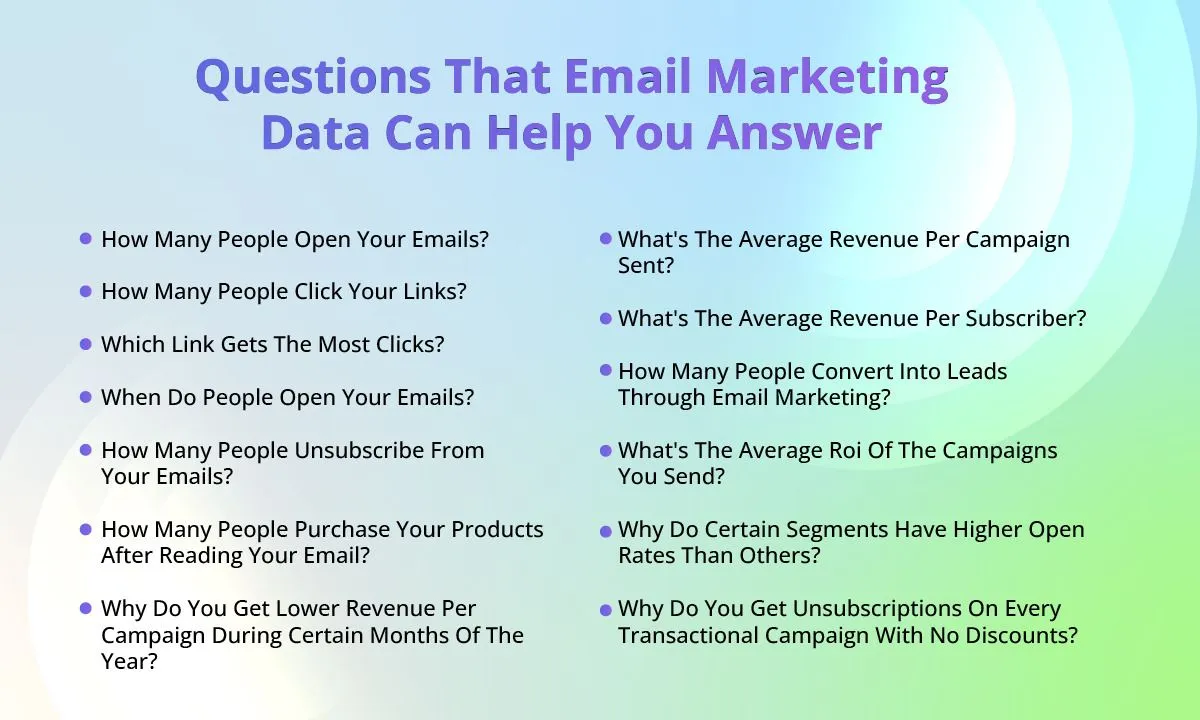
A Look Inside the Mailmunch Analytics Dashboard (and What You Can Actually Do With It)
One of the biggest strengths of Mailmunch is how clean, visual, and genuinely helpful the analytics dashboard is. You don’t have to dig through multiple reports or export data just to understand what your audience is doing. Everything you need is laid out in a way that actually supports real decision-making not just reporting for the sake of reporting.
Here’s a closer look at what you can access inside Mailmunch and how each section helps you optimize your strategy:
1. Engagement Overview
This is your snapshot of how subscribers interact with your emails.
You’ll see:
- open rates and trends over time
- click behavior and link performance
- scroll depth for long-form content
- device and browser data
- engagement heatmaps that reveal where people pay attention
This view tells you instantly whether your subject lines, content structure, and layout are doing their job.
2. Conversion + Revenue Insights
If you’re running ecommerce or conversion-focused campaigns, this section becomes your best friend.
Mailmunch shows you:
- revenue per campaign
- revenue per individual email
- conversions tied directly to subscriber actions
- revenue generated from automation flows
- attribution paths showing what influenced a sale
It’s everything you need to evaluate ROI without guessing and without patching together multiple tracking tools.
3. Segment-by-Segment Breakdown
This is where personalization becomes effortless.
With Mailmunch’s breakdowns, you can easily see:
- which audience segments open more
- which ones click more
- which ones purchase more
- how different segments behave across flows and campaigns
These insights help you tailor messaging, build smarter automations, and send content that feels like it was written for each group because it practically is.
4. Deliverability Monitoring
You can’t grow if your emails don’t reach the inbox and Mailmunch makes it easy to catch issues early.
In this section, you can monitor:
- spam complaints
- bounce types and categories
- domain + IP reputation warnings
- inbox placement trends
- engagement declines that may signal filtering
This gives you a real chance to fix problems before they hurt your entire email program.
Comparing Email Marketing Analytics Tools (Mailmunch vs Others)
Here’s a quick, simple comparison of Mailmunch and a few well-known platforms. This table is necessary because it helps readers make sense of the landscape at a glance.
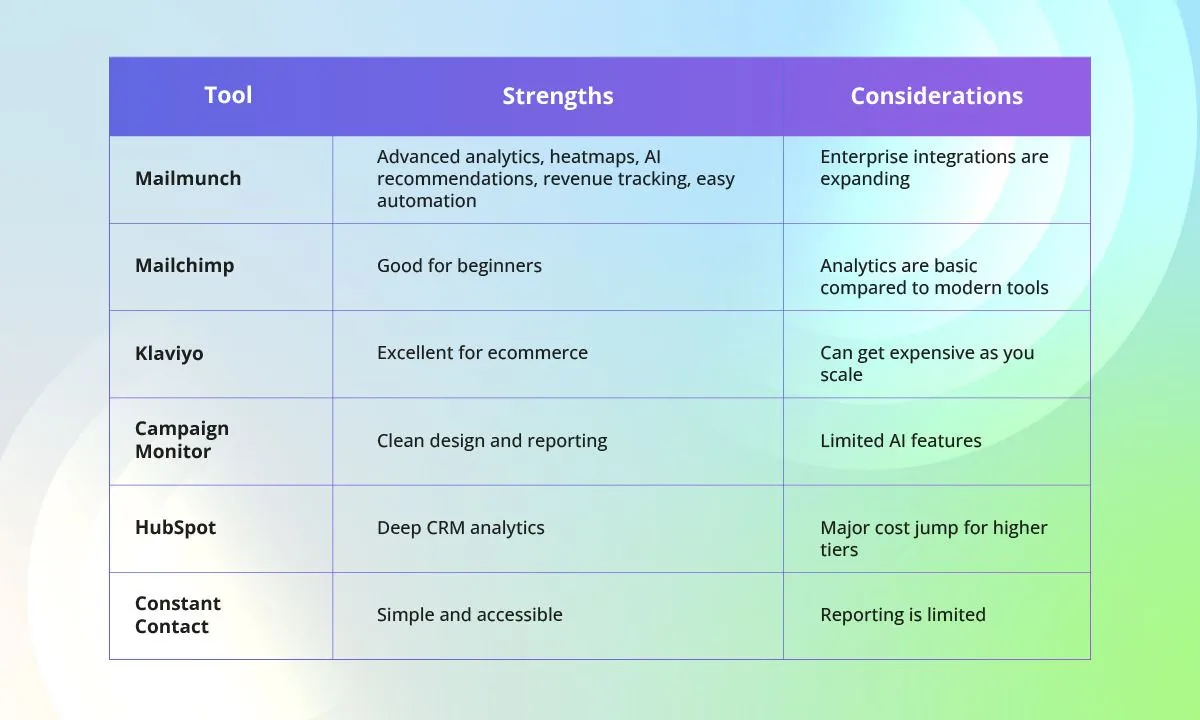
Mailmunch is the most balanced option for marketers who want depth without complexity or enterprise-level pricing.
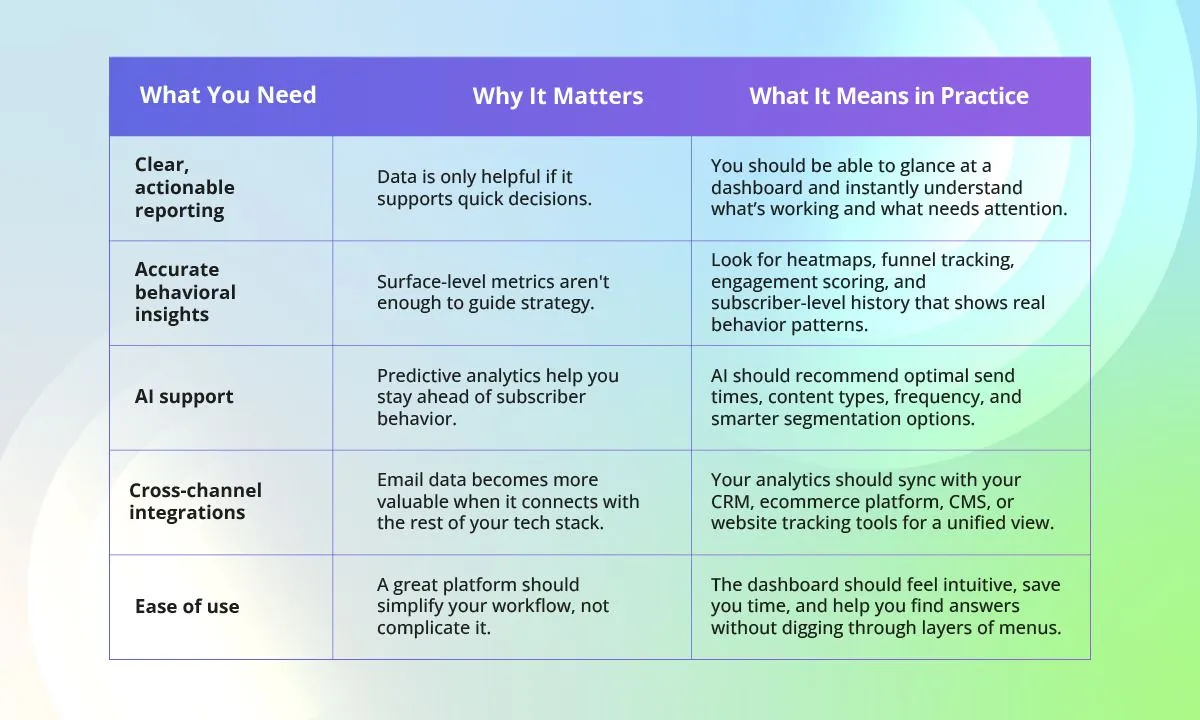
How to Choose the Right Email Marketing Analytics Platform
Best Practices for Using Email Marketing Analytics (Without Overthinking It)
Email analytics can feel overwhelming, but they don’t have to be. The goal isn’t to turn you into a data scientist. It’s to help you make smarter, more confident decisions based on what your subscribers are actually doing. Think of analytics as a conversation between you and your audience. When you look at the right signals, the next step almost always becomes obvious.
Here’s a practical, human-first approach to using your email analytics effectively.
1. Make Decisions Metric-by-Metric
When a metric drops, it’s easy to spiral. But analytics aren’t there to shame you. They’re there to guide you.
For example, say your click-through rate dips. Instead of panicking, ask the right questions:
- Was my CTA clear and compelling?
- Did I place it too far down the email?
- Did the content actually match the subject line?
- Did I send something too broad for the audience segment?
Each metric helps diagnose a specific part of your email.
Open rate points to subject line relevance. Click rate points to message clarity. Conversion rate points to offer strength.
The more comfortable you get interpreting metrics this way, the faster and more confidently you’ll know how to pivot.
2. Look for Trends, Not One-Off Spikes
Email performance can fluctuate for reasons completely out of your control; holidays, inbox filtering, unexpected news events, even weather. One strong or weak email doesn’t mean much by itself.
What does matter?
Patterns.
- Are your open rates gradually climbing over weeks?
- Did engagement drop for a particular segment across multiple sends?
- Is a certain content type consistently outperforming others?
- Has your deliverability slowly dipped since last quarter?
Mailmunch’s analytics help you compare sends over time so you can see the bigger picture instead of reacting emotionally to isolated numbers.
3. Lean Into Segmentation (Your Future Self Will Thank You)
Your audience is not one monolithic group, and your analytics will prove that quickly.
Segmentation is where your email performance really starts to take off. Look at how different groups behave:
- New subscribers might love educational content.
- Long-time customers may respond more to product updates.
- High-intent shoppers might need stronger CTAs and urgency.
- Inactive subscribers might need shorter, value-packed emails.
Your analytics reveal these patterns. And once you see them, you can create more personalized flows, content variations, and targeted campaigns that feel intuitive instead of forced.
4. A/B Test With Intention, Not Curiosity
A/B testing is powerful but only when you’re testing with a purpose.
Don’t run tests just to “collect data.”
Run tests to answer real questions.
For example:
- Will personalized subject lines actually improve engagement?
- Does a shorter email convert better for this segment?
- Does a more visual layout drive more clicks?
- Do buttons work better than text links for this audience?
Every A/B test should teach you something about how your audience thinks, not just which variation got a higher percentage.
Mailmunch makes it easy to set up these tests and interpret results clearly so you can make decisions you actually trust.
5. Monitor Deliverability Like Your Reputation Depends on It (Because It Does)
Even the best-designed emails won’t matter if they don’t land in the inbox.
Deliverability is one of those behind-the-scenes metrics that often gets ignored until something breaks. Pay attention to:
- sudden rises in bounce rate
- increasing spam complaints
- drops in open rate across all segments
- domain or IP reputation warnings
- low engagement from previously active subscribers
Think of deliverability as your email marketing “infrastructure.”
If it stays healthy, everything else becomes easier.
If it slips, every campaign suffers.
Mailmunch’s analytics help you track these signals early so you can fix issues before they impact your entire program.
Building a Strong Analytics Strategy With Mailmunch
A successful analytics strategy doesn’t have to be complicated — it just has to be intentional. With Mailmunch, the goal is to build a rhythm that helps you understand what’s working, spot what isn’t, and continuously optimize without starting from zero every quarter.
Here’s a clearer, more complete framework you can use:
1. Define What Success Looks Like
Before you look at any dashboards or metrics, you need to know what you’re optimizing for.
Is it higher open rates? Better click engagement? More conversions from email to checkout?
Or maybe you’re focused on keeping your list clean and reducing churn?
When your goals are specific, Mailmunch’s analytics instantly become more meaningful.
Every chart, every trend, every performance insight has a purpose — and you stop treating metrics like random numbers.
2. Pick the Right Metrics for Each Goal
Once you know your goals, you can narrow down which metrics truly matter.
For example:
- Want higher engagement? → track open rate, click rate, engagement time
- Want revenue growth? → track revenue per email, conversion rate, customer lifetime value
- Want a healthier list? → track bounce rate, unsubscribe rate, inactivity segments
Mailmunch’s analytics dashboard makes these insights easy to view, compare, and connect to your campaigns.
3. Review Your Dashboard Weekly
A weekly cadence is the sweet spot.
You’re not checking obsessively but you’re also not letting performance slip for a full month.
A weekly review helps you quickly identify:
- sudden dips in engagement
- subject lines that didn’t resonate
- segments that responded better than expected
- any deliverability red flags
This rhythm gives you a sense of “email pulse,” so you stay proactive instead of reactive.
4. Create Monthly Insights and Adjustments
Your monthly review is where the real strategy kicks in.
This is your chance to zoom out and look at performance across the entire month, not just campaign by campaign.
Inside Mailmunch, you can analyze:
- which content themes performed best
- which segments showed the highest intent
- which automations drove the most revenue
- what send times produced consistent results
Based on these insights, you can update messaging, refine your segmentation strategy, tweak automation logic, and test new ideas without making guesses.
5. Make Quarterly Improvements That Move the Needle
Quarterly improvements are bigger, more impactful changes; the kind you can’t do every week or month.
This is where you:
- refresh or redesign your top templates
- rebuild automations that have plateaued
- refine your high-value segments
- experiment with new types of content or personalization
- test new offers, incentives, or lifecycle flows
By pairing Mailmunch’s analytics with quarterly optimization cycles, you create long-term growth without burning out your team or starting from scratch every time.
Final Thoughts: Email Analytics Will Define Email Success in 2026
Email isn’t going anywhere but the way we manage it is evolving fast. Analytics, especially when paired with the right tool set, are central to every high-performing email program.
Mailmunch gives marketers the clarity, insight, and predictive power needed to confidently optimize campaigns and deliver content subscribers genuinely enjoy.