How Much Does Email Marketing Software Cost in 2027?
Last updated on
Email marketing remains an important channel for businesses that want to connect with customers, nurture leads, promote products, and build long-term relationships. However, before launching an email marketing strategy, businesses need to understand how much the software will cost and which features are worth paying for.
Email marketing software can cost anywhere from $0 per month for a free plan to several hundred dollars per month or more for advanced platforms. The final price depends on factors such as the number of subscribers, monthly email volume, automation capabilities, reporting features, and the number of users who need access.
For small businesses, a basic paid plan may be enough to get started. Growing companies may need more advanced automation and segmentation, while marketing agencies and enterprises often require additional features, multiple accounts, or customized pricing.
In this guide, we will break down email marketing software costs in 2027, explain common pricing models, compare the factors that influence pricing, and help you choose a solution that fits your marketing budget.
How Much Does Email Marketing Software Cost?
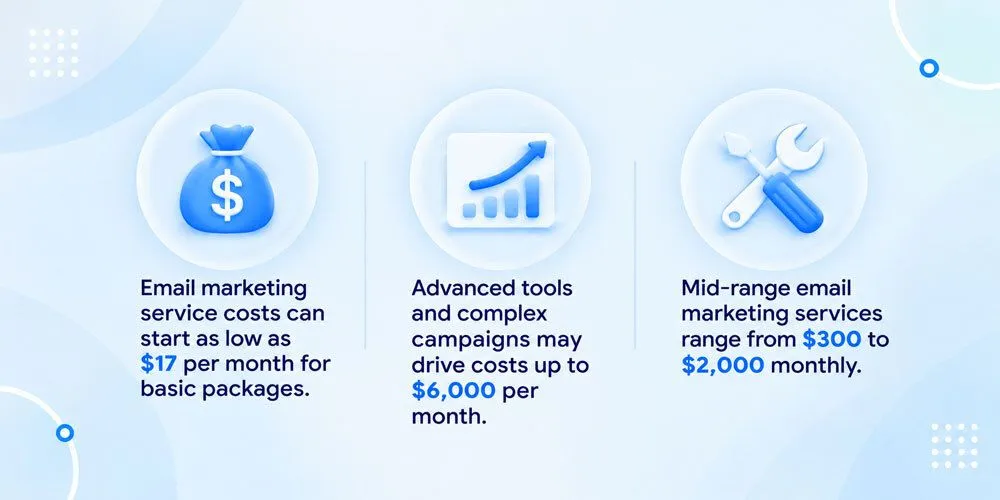
The cost of email marketing software depends on the size of your audience and the features you need. Some platforms offer free plans with limited functionality, while others charge based on subscriber count, email volume, or access to advanced tools.
For budgeting purposes, the following ranges provide a useful starting point. These are indicative estimates, not confirmed 2027 market averages or guaranteed vendor prices.
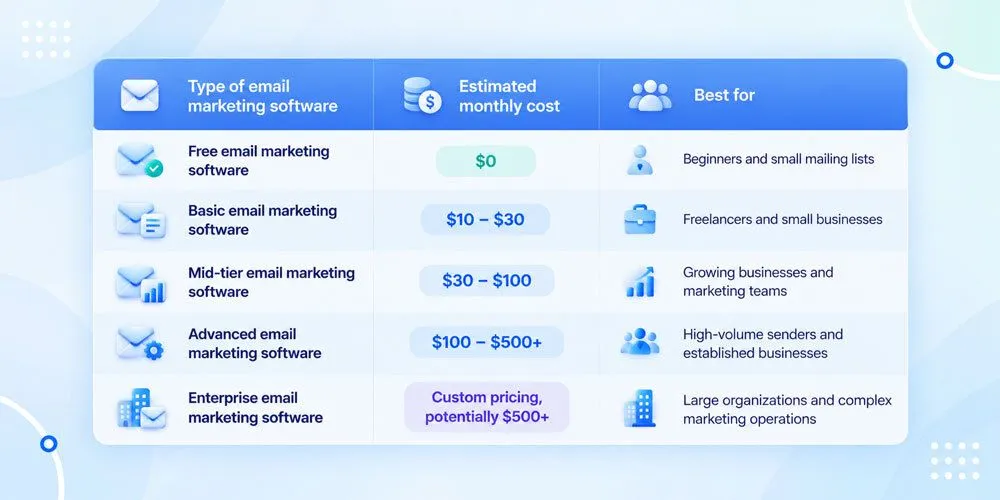
Actual prices can fall outside these ranges. Some platforms charge less for basic plans, while enterprise solutions can cost substantially more depending on their requirements.
For example, Capterra's July 2026 pricing comparison reported entry-level plans ranging from approximately $8 to $19 per month across several popular platforms, with higher-tier plans costing considerably more. These prices provide a useful reference point, but they should not be treated as confirmed 2027 rates.
The most important consideration is not simply the monthly subscription price. You also need to determine whether the plan includes the features required to execute your campaigns effectively.
What Factors Affect Email Marketing Software Pricing?
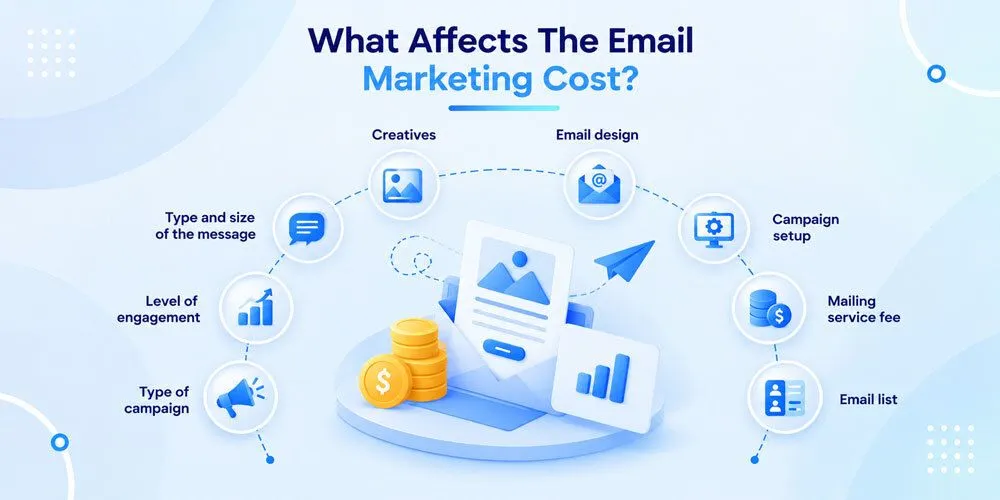
Email marketing platforms use different pricing structures, so two tools with similar starting prices may have very different total costs. Understanding the main pricing factors can help you avoid paying for unnecessary features or choosing a plan that becomes expensive as your business grows.
1. Number of Email Subscribers
The size of your email list is one of the most common factors affecting software pricing.
Many platforms use contact-based pricing, which means the subscription cost increases as your subscriber database grows. A business with 500 contacts may pay considerably less than one managing 25,000 or 100,000 contacts.
For example, a business with a list of 1,000 subscribers may need only a basic plan. However, as the list expands, the business may need to upgrade to accommodate additional contacts and access more advanced features.
Before selecting a plan, check how the platform counts contacts. Some providers may charge for all stored contacts, including inactive subscribers, while others offer different allowances or pricing structures.
Tip: Regularly clean your email list to remove invalid addresses and contacts you no longer need. This can help maintain list quality and may reduce costs on platforms that charge according to stored contacts.
2. Monthly Email Sending Volume
Some email marketing platforms charge according to the number of emails you send each month rather than the number of contacts you store.
This pricing model can work well for businesses with large databases that send campaigns infrequently. However, companies that send frequent newsletters, promotional campaigns, or automated emails may need a higher sending allowance.
Consider a business with 5,000 subscribers.
If it sends one newsletter each month, it needs approximately 5,000 campaign emails. If it sends four newsletters, it needs approximately 20,000 campaign emails, excluding automated messages and other communications.
The difference in sending volume can affect which pricing tier is appropriate.
When comparing platforms, check whether your allowance covers both regular campaigns and automated emails. You should also review the provider's overage fees, sending restrictions, and upgrade requirements.
3. Email Marketing Automation
Automation allows businesses to send emails automatically in response to specific actions, dates, or customer behaviors.
For example, an online store can send a welcome email when someone subscribes, a reminder when a shopper abandons a cart, and a follow-up after a purchase.
Basic automation may be included in entry-level plans, while more advanced workflows, behavioral triggers, branching logic, and sophisticated targeting may require a higher-tier subscription.
If your business plans to use automation regularly, look beyond the starting price. Evaluate the number of workflows you can create, the triggers available, and whether you can customize the customer journey.
Automation can also help reduce repetitive work, making a more expensive plan worthwhile if it saves your team enough time or supports additional revenue.
4. Email Segmentation and Personalization
Email segmentation allows marketers to divide subscribers into smaller groups based on characteristics such as interests, purchase history, engagement, or signup source.
Personalization uses that information to deliver more relevant messages to each group or individual.
For instance, an ecommerce business might send different product recommendations to first-time buyers and returning customers. A SaaS company might send onboarding emails based on the features a customer has used.
Some platforms include basic segmentation in their entry-level plans, while advanced filters, dynamic content, and behavioral targeting may be restricted to higher tiers.
These features can improve campaign relevance, but you should assess whether you will actually use them before paying for a more expensive plan.
5. Reporting and Analytics
Email marketing software often includes reporting tools that help businesses understand how their campaigns perform.
Depending on the platform and subscription, these tools may include:
- Email delivery and bounce reports
- Click-through rate tracking
- Unsubscribe and spam complaint monitoring
- Conversion and revenue attribution
- Campaign comparisons and A/B testing
- Automation performance reports
Basic reporting may be sufficient for businesses that send occasional newsletters. Teams running multiple campaigns or measuring revenue from email marketing may benefit from more detailed analytics.
When comparing plans, determine which metrics are included and whether advanced reporting requires an upgrade or integration with another tool.
6. Number of Users and Team Permissions
A solo marketer may need access for only one person, whereas an agency or larger organization may require multiple team members to manage campaigns.
Some platforms include a limited number of user seats in lower-tier plans. Additional seats, advanced permissions, and administrative controls may increase the overall cost.
If several people will use the software, check whether the plan supports role-based access, collaboration, account management, and appropriate security controls.
These features are especially important for agencies managing multiple client accounts and businesses with separate marketing teams.
7. Integrations and Additional Features
Email marketing software may integrate with ecommerce platforms, CRM systems, website builders, analytics tools, and customer databases.
Some integrations are included in the subscription, while others require third-party software or paid add-ons.
Additional costs may also arise from:
- SMS marketing
- Premium templates
- Landing page functionality
- Advanced AI features
- Dedicated onboarding or support
- Additional storage or sending capacity
- Ecommerce and CRM integrations
A platform with a low advertised price may become more expensive if essential capabilities are sold separately. Evaluate the complete set of tools your business needs rather than comparing subscription prices alone.
Common Email Marketing Software Pricing Models
Email marketing platforms generally use one or more pricing models. Understanding how each works will help you choose a plan that matches your subscriber database and sending habits.
Contact-Based Pricing
With contact-based pricing, your subscription depends primarily on the number of contacts stored in your account.
For example, a provider may offer different tiers for smaller lists and larger databases. As you add more subscribers, your subscription cost may increase.
Best for: Businesses that send campaigns regularly to a relatively stable subscriber list.
Potential drawback: Costs can rise as your database grows, even if you do not send more emails. Depending on the provider, inactive contacts may also count toward your allowance.
Email Volume-Based Pricing
Email volume-based pricing depends on the number of messages you send during a billing period.
For example, a plan may include 10,000 emails per month, with higher tiers available for businesses that need additional sending capacity.
Best for: Businesses with large subscriber lists that send emails occasionally, or organizations with predictable sending volumes.
Potential drawback: Frequent newsletters, promotions, and automated campaigns can quickly consume your allowance. Overage charges or plan upgrades may increase costs.
Feature-Based Pricing
Feature-based pricing divides plans according to the tools and functionality available.
A basic plan may include email campaigns, templates, and simple reporting. Higher-tier plans may offer advanced automation, A/B testing, detailed segmentation, and additional integrations.
Best for: Businesses that want to pay for functionality as their marketing requirements become more complex.
Potential drawback: Essential features may be locked behind higher-priced plans, so the advertised starting price may not reflect the cost of the plan you actually need.
Pay-As-You-Go Pricing
Some providers allow customers to purchase email credits or sending capacity when required instead of maintaining a recurring subscription.
This can be useful for businesses that send campaigns occasionally or have seasonal marketing requirements.
Best for: Businesses with irregular email sending schedules.
Potential drawback: Costs can be less predictable, and frequent campaigns may make a recurring subscription more economical.
Custom and Enterprise Pricing
Enterprise pricing is usually tailored to an organization's requirements. The cost may depend on contact volume, sending requirements, security, support, integrations, and account management needs.
Some providers also offer customized arrangements for agencies and resellers that want to deliver email marketing services under their own branding.
Best for: Large businesses, agencies, and organizations with specialized requirements.
Potential drawback: Pricing may not be publicly available, making it necessary to request a quote and evaluate the complete agreement.
Email Marketing Software Pricing Comparison
Comparing real platforms can help you understand how pricing and features differ. The following examples use publicly available pricing information from 2026, not confirmed prices for 2027.
Mailmunch
Free plan; Premium from $20.99/month billed annually or $29.99/month billed monthly
Contact-based pricing, email automation, popups, landing pages, and campaign analytics
Mailchimp
Free plan available; paid plans vary
Contact limits, email sending allowances, and advanced features
Constant Contact
From $10.20/month with annual billing
Contact-based pricing, email sending limits, and automation features
Brevo
Standard plan from $18/month
Email sending volume, contact allowances, and included features
These examples illustrate why comparing starting prices alone can be misleading. Each platform uses its own combination of contact allowances, sending limits, features, and billing conditions.
Prices may change before or during 2027. Always review the vendor's current pricing page and calculate the cost using your actual subscriber count and expected monthly sending volume.
Hidden Costs to Consider When Budgeting for Email Marketing Software
The monthly subscription is only one part of your email marketing budget. Depending on your setup, you may also need to account for additional expenses.
Setup and Migration Costs
Moving from one email marketing platform to another can require data exports, contact cleanup, template recreation, automation setup, and testing.
Some businesses can handle this process internally, while others may need professional assistance.
If you are switching platforms, include migration time and any implementation fees in your budget.
Email Design and Content Creation
Email marketing software provides tools for creating campaigns, but your team still needs to develop effective content.
Depending on your resources, this may involve hiring a copywriter, designer, or email marketing specialist. AI writing tools and ready-made templates can help reduce production time, although they may not eliminate the need for editing and quality assurance.
Third-Party Integrations
If your email marketing platform does not provide every capability you need, you may need additional software for CRM management, ecommerce tracking, analytics, or automation.
Review the cost of these tools and whether your chosen platform includes the integrations you require.
Additional Contacts or Email Sends
Exceeding your plan's contact or sending allowance may trigger an upgrade, additional charges, or restrictions on sending.
Check these conditions before committing to a subscription, especially if your list grows quickly or you run frequent promotional campaigns.
Taxes and Currency Conversion
Software providers may charge in US dollars or another currency. Businesses paying internationally should account for currency conversion, applicable taxes, and potential foreign transaction fees.
These expenses can affect the final amount charged to your payment method, even when the advertised subscription price remains unchanged.
How to Choose the Right Email Marketing Software for Your Budget
The right email marketing software should support your current marketing needs while allowing room for growth. Paying for advanced features you do not use can waste money, but choosing an overly restrictive plan may create additional costs later.
Here are five steps to help you make the right decision.
1. Define Your Email Marketing Goals
Start by identifying what you want to achieve.
Are you sending monthly newsletters, generating leads, nurturing prospects, recovering abandoned carts, or building automated customer journeys?
Your objectives will help determine which features are essential and which can wait until later.
2. Estimate Your Subscriber Count and Sending Volume
Calculate the number of contacts you expect to manage and how frequently you plan to email them.
For example, if you have 3,000 subscribers and plan to send four newsletters each month, you will need approximately 12,000 campaign emails monthly. Add your estimated automated emails to determine your total sending requirement.
This calculation will help you avoid choosing a plan that is too restrictive.
3. Identify Essential Features
Separate must-have features from optional extras.
For a small business, essential capabilities might include an email editor, templates, subscriber management, and campaign reporting.
A growing business may also need automation, segmentation, A/B testing, integrations, and more detailed analytics.
Choose a plan based on the capabilities your strategy requires, not the longest feature list.
4. Compare the Total Cost of Ownership
Look beyond the advertised monthly price. Calculate the annual subscription, possible add-ons, implementation costs, and any fees associated with additional contacts or email sends.
For example, a plan costing $30 per month has a base annual subscription cost of $360. If it requires additional paid tools or regular upgrades, your actual annual spending will be higher.
Comparing total costs gives you a more accurate picture of the investment required.
5. Consider Scalability and Support
Your email marketing requirements will probably change as your business grows.
Choose a platform that can accommodate a larger subscriber list, more sophisticated workflows, and additional team members without requiring a complete migration.
You should also consider the quality of documentation, support availability, account security, and ease of use.
The cheapest plan is not necessarily the most economical choice if it creates operational difficulties or prevents your team from executing its marketing strategy.
How Much Should Small Businesses Spend on Email Marketing Software?
Small businesses should begin with a budget based on their actual needs rather than an arbitrary spending target.
A company with a small mailing list and straightforward newsletter requirements may be able to use a free plan or an entry-level subscription. A business that depends on lead nurturing, behavioral automation, and detailed campaign reporting may benefit from a more capable paid plan.
Consider the following illustrative scenarios:
Scenario 1: A freelancer or startup
A freelancer with a small subscriber list may need only basic campaign creation, signup forms, and reporting. A free plan or a low-cost subscription could be sufficient.
Scenario 2: A growing ecommerce business
An online store sending promotional emails, welcome sequences, abandoned-cart reminders, and post-purchase messages may need automation, segmentation, and ecommerce integrations. A mid-tier subscription may be more appropriate.
Scenario 3: A marketing agency
An agency managing campaigns for multiple clients may require separate accounts, staff permissions, client management, and branded software. Its budget will depend on the number of accounts, required features, and whether it uses a white-label platform.
The key is to connect software spending with business objectives. A more expensive platform can provide value when its features improve productivity, support revenue generation, or reduce the need for additional tools.
Is Free Email Marketing Software Worth It in 2027?
Free email marketing software can be a practical starting point for beginners and businesses that are testing email as a marketing channel.
Depending on the provider, a free plan may include campaign creation, basic templates, contact management, and limited reporting. Some platforms also provide introductory access to automation or other marketing features.
However, free plans typically have restrictions. These may include subscriber limits, monthly sending caps, limited automation, fewer user seats, or restricted support.
A free plan is worth considering when it covers your current requirements without creating unnecessary workarounds.
You may need to upgrade when your subscriber list grows, your sending frequency increases, or your marketing strategy requires advanced segmentation and automation.
Before choosing a free plan, check whether it includes the features you need and whether upgrading later will fit your budget.
How Mailmunch Can Help Businesses Manage Email Marketing Costs
Choosing email marketing software is not just about finding the lowest subscription price. Businesses also need tools that help them create campaigns efficiently, manage subscribers, and improve marketing performance without adding unnecessary complexity.
Mailmunch offers email marketing capabilities that can support different stages of a business's email marketing strategy.
Depending on the plan and features available, useful capabilities may include:
- Email templates and drag-and-drop editing: Create professional campaigns without building every email from scratch.
- Email marketing automation: Set up automated workflows for welcome messages, follow-ups, and other customer interactions.
- AI-powered content tools: Assist with email copy and subject line creation to help streamline campaign production.
- Subscriber management: Organize contacts and support more targeted marketing campaigns.
- Campaign analytics: Monitor campaign performance and identify opportunities to improve engagement.
For agencies and businesses interested in offering email marketing under their own branding, Mailmunch White Label provides a separate option to explore. Relevant capabilities may include branded experiences, partner administration, and account management features, depending on the applicable plan.
Before choosing any Mailmunch plan, review the current product and pricing details to confirm which features, limits, and services are included.
The objective is to find a solution that meets your needs today while supporting future growth. A platform that combines campaign creation, subscriber management, and automation can also reduce the need to maintain multiple disconnected tools.
Final Thoughts
Email marketing software costs in 2027 will depend on how many subscribers you manage, how frequently you send campaigns, and which features your business needs.
Free plans can be useful for beginners, entry-level subscriptions can support straightforward campaigns, and more advanced platforms can help growing businesses manage automation, segmentation, reporting, and complex workflows.
Before committing to a platform, compare the pricing model, included features, sending limits, potential add-on costs, and scalability. Most importantly, choose software that supports your marketing objectives without forcing you to pay for capabilities you will not use.
The best email marketing software is not necessarily the cheapest option. It is the one that delivers the right combination of features, usability, and long-term value for your business.
Frequently Asked Questions About Email Marketing Software Costs
1. What is the average cost of email marketing software?
There is no single average that applies to every business. Free plans are available, basic paid subscriptions may cost around 10–30 per month, and more advanced solutions can cost hundreds of dollars per month or more. The actual price depends on contact limits, sending volume, features, and the provider.
2. Is email marketing software free?
Yes. Several providers offer free plans, although these usually have restrictions on subscribers, sending volume, features, or users. Businesses with more demanding requirements may need a paid subscription.
3. What is the cheapest email marketing software?
The cheapest option depends on your subscriber count, sending requirements, and the features you need. A free plan may be sufficient for a small mailing list, while a paid entry-level plan may offer better value if it includes essential automation and reporting.
Compare the total cost for your actual usage rather than relying on advertised starting prices.
4. Does email marketing software charge per email?
Some providers charge based on sending volume, while others use contact-based or feature-based pricing. Certain platforms combine these models or offer pay-as-you-go credits. Check the provider's pricing structure to understand how your email volume affects your subscription.
5. How much does email marketing automation cost?
Automation may be included in basic plans, while more advanced workflows and behavioral targeting may require a higher subscription tier. Costs vary by provider and the complexity of your requirements.
When evaluating automation pricing, consider the time it could save your team and the business outcomes it could support.
6. Is annual billing cheaper than monthly billing?
Many providers offer discounted rates for annual billing compared with paying month to month. However, annual plans may require a larger upfront payment or a longer commitment.
Compare the total annual cost and review the cancellation policy before choosing an annual subscription.
7. How much does white-label email marketing software cost?
White-label email marketing software pricing depends on the provider, number of client accounts, branding requirements, automation capabilities, and partner management features. Some providers publish their prices, while others offer customized quotes.
Agencies should also consider the cost of managing multiple clients and the revenue they expect to generate from their branded email marketing services.
8. Will email marketing software prices increase in 2027?
Pricing changes depend on individual providers and their business models. Some may adjust subscription rates, contact limits, or included features, while others may introduce new plans or billing structures.
Because 2027 pricing cannot be confirmed in advance for every provider, review current pricing pages before purchasing and revisit your software budget periodically.