Email Marketing in Healthcare: A Practical Guide for Healthcare Managers to Drive Patient Loyalty

Ayesha Ejaz Last updated on
Building long-term trust and loyalty requires more than exceptional medical services in today’s fast-paced healthcare industry, where patient expectations are higher than ever. Digital communication—especially email marketing—has become one of the most effective tools for improving patient engagement, retention, and satisfaction.
Email marketing isn’t just a promotional channel for healthcare managers—it’s a strategic way to nurture patient relationships, educate communities, and strengthen the patient-provider bond. With the right strategies, email can transform from a basic reminder system into a powerful driver of patient loyalty.
What is Email Marketing for Healthcare?
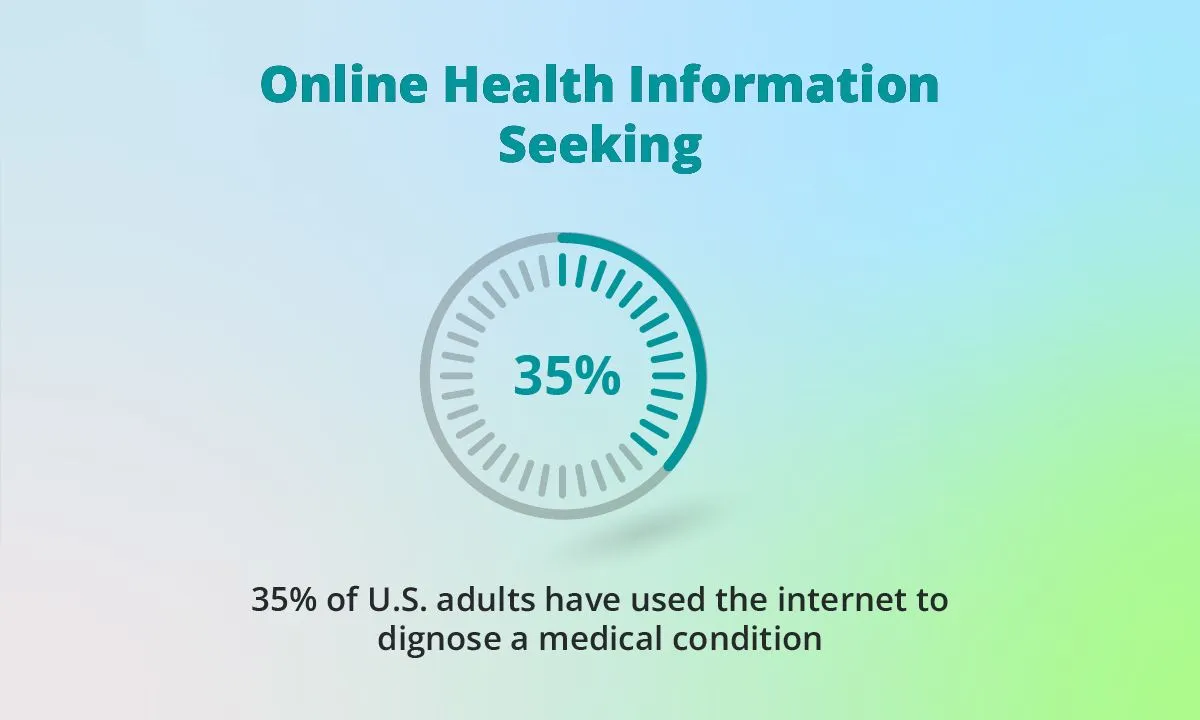
Healthcare email marketing refers to the use of targeted, permission-based email campaigns to communicate with patients, caregivers, partners, and even other healthcare organizations. Unlike generic marketing, this approach emphasizes trust, accuracy, and compliance with patient privacy regulations.
The primary goals of healthcare email marketing include:
- Patient communication: Streamlining appointment reminders, follow-ups, and lab results.
- Education: Sharing wellness tips, preventive care advice, and updates on medical research.
- Retention: Keeping patients connected through regular touchpoints to reduce drop-offs.
- Promotion: Highlighting new services, facilities, or health programs.
When done right, email becomes more than just information delivery—it becomes a relationship-building tool that supports better health outcomes.
Benefits of Email Marketing in Healthcare
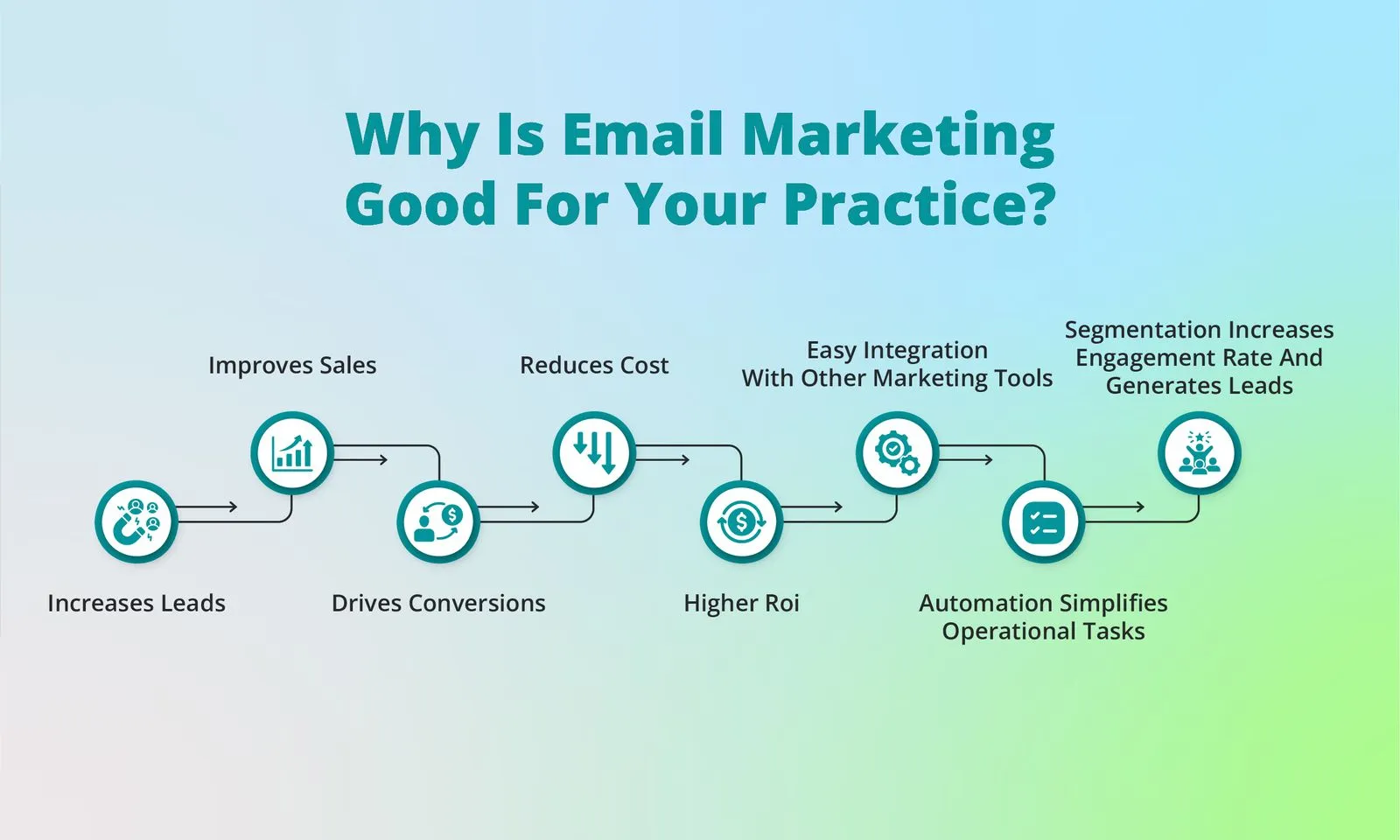
Healthcare managers often face tight budgets and rising patient expectations. Email marketing offers an affordable yet highly effective solution.
Key benefits include:
- Cost-effectiveness: Email costs significantly less than traditional advertising like print, radio, or TV campaigns.
- Enhancing patient retention and loyalty: Regular updates keep patients engaged, reducing the likelihood of switching providers.
- Reducing no-shows: Timely appointment reminders via email drastically cut down on missed visits.
- Strengthening patient-provider relationships: Personalized, compassionate communication builds trust.
- Promoting proactive health education: Email allows clinics to deliver preventive care tips, awareness campaigns, and health alerts directly to patients.
Types of Healthcare Email Campaigns
Healthcare managers can design different types of campaigns depending on their goals:
- Appointment reminders and follow-ups – Reduce no-shows and encourage adherence to treatment plans.
- Wellness tips and patient education – Promote healthy habits, seasonal health advice, or chronic condition management.
- Promotions for new healthcare services and programs – Announce new departments, telemedicine services, or wellness packages.
- Newsletters with clinic updates and health insights – Keep patients connected with your brand while delivering value.
- B2B communication – Share updates with insurers, pharmaceutical partners, or research institutions.
Building a Successful Healthcare Email Marketing Strategy
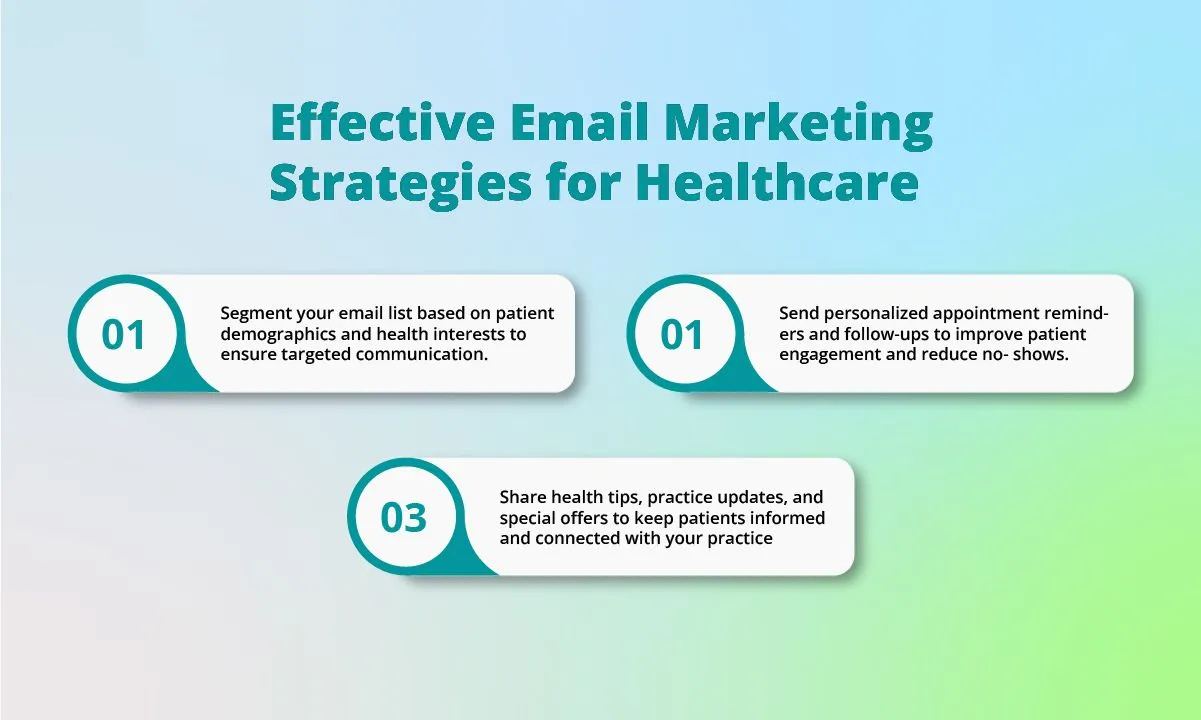
Creating impactful email campaigns requires a structured approach. Below are the pillars of a strong healthcare email marketing strategy:
Compliance and Privacy
- HIPAA compliance is non-negotiable. Patient data must always be handled with confidentiality.
- Encrypt sensitive information and use secure servers.
- Offer transparent opt-in and opt-out processes to respect patient choices.
Building and Segmenting Your Email List
- Grow your subscriber base ethically by encouraging patients to sign up during visits or through secure online forms.
- Segment lists based on demographics (age, gender), health conditions (chronic illness, preventive care needs), or engagement behavior.
- Segmentation allows healthcare managers to deliver more targeted and relevant campaigns, improving patient response.
Crafting Engaging and Relevant Content
- Personalize emails with patient names and relevant health advice.
- Use compassionate, jargon-free language that resonates with patients.
- Balance educational content (like nutrition tips) with actionable advice (like scheduling a flu shot).
Design and Deliverability Best Practices
- Ensure emails are mobile-friendly since most patients check emails on phones.
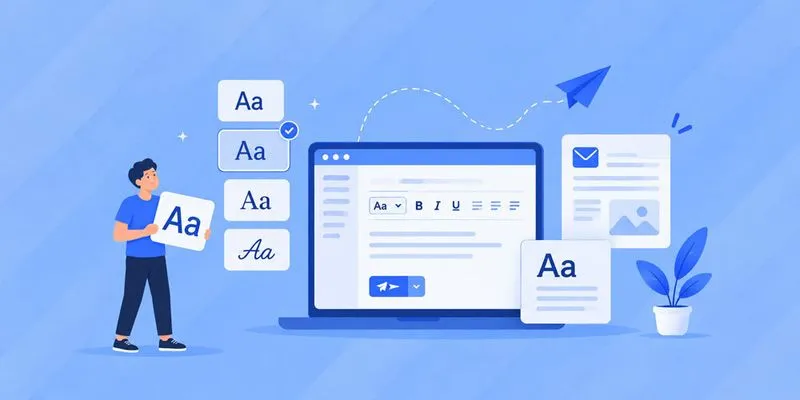
- Use accessible design—readable fonts, alt text for images, and clear CTAs.
- Avoid spam triggers by optimizing subject lines and keeping messages concise.
- Test different send times to maximize open rates and engagement.
Monitoring and Measuring Campaign Effectiveness
To refine your efforts, healthcare managers must track performance regularly.
Key metrics include:
- Open rates – Do patients find your subject lines compelling?
- Click-through rates (CTR) – Are patients engaging with your content?
- Conversion rates – Are emails leading to booked appointments or health program enrollments?
Analytics tools like Mailmunch, Mailchimp, Constant Contact, or healthcare-focused CRM systems help A/B test subject lines, track engagement, and optimize campaigns for better results.
Current Trends and Innovations in Healthcare Email Marketing
The healthcare industry is evolving rapidly, and email marketing is no exception. Emerging trends include:
- Integration with telemedicine platforms and patient portals – Emails now link directly to secure portals where patients can book appointments or consult doctors virtually.
- Automation and AI – From personalized patient journeys to predictive care reminders, AI ensures messages are relevant and timely.
- Interactive content and multimedia – Videos, infographics, and quizzes make emails more engaging and educational.
Healthcare managers who embrace these innovations will stand out by delivering seamless, patient-centered experiences.
Conclusion
Email marketing is not just a promotional tool for healthcare managers—it’s a strategic driver of patient loyalty, trust, and engagement. From reducing no-shows to improving patient education and satisfaction, email is a cost-effective, scalable solution that benefits both providers and patients.
By following best practices—ensuring compliance, segmenting lists, personalizing content, and embracing new trends—managers can build email campaigns that truly make a difference in healthcare outcomes.
Now is the time for healthcare organizations to leverage email marketing as a cornerstone of patient communication and retention strategies.