Mailmunch vs MailerLite: Which Email Marketing Tool Is Better in 2026?

Ayesha Ejaz Last updated on

Email marketing in 2026 is defined by automation depth, data-driven segmentation, omnichannel integrations, and conversion optimization. Businesses are no longer comparing tools based solely on newsletter functionality. Instead, the focus has shifted to lifecycle marketing, behavioral triggers, lead scoring, and revenue attribution.
In this comprehensive comparison of Mailmunch vs MailerLite, we will analyze:
- Platform architecture and positioning
- Lead capture and conversion tools
- Email builder and campaign flexibility
- Automation sophistication
- eCommerce integrations
- Pricing scalability
- Use-case alignment
- ROI potential
If you are evaluating which platform can support sustainable growth, this guide will provide a structured and detailed assessment.
Mailmunch vs MailerLite: Platform Overview
What Is Mailmunch?
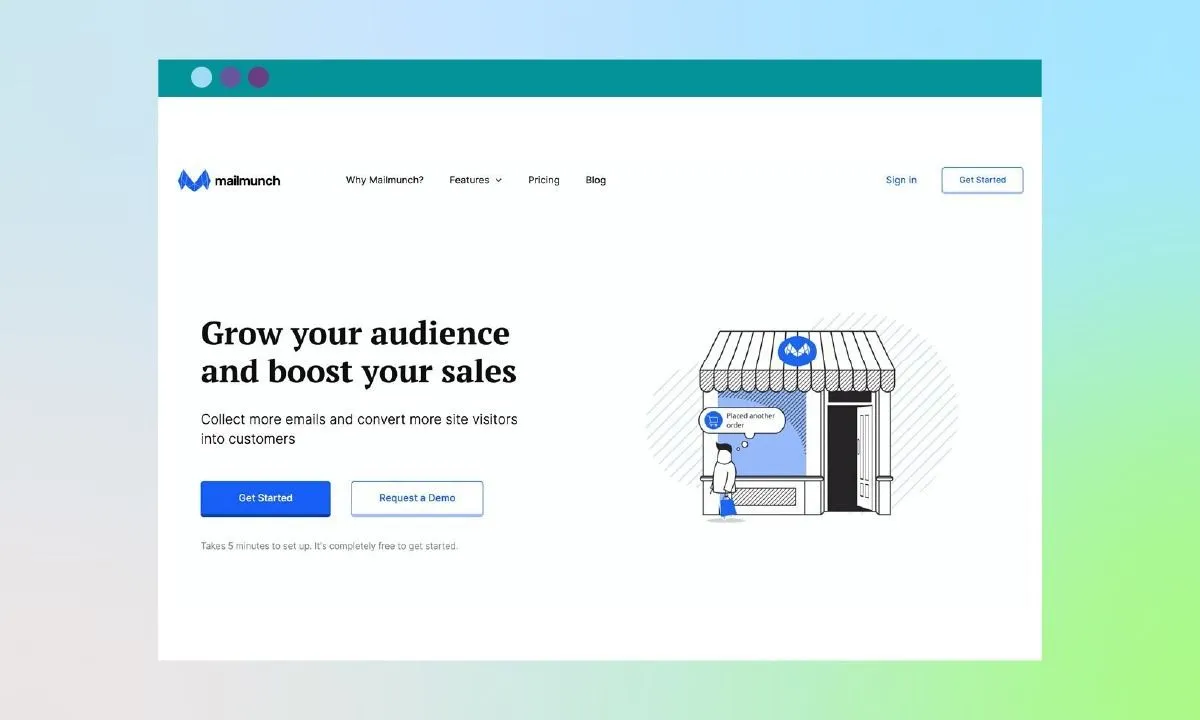
Mailmunch is a full-stack email marketing and lead generation platform designed to consolidate list building, campaign execution, and automation within a single ecosystem.
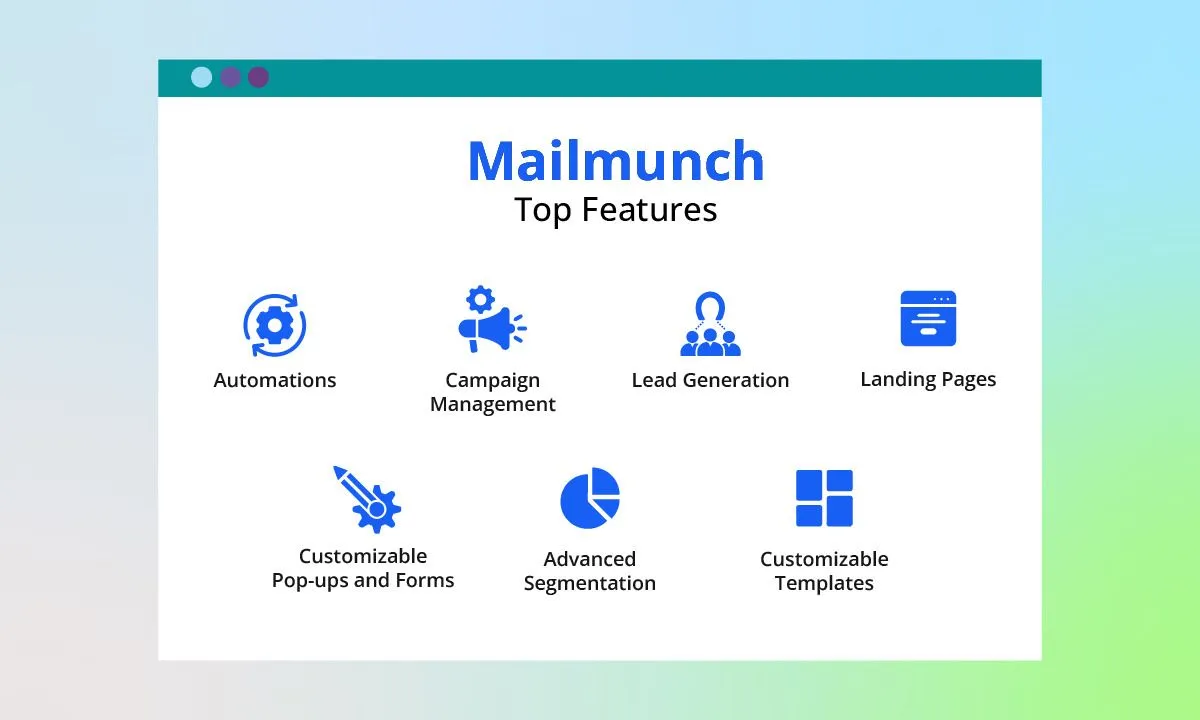
Unlike tools that focus primarily on email broadcasting, Mailmunch integrates:
- Advanced popup and form builders
- Landing page creation
- Email campaign management
- Marketing automation workflows
- Behavioral segmentation
- eCommerce integrations
Its infrastructure is built for performance-driven marketing. Businesses can manage acquisition, nurturing, and conversion inside one platform without relying on multiple third-party tools.
Mailmunch is particularly suitable for:
- eCommerce brands
- Digital product sellers
- Bloggers and publishers
- Agencies managing multiple funnels
- Growth-focused SMEs
The core value proposition is centralization: instead of stitching together separate lead capture and email systems, users operate within a unified conversion environment.

What Is MailerLite?
MailerLite is primarily an email marketing solution known for its clean interface and beginner-friendly experience.
Its primary strengths include:
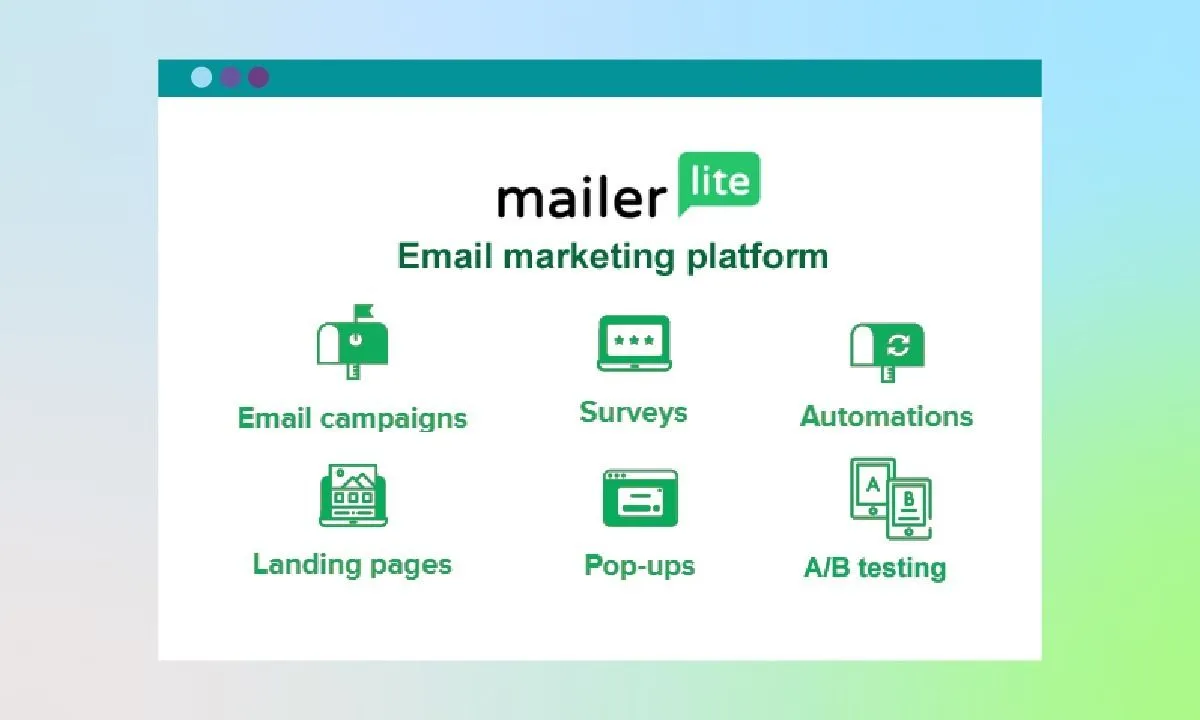
- Newsletter campaigns
- Basic automation workflows
- Landing pages
- Subscriber tagging
MailerLite is often positioned toward:
- Small businesses
- Solopreneurs
- Content creators
- Teams seeking simple email distribution
While it offers automation and landing pages, its depth in lead capture triggers and advanced automation logic is more limited compared to Mailmunch.
Feature Comparison: Why Mailmunch Stands Out
Lead Capture and Form Builder
Lead generation is the foundation of email marketing performance. The quality of your opt-in tools directly impacts conversion rate, list growth velocity, and revenue potential.
Mailmunch Lead Capture Capabilities
Mailmunch provides:
- Exit-intent popups
- Scroll-triggered forms
- Timed display popups
- Geo-targeted forms
- Device-based targeting
- Embedded forms
- Floating bars
- Slide-ins
- Dedicated landing pages
These tools include advanced display logic such as:
- Trigger after X seconds
- Trigger on scroll percentage
- Trigger on exit behavior
- Target by referral source
- Exclude existing subscribers
This granular targeting enables businesses to personalize lead capture strategies based on user behavior.
For example:
- Offer discount popups only to first-time visitors.
- Display cart reminders only to users with items in checkout.
- Trigger content upgrades for blog readers after 50% scroll depth.
MailerLite Lead Capture
MailerLite offers:
- Basic popups
- Embedded forms
- Simple landing pages
While functional, customization depth and behavioral targeting are less advanced. For businesses aggressively optimizing conversion funnels, Mailmunch provides significantly more flexibility.
Email Campaign Builder
Both platforms offer drag-and-drop editors. However, structural depth differs.
Mailmunch Email Builder
Mailmunch includes:
- Pre-designed conversion-focused templates
- Custom HTML support
- Brand styling controls
- Mobile responsiveness
- A/B testing capabilities
- Dynamic content blocks
Campaign types supported:
- Promotional emails
- Drip campaigns
- Welcome sequences
- Product launches
- Abandoned cart emails
- Re-engagement campaigns
The platform emphasizes performance optimization, allowing marketers to refine subject lines, preview text, and layout structure to improve open and click-through rates.
MailerLite Email Builder
MailerLite is known for:
- Minimalist template design
- Clean drag-and-drop experience
- Newsletter-style formatting
While effective for standard broadcasting, it offers fewer advanced personalization or dynamic segmentation capabilities compared to Mailmunch.
Marketing Automation
Automation sophistication often determines whether a platform can scale with your business.
Mailmunch Automation
Mailmunch provides:
- Visual workflow automation
- Multi-step drip sequences
- Conditional logic
- Behavioral triggers
- Tag-based segmentation
- Cart abandonment workflows
- Time-delay triggers
- Event-based triggers
This allows marketers to build lifecycle campaigns such as:
- Welcome sequence
- Product education flow
- Engagement scoring
- Sales conversion push
- Re-engagement campaign
The inclusion of behavioral triggers ensures communication aligns with user intent.
MailerLite Automation
MailerLite supports automation workflows but with more simplified logic. While it allows:
- Basic triggers
- Email sequences
- Subscriber tagging
It lacks the same depth in behavioral segmentation and event-triggered flows.
For complex funnels and revenue-driven campaigns, Mailmunch provides stronger automation infrastructure.
Integrations
Integration breadth directly affects workflow efficiency.
Mailmunch integrates with major eCommerce platforms including:
- Shopify
- WooCommerce
- BigCommerce
These integrations enable:
- Automated abandoned cart emails
- Purchase-triggered follow-ups
- Revenue tracking
- Customer segmentation by buying behavior
MailerLite supports integrations as well, but Mailmunch offers stronger conversion-oriented eCommerce functionality.
Pricing Comparison: Mailmunch vs MailerLite
Pricing analysis should evaluate not just cost, but feature accessibility at each tier.
Free Plan Comparison
Mailmunch Free Plan includes:
- Core lead capture tools
- Email campaigns
- Limited automation
- Subscriber caps
MailerLite Free Plan includes:
- Newsletter sending
- Basic forms
- Limited automation
From a value perspective, Mailmunch’s inclusion of stronger lead capture tools increases monetization potential even on entry-level plans.
Paid Plan Breakdown
When scaling subscriber counts:
- Mailmunch provides earlier access to automation features.
- MailerLite often gates advanced automation behind higher tiers.
Cost per subscriber becomes more efficient when factoring in Mailmunch’s expanded feature set.
Value for Money
To evaluate ROI, consider:
- Lead conversion rates
- Automation depth
- Integration capability
- Reduction in third-party tool costs
Mailmunch consolidates multiple marketing functions into one platform, reducing tool fragmentation and improving operational efficiency.
Ease of Use and User Experience
Dashboard and Navigation
MailerLite prioritizes minimalism. Its dashboard is intuitive for beginners.
Mailmunch balances usability with depth. While slightly more feature-rich, it offers structured onboarding and guided setup flows that reduce implementation friction.
Businesses that anticipate growth often benefit from a system that supports complexity without requiring migration later.
Customer Support and Resources
Mailmunch provides:
- Email support
- Documentation
- Integration guides
- Knowledge base
- Tutorials
Support scalability becomes increasingly important as automation complexity increases.
MailerLite offers support resources as well, but advanced support availability may depend on subscription level.
Use Cases: Who Should Choose Mailmunch?
Best for eCommerce Businesses
Mailmunch is optimized for revenue-driven campaigns:
- Cart abandonment sequences
- Post-purchase upsell emails
- Product-specific segmentation
- Dynamic audience targeting
Its deep integration with Shopify, WooCommerce, and BigCommerce enables advanced revenue tracking and lifecycle automation.
Best for Bloggers and Content Creators
Mailmunch supports:
- Content upgrade forms
- Scroll-triggered blog popups
- Automated welcome funnels
- Segmented newsletter audiences
Creators can build and monetize email lists more strategically through behavioral targeting.
Best for Agencies and Growing Businesses
Agencies require:
- Scalable automation
- Multi-client campaign management
- Conversion tracking
- Cost efficiency
Mailmunch’s comprehensive feature stack reduces reliance on additional software, improving profitability margins.
When MailerLite May Be Suitable
MailerLite may be appropriate for:
- Users needing only newsletter broadcasting
- Small lists with minimal segmentation
- Very early-stage marketers
For simple email campaigns without advanced funnels, MailerLite remains functional.
Pros and Cons
Mailmunch Pros and Cons
Pros:
- Comprehensive feature set
- Strong automation depth
- Advanced lead capture tools
- Robust integrations
- Competitive pricing
- Scalable infrastructure
Cons:
- May feel feature-rich for users seeking only basic newsletters
MailerLite Pros and Cons
Pros:
- Clean interface
- Easy setup
- Suitable for simple campaigns
Cons:
- Limited advanced automation
- Fewer behavioral triggers
- Less robust eCommerce integration
- Fewer lead capture customization options
Final Verdict: Mailmunch vs MailerLite
In 2026, email marketing success depends on automation maturity, integration depth, and conversion optimization.
If your goal is basic newsletter communication, MailerLite provides a straightforward solution.
However, if you are focused on:
- Growing your subscriber base
- Increasing conversion rates
- Automating revenue workflows
- Scaling lifecycle marketing
Mailmunch offers a more comprehensive and future-proof platform.
For businesses seeking long-term scalability and higher ROI, Mailmunch stands out as the stronger strategic investment.
Frequently Asked Questions (FAQ)
Is Mailmunch better than MailerLite?
For businesses requiring advanced lead capture, automation, and eCommerce workflows, Mailmunch offers broader functionality and scalability.
Which is more affordable: Mailmunch or MailerLite?
Both platforms offer competitive pricing, but Mailmunch often delivers stronger value at comparable tiers due to expanded feature access.
Does Mailmunch offer better automation than MailerLite?
Yes. Mailmunch provides visual workflows, conditional logic, and behavioral triggers that exceed MailerLite’s more basic automation framework.
What is the best MailerLite alternative?
For businesses seeking stronger automation, improved lead generation tools, and deeper eCommerce integrations, Mailmunch is one of the strongest MailerLite alternatives in 2026.