Product Launch Emails: The Complete Guide to Creating Campaigns That Drive Excitement and Sales

Ayesha Ejaz Last updated on
Launching a new product is one of the most exciting milestones for any business. Months of planning, research, design, and development all lead up to one pivotal moment introducing your product to the world. However, even the most innovative products can fail to gain traction without a well-executed marketing strategy. That's where product launch emails come in.
Email marketing remains one of the highest-performing digital marketing channels, delivering exceptional ROI while enabling brands to communicate directly with interested audiences. A carefully planned product launch email campaign helps you build anticipation, educate subscribers, generate demand, and ultimately convert excitement into revenue.
Whether you're launching a SaaS feature, an ecommerce product, a mobile app, or an online course, product launch emails give you complete control over your messaging and customer journey. Instead of relying solely on social media algorithms or paid advertising, email allows you to engage subscribers with personalized content that encourages action.
In this guide, you'll learn everything you need to know about product launch emails, including why they matter, the different types of launch emails, how to build an effective launch sequence, and best practices for maximizing conversions.
What Are Product Launch Emails?
Product launch emails are marketing emails designed to announce and promote a new product, service, or feature to your subscribers. Rather than sending a single announcement, successful brands often create an entire launch campaign consisting of multiple emails sent before, during, and after launch.
These emails serve different purposes throughout the customer journey, including:
- Building anticipation before launch
- Introducing product benefits
- Educating customers
- Creating urgency
- Encouraging purchases
- Collecting customer feedback
- Maintaining momentum after launch
Unlike traditional promotional emails that focus on discounts or seasonal campaigns, product launch emails tell a story. They gradually reveal information, answer customer questions, showcase value, and motivate subscribers to take action.
Why Product Launch Emails Matter
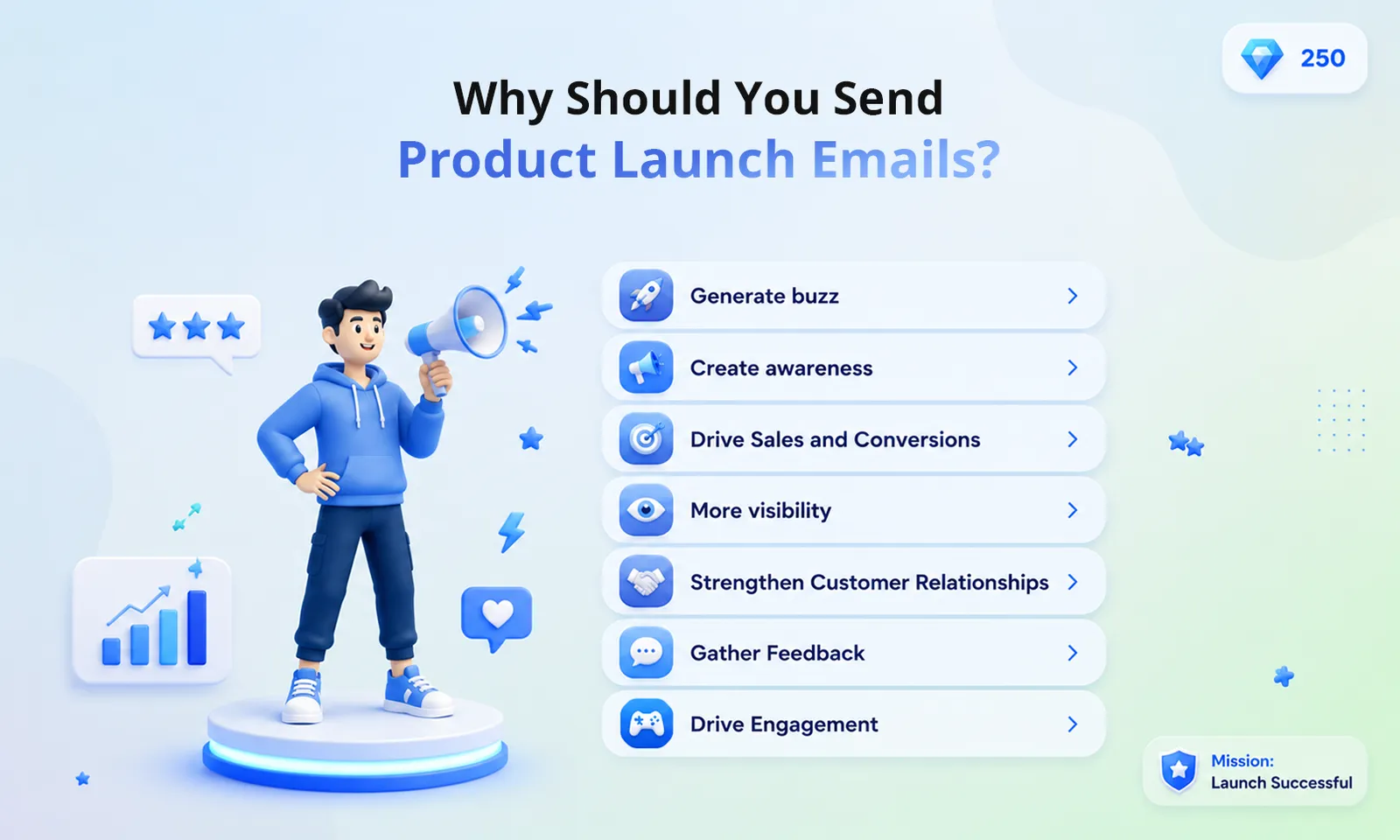
Many businesses invest heavily in product development but underestimate the importance of launch communication. Without a strategic email campaign, customers may never fully understand what makes your new offering valuable.
A product launch email campaign helps you:
Create Anticipation
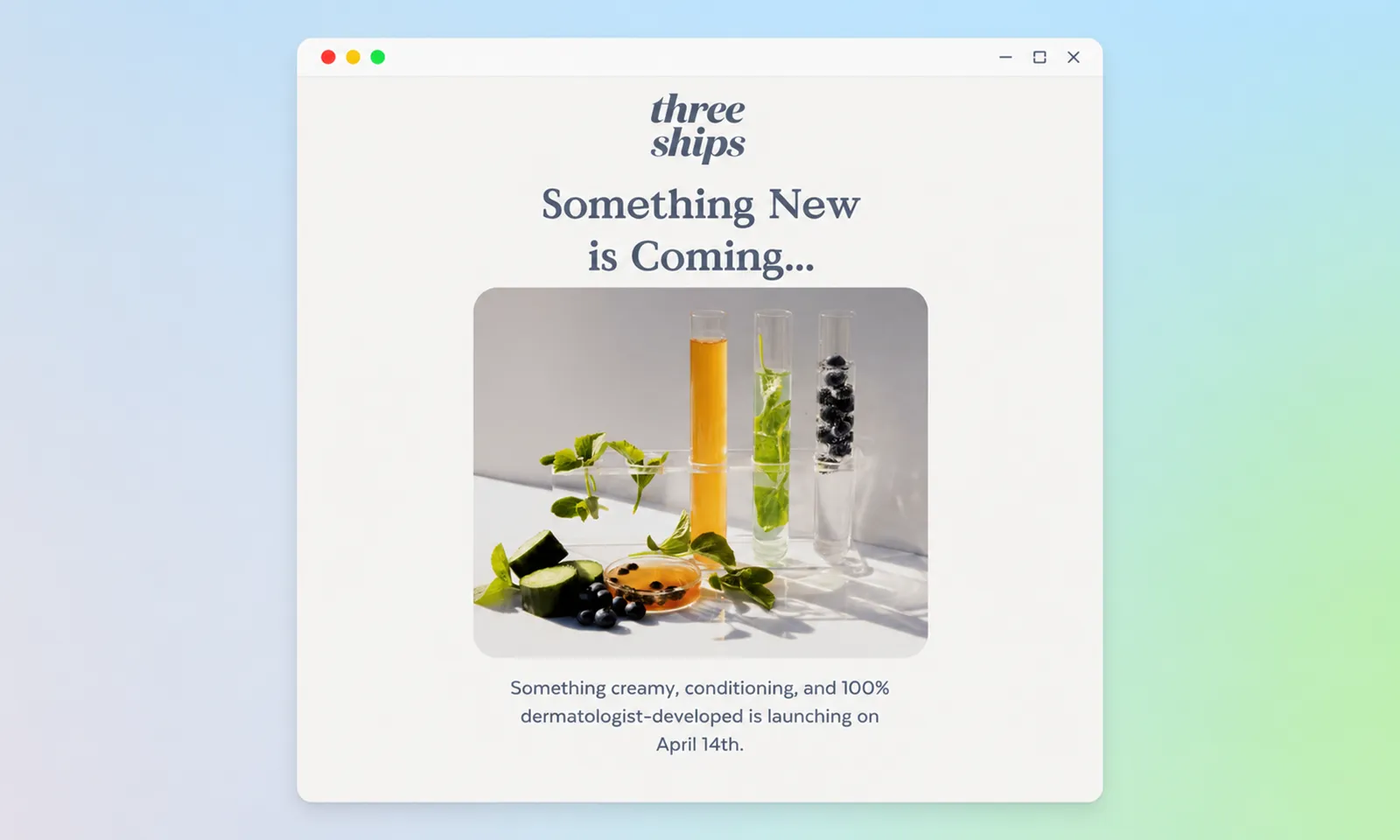
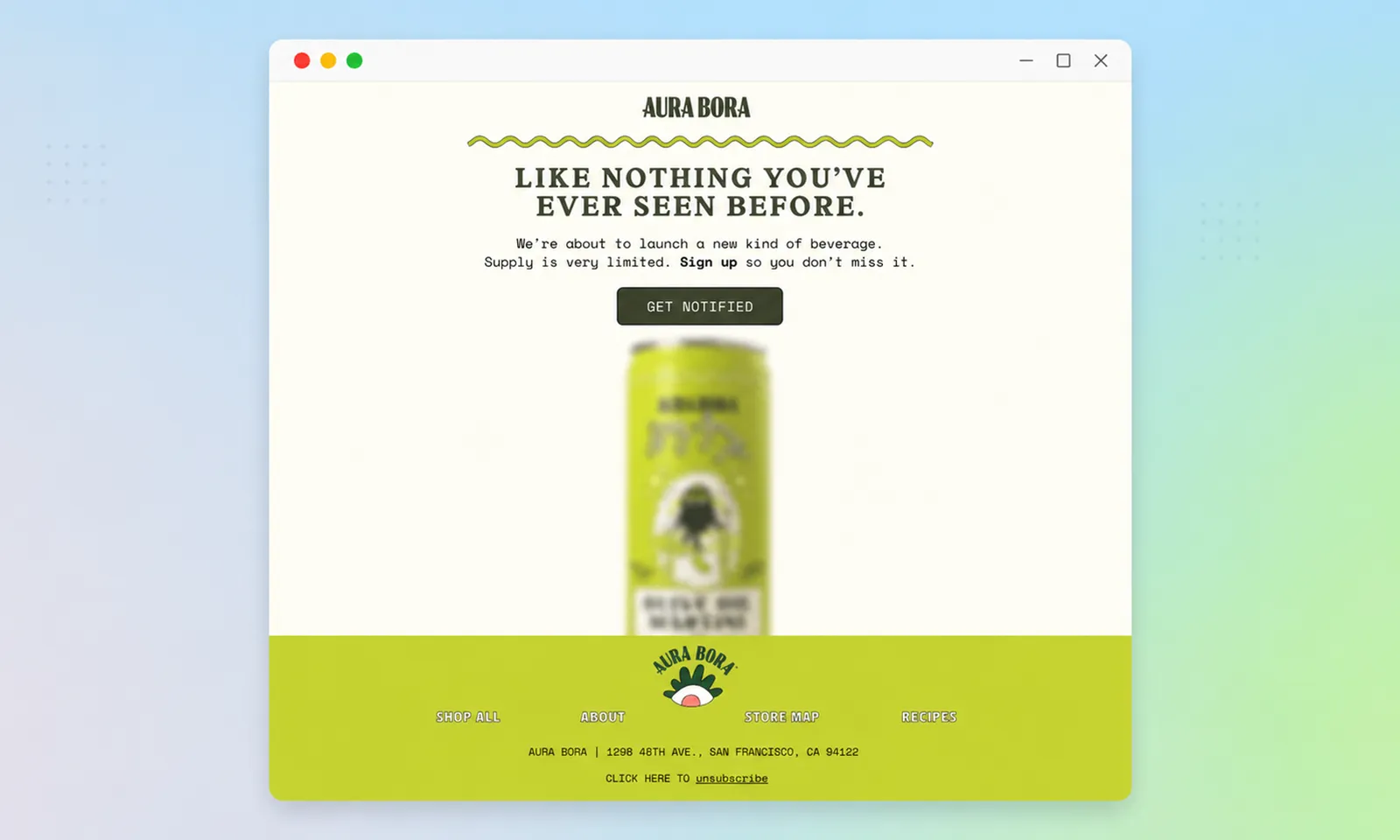
Successful launches begin long before launch day. Teaser emails spark curiosity without revealing every detail, encouraging subscribers to stay engaged and look forward to future announcements.
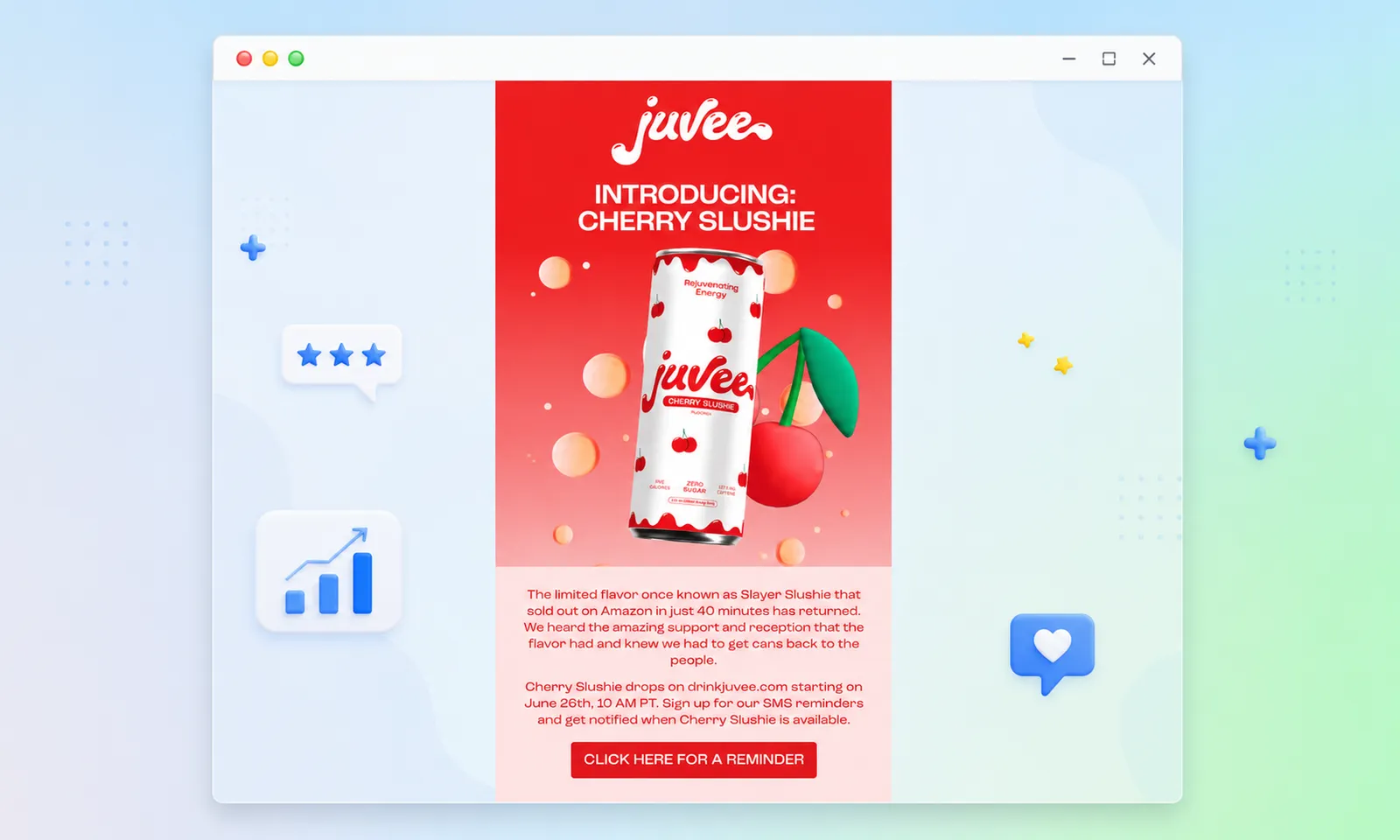
Educate Your Audience
Customers rarely purchase products they don't understand. Product launch emails allow you to explain features, benefits, use cases, and unique selling points through digestible content.
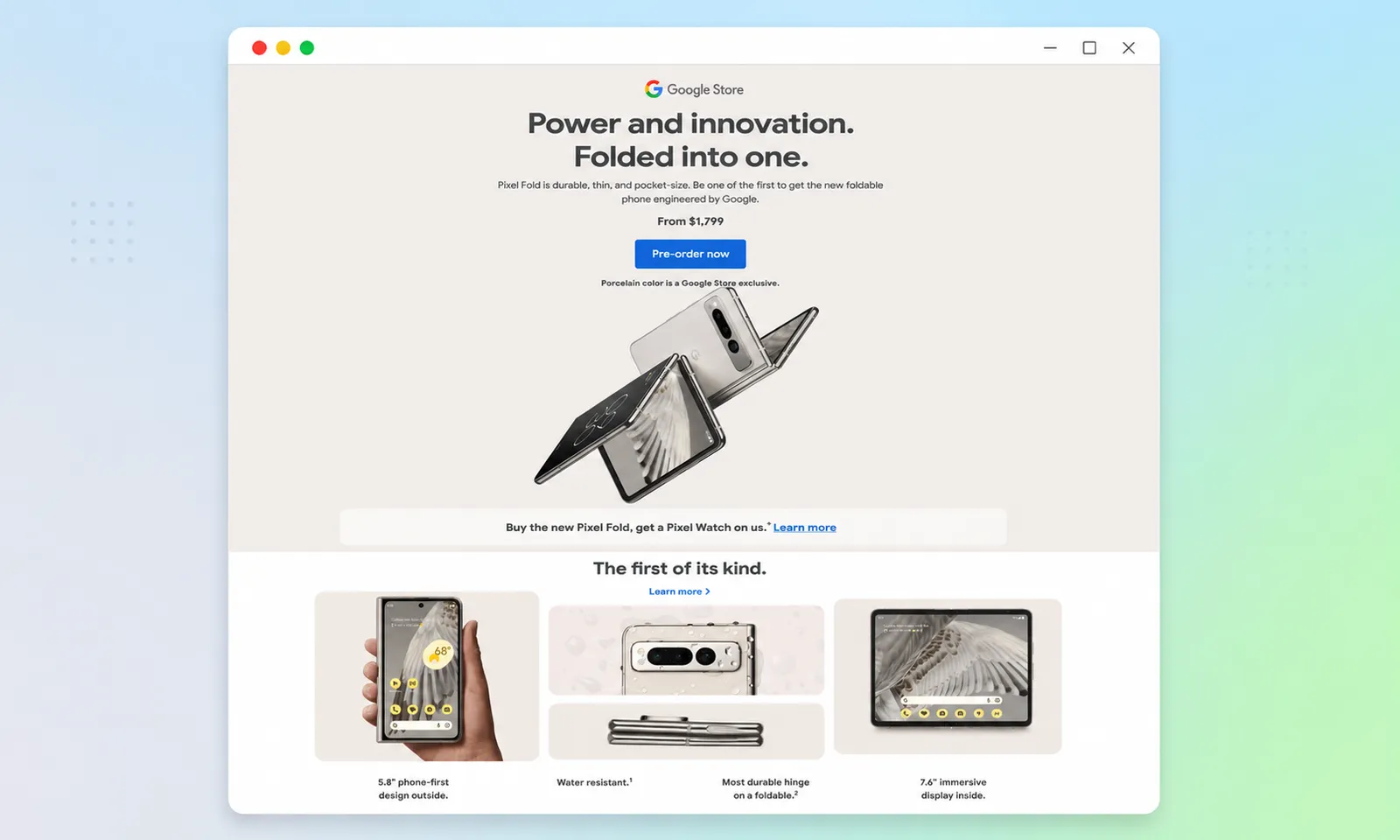
Drive Immediate Sales
Launch-day emails create excitement while encouraging immediate purchases through limited-time offers, exclusive access, or early-bird pricing.
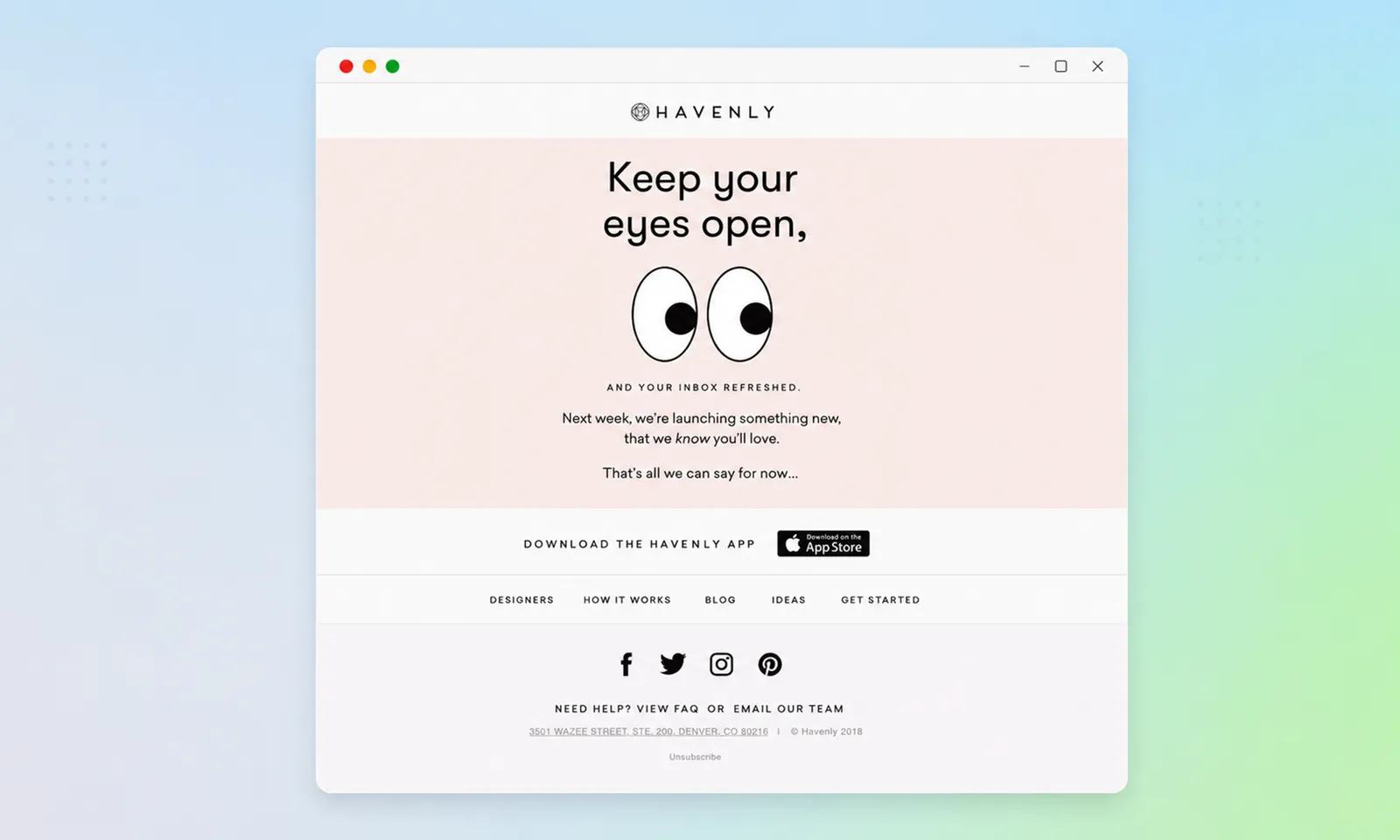
Build Customer Relationships
Instead of feeling like advertisements, well-crafted launch emails invite subscribers to become part of the journey, making them feel valued and included.
Increase Brand Awareness
Even subscribers who don't purchase immediately become familiar with your new product, making future marketing efforts more effective.
Benefits of Product Launch Emails
A strategic launch campaign delivers measurable business results beyond simply announcing a new product.
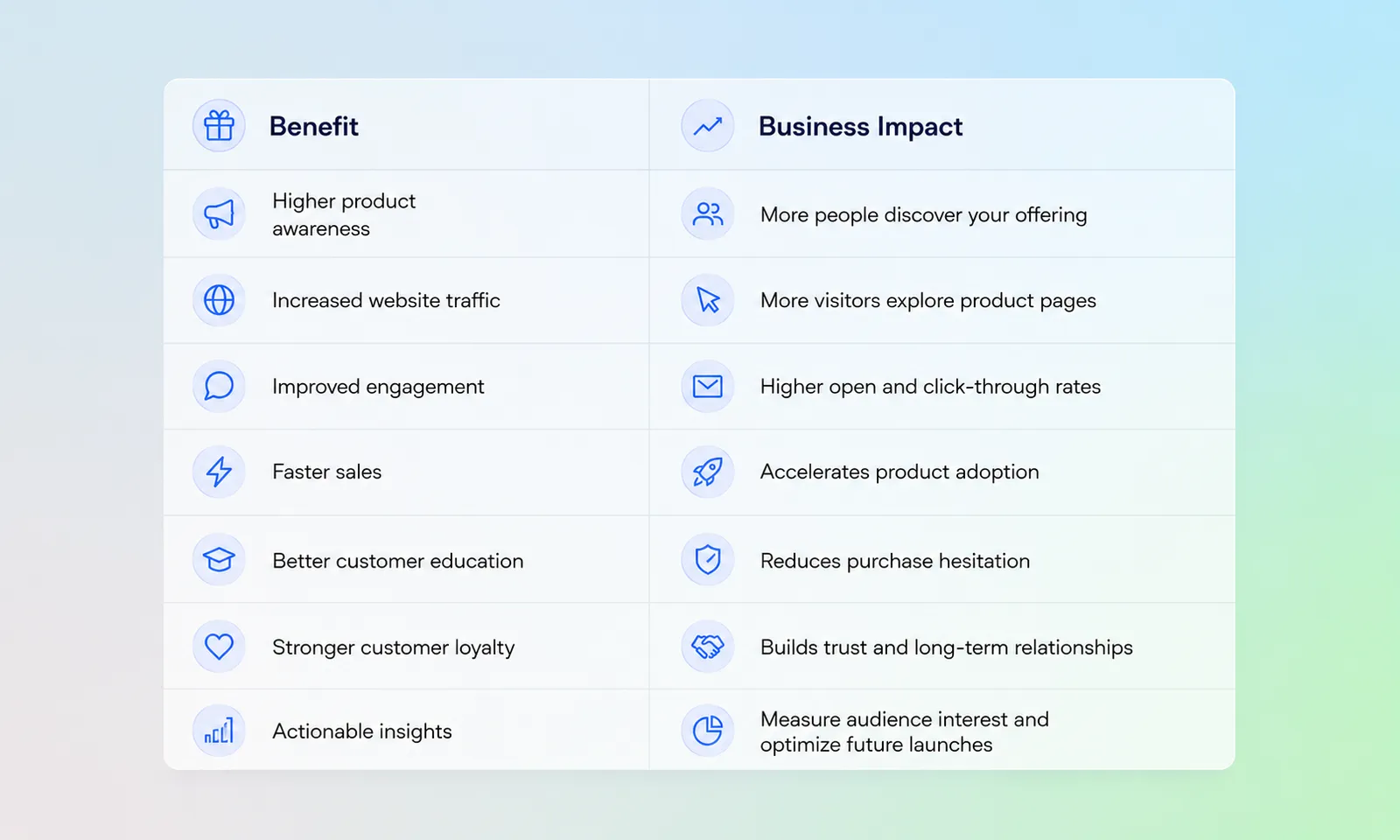
When combined with audience segmentation and automation, product launch emails become even more effective by delivering relevant content to the right subscribers at the right time.
Types of Product Launch Emails
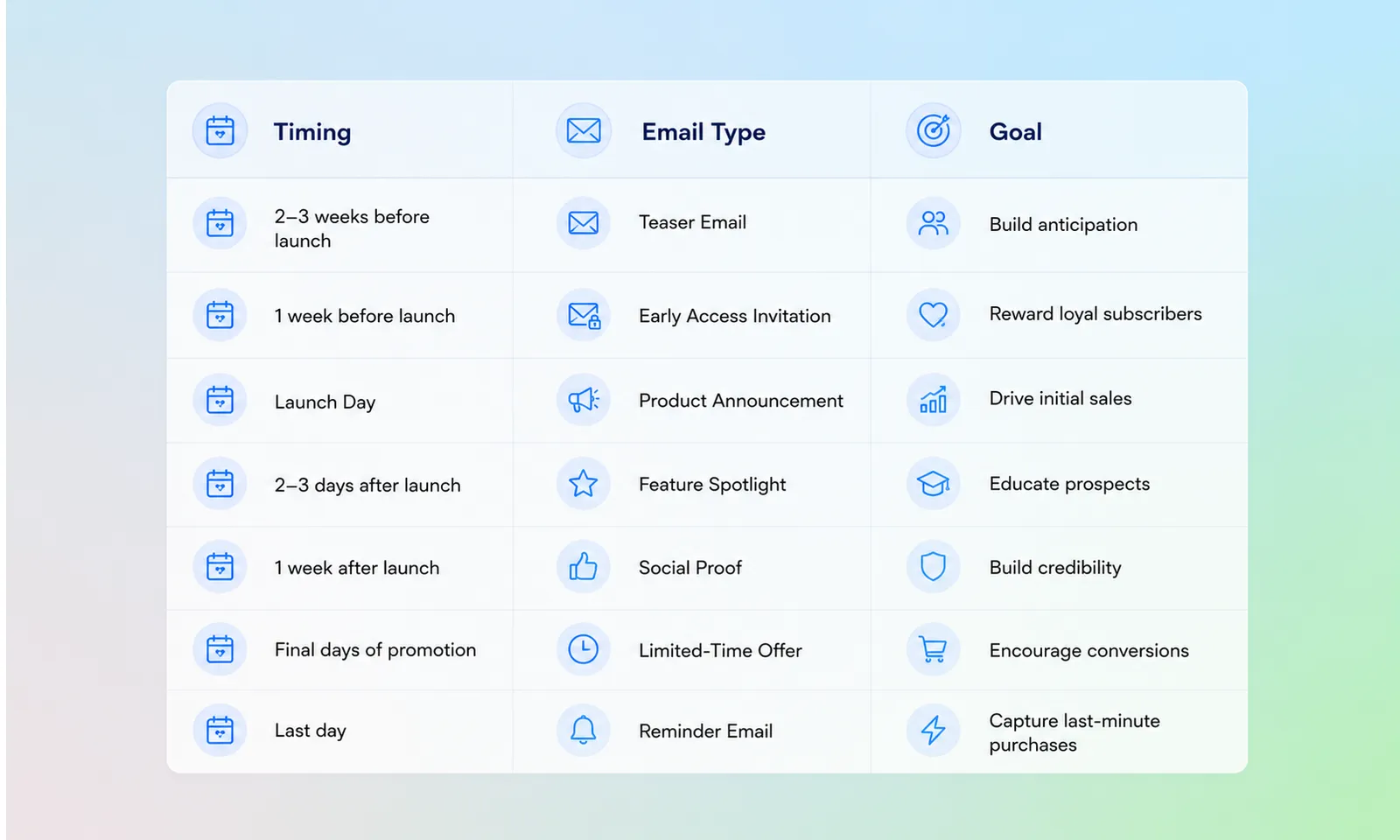
One email isn't enough to create excitement around a new product. Instead, successful brands use multiple email types throughout the launch journey.
1. Teaser Email
A teaser email generates curiosity before revealing the product.
Its purpose isn't to sell—it's to make subscribers eager to learn more.
Example subject lines:
- Something exciting is coming...
- Can you keep a secret?
- Get ready for what's next
- We're launching something big
Best Practices
- Reveal just enough information
- Include intriguing visuals
- Encourage subscribers to watch for future emails
- Avoid giving away every detail
2. Early Access Email
Reward your most engaged subscribers with exclusive access before the public launch.
Benefits include:
- VIP experience
- Limited inventory access
- Early feedback opportunities
- Stronger customer loyalty
This approach works particularly well for loyal customers, premium members, and waitlist subscribers.
3. Product Announcement Email
This is the official launch email introducing your new product.
A strong announcement email typically includes:
- Product name
- Hero image
- Key benefits
- Product features
- Pricing information
- Strong call-to-action
- Customer testimonials (if available)
Rather than listing every feature, focus on the problems your product solves.
4. Feature Spotlight Email
Trying to explain everything in one email often overwhelms readers. Feature spotlight emails dive deeper into one standout capability at a time.
For example, if you're launching a project management platform, dedicate separate emails to:
- AI-powered task automation
- Team collaboration tools
- Reporting dashboards
- Workflow integrations
This approach keeps content focused and helps subscribers better understand your product.
5. Social Proof Email
Customers trust other customers more than brands. Social proof emails showcase:
- Customer reviews
- Testimonials
- User-generated content
- Case studies
- Industry recognition
- Expert endorsements
These emails reinforce credibility and reduce hesitation, especially for first-time buyers.
6. Limited-Time Offer Email
Once your audience understands the product, create urgency with a time-sensitive incentive.
Popular examples include:
- Launch discounts
- Free shipping
- Bonus gifts
- Extended free trials
- Exclusive bundles
- Limited-edition products
Be transparent about deadlines and avoid creating false scarcity, as authenticity builds long-term trust.
7. Last-Chance Reminder Email
Some subscribers simply need a final nudge before taking action.
A reminder email highlights:
- Offer expiration
- Remaining inventory (if applicable)
- Final opportunity to save
- Countdown to the end of the promotion
Keep the message concise, emphasize urgency, and make the call-to-action impossible to miss.
Anatomy of a High-Converting Product Launch Email
Every successful product launch email shares a common structure designed to capture attention and drive action.
1. An Attention-Grabbing Subject Line
Your subject line determines whether your email gets opened. Use curiosity, urgency, personalization, or exclusivity to increase open rates.
Examples include:
- Meet the product we've been building for months
- It's here! Introducing our newest innovation
- Your exclusive first look starts now
- Ready to experience something new?
Avoid clickbait or misleading language. Your subject line should accurately reflect the content inside the email.
2. Compelling Preview Text
The preview text complements your subject line and provides additional context in the inbox. Instead of repeating the subject, use it to reinforce the value of opening the email.
Example:
Discover how our newest solution can help you save time, boost productivity, and achieve better results.
3. A Powerful Hero Section
The top section of your email should immediately communicate what you're launching. Include:
- A bold headline
- High-quality product imagery
- A concise value proposition
- A primary call-to-action button
Your hero section should answer the question, "Why should I care?" within seconds.
4. Focus on Benefits Over Features
While features explain what a product does, benefits explain why it matters. Rather than listing technical specifications, highlight the outcomes customers can expect.
Instead of saying, "Includes AI-powered automation," say, "Automate repetitive tasks and save hours every week."
5. Strong Visual Hierarchy
Design your email so readers can quickly scan the content. Use headings, bullet points, whitespace, and contrasting CTA buttons to guide the eye.
Avoid overcrowding the layout with too much text or too many competing visuals.
6. A Clear Call-to-Action (CTA)
Every launch email should have one primary objective. Whether it's "Shop Now," "Start Your Free Trial," or "Learn More," your CTA should be clear, action-oriented, and easy to find.
Building a Winning Product Launch Email Sequence
Instead of relying on a single announcement, create a sequence that nurtures subscribers from curiosity to conversion.
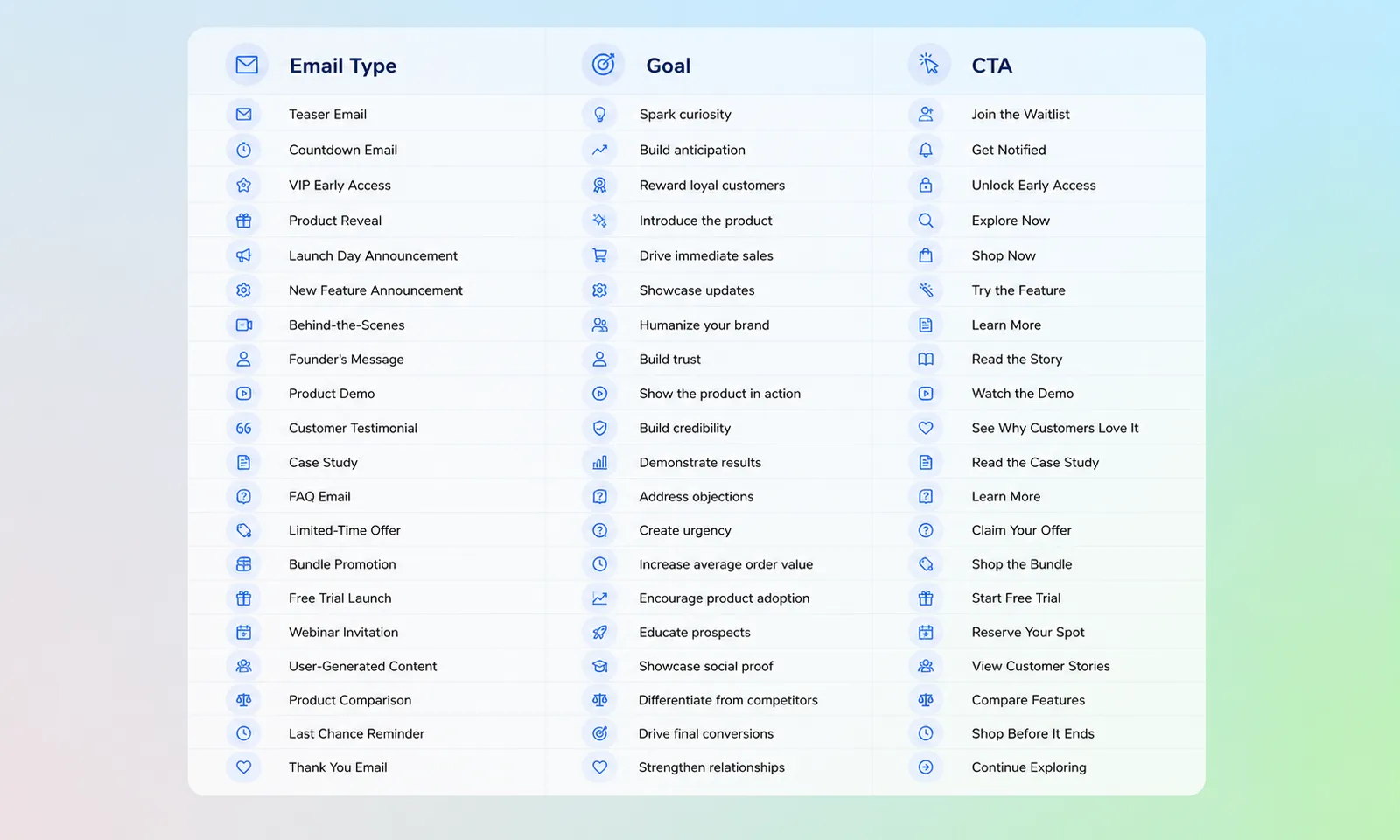
20 Product Launch Email Examples to Inspire Your Next Campaign
There's no one-size-fits-all approach to product launch emails. The best campaigns use different messaging styles depending on the audience, product, and stage of the launch. Below are 20 proven product launch email ideas you can adapt for your own campaigns.
Rather than using every email type in one campaign, choose the ones that best align with your audience's buying journey and campaign goals.
Best Product Launch Email Subject Lines
Your subject line is the first impression subscribers have of your launch. An engaging subject line can significantly improve open rates, especially when paired with compelling preview text.
Here are some effective examples:
Curiosity-Based
- Something exciting is arriving soon…
- We've been keeping a secret
- Your first look is almost here
- Guess what's launching next?
Announcement-Based
- It's Here! Meet Our New Product
- Introducing Our Biggest Launch Yet
- The Wait Is Over
- Say Hello to Our Newest Innovation
Exclusive Access
- You're Invited: Early Access Starts Now
- VIP Access Is Officially Open
- Reserved Just for You
- Be Among the First to Try It
Urgency-Based
- Launch Offer Ends Tonight
- Last Chance to Save
- Final Hours to Claim Your Bonus
- Don't Miss Out
Personalization Ideas
- [First Name], Your Exclusive Invitation Awaits
- We Picked This Just for You
- Based on Your Interests…
- You'll Love What's Coming Next
Product Launch Email Copywriting Best Practices
Writing effective launch emails requires more than announcing a product. Every sentence should move readers closer to taking action.
Start With Customer Problems
Avoid opening with product specifications. Instead, address the challenges your audience faces and position your product as the solution.
For example:
Instead of:
"Our new project management platform has AI-powered task automation."
Try:
"Still spending hours managing repetitive tasks? Our newest platform helps automate your workflow so you can focus on meaningful work."
Focus on Outcomes
Customers buy results, not features. Explain how your product improves their lives, saves time, reduces costs, or helps them achieve their goals.
Keep Copy Scannable
Most subscribers skim emails rather than reading every word. Improve readability by using:
- Short paragraphs
- Clear headings
- Bullet points
- Bold text for key messages
- Plenty of white space
Maintain One Primary CTA
Each launch email should encourage one main action. Too many links or competing buttons can distract readers and reduce conversions.
Write Like a Human
Avoid overly promotional language. A conversational tone builds trust and makes your emails feel more authentic.
Product Launch Email Design Best Practices
A well-designed email supports your message without overwhelming the reader.
Consider these design principles:
Use a Strong Hero Image
Showcase your product prominently with high-quality visuals that reinforce your value proposition.
Prioritize Mobile Responsiveness
Since many subscribers open emails on smartphones, ensure your design is easy to read and navigate on smaller screens.
Maintain Brand Consistency
Use your brand's fonts, colors, imagery, and tone to create a cohesive experience across every touchpoint.
Optimize CTA Buttons
Make buttons easy to spot with action-oriented text such as:
- Shop Now
- Get Early Access
- Explore Features
- Start Free Trial
Include Social Proof
Adding customer reviews, ratings, or testimonials can increase credibility and encourage hesitant buyers to convert.
Common Product Launch Email Mistakes to Avoid
Even the most exciting product launch can underperform if your email strategy isn't carefully planned.
Sending Only One Launch Email
A single announcement rarely delivers the best results. A multi-email sequence keeps your audience engaged and reinforces your message over time.
Focusing Too Much on Features
Listing technical details without explaining their benefits can leave subscribers wondering why the product matters to them.
Ignoring Audience Segmentation
Different subscriber groups have different needs. Tailor messaging for existing customers, prospects, VIP members, or inactive subscribers to improve relevance and engagement.
Weak Calls-to-Action
Vague CTAs like "Click Here" don't inspire action. Use clear, benefit-driven language that tells readers exactly what to do next.
Skipping Performance Analysis
After your campaign, review metrics such as:
- Open rate
- Click-through rate
- Conversion rate
- Revenue generated
- Bounce rate
- Unsubscribe rate
Analyzing these insights helps refine future product launch campaigns.
Product Launch Email Template
Use this simple framework as a starting point for your next launch.
Subject: 🎉 Meet Our Newest Product
Headline:
Introducing Something We've Been Excited to Share
Body:
After months of development, we're thrilled to introduce our latest product designed to help you achieve better results with less effort.
Here's what you'll love:
- Easy to use
- Powerful features
- Designed with customer feedback
- Built to help you save time
Ready to see it in action?
CTA: Explore the New Product
Product Launch Email Checklist
Before hitting "Send," review this checklist to ensure your campaign is ready for success.
Strategy
- Define your campaign goals.
- Segment your audience.
- Build a launch email sequence.
- Create a promotional timeline.
Content
- Write compelling subject lines.
- Highlight benefits over features.
- Include strong CTAs.
- Add social proof where possible.
Design
- Use responsive email templates.
- Optimize images for fast loading.
- Maintain brand consistency.
- Test across devices and email clients.
Testing
- Proofread your copy.
- Verify all links.
- Test personalization fields.
- Send test emails before launch.
Analytics
- Monitor open and click-through rates.
- Track conversions and revenue.
- Review subscriber feedback.
- Identify areas for improvement.
Launch Your Next Product with Confidence
Creating a successful product launch email campaign is easier when you have the right tools. With Mailmunch, you can design professional email campaigns, segment your audience, automate your launch sequence, personalize messaging, and track campaign performance all from one intuitive platform.
Whether you're announcing a brand-new product or rolling out your latest feature update, Mailmunch helps you deliver the right message to the right audience at the right time, turning product launches into lasting customer relationships and measurable business growth.
Frequently Asked Questions
How many emails should a product launch campaign include?
Most successful product launch campaigns include five to seven emails, covering teasers, early access, launch day announcements, feature highlights, social proof, and reminder emails. The ideal number depends on your audience, product complexity, and campaign duration.
When should I send product launch emails?
Start building anticipation one to three weeks before launch. Continue communicating after launch with educational content, testimonials, and limited-time offers to maintain momentum.
What should every product launch email include?
A high-converting product launch email should feature:
- A compelling subject line
- A clear value proposition
- Benefit-focused copy
- Engaging visuals
- One primary call-to-action
- Mobile-friendly design
Should I segment my audience?
Yes. Segmentation allows you to tailor messaging based on customer behavior, purchase history, engagement level, or demographics. Personalized campaigns often generate higher open rates, click-through rates, and conversions than generic email blasts.