


Last updated on
February 22, 2026
As businesses scale and customer expectations evolve, many teams begin reassessing whether their existing CRM and business software stack still meets their needs. Zoho remains a popular all-in-one suite, but it is not always the best fit for every organization. In 2026, companies are increasingly looking for tools that are easier to use, more flexible, and better aligned with specific workflows.
This long-form guide is designed for decision-makers, CRM managers, and marketing and operations leaders evaluating Zoho alternatives. It explores why businesses move away from Zoho, what to look for in an alternative, and provides in-depth reviews of the most viable platforms available today.
Zoho offers an extensive ecosystem covering CRM, email marketing, finance, support, and operations. While this breadth is appealing, it also introduces challenges that prompt many users to explore alternatives.
Zoho’s all-in-one nature can feel overwhelming. Teams often adopt Zoho for a single use case, only to find themselves navigating dozens of interconnected apps. This complexity increases onboarding time, creates configuration overhead, and can slow down adoption; especially for non-technical teams.
Although Zoho is often perceived as budget-friendly, pricing can escalate as businesses scale. Advanced features, additional users, and add-on apps quickly increase total cost of ownership, making it less predictable over time.
For larger organizations, Zoho can become difficult to manage across departments. Permission structures, reporting consistency, and cross-team workflows may require heavy customization, which adds operational friction.
Many users cite Zoho’s interface as dated or unintuitive. When tools feel cumbersome, adoption suffers, and teams revert to spreadsheets or disconnected systems—undermining the value of a CRM entirely.
Before switching platforms, it is critical to define what success looks like for your business. The best Zoho alternative is not necessarily the most popular one—it is the one that aligns with your workflows.
An intuitive interface reduces training time and accelerates adoption. Clean navigation, logical workflows, and modern design are no longer optional for productivity tools in 2026.
Every business has unique processes. Look for platforms that allow custom fields, pipelines, automations, and views without requiring extensive development work.
Your CRM should connect seamlessly with email, marketing automation, analytics, accounting, and support tools. Strong native integrations or reliable APIs are essential.
Clear pricing tiers and predictable scaling costs help avoid budget surprises. Pay close attention to user limits, feature gating, and add-on fees.
Core CRM functionality should include contact management, deal tracking, reporting, and activity logging, it should also be robust and easy to configure.
Automation reduces manual work and improves consistency. Look for rule-based workflows, triggers, and lifecycle automation that match your operational complexity.
Reliable customer support, documentation, and onboarding resources significantly impact long-term success, particularly during migration.
The right platform should support your business not just today, but as your team size, data volume, and processes expand.
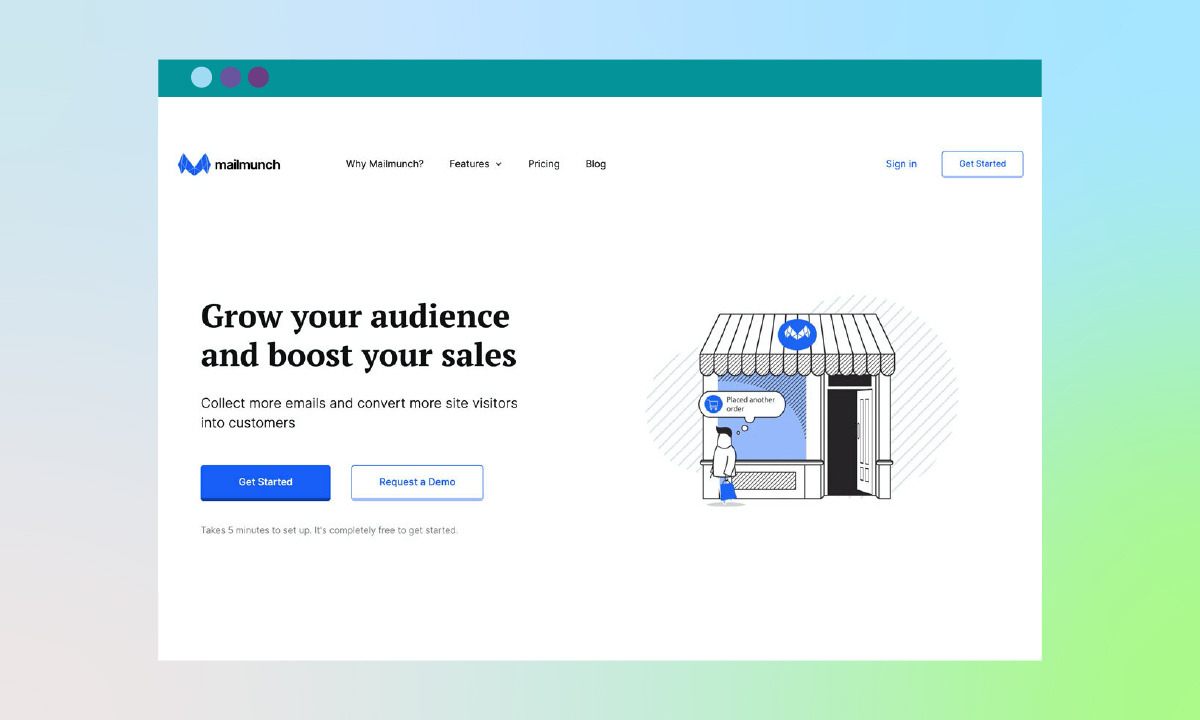
Best for businesses wanting a free CRM with premium upgrades
Mailmunch positions itself as a growth-focused platform combining CRM fundamentals with strong email marketing and automation capabilities.
Key Features
Pros and Cons
Pricing Overview
Who It’s Ideal For Small to mid-sized businesses looking for an accessible CRM with built-in marketing tools.
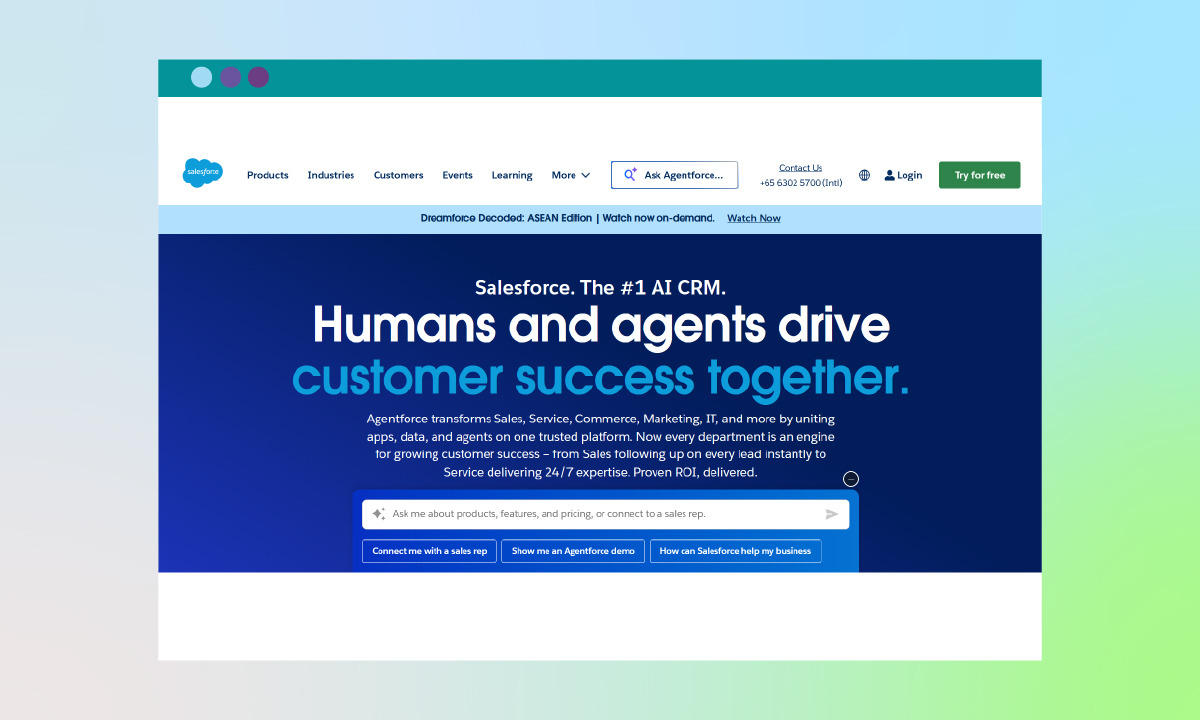
Best for enterprises needing robust CRM capabilities
Salesforce is the industry standard for enterprise CRM, offering unmatched depth and extensibility.
Key Features
Pros and Cons
Pricing Overview
Ideal Business Types Large enterprises with complex sales cycles and dedicated CRM administrators.
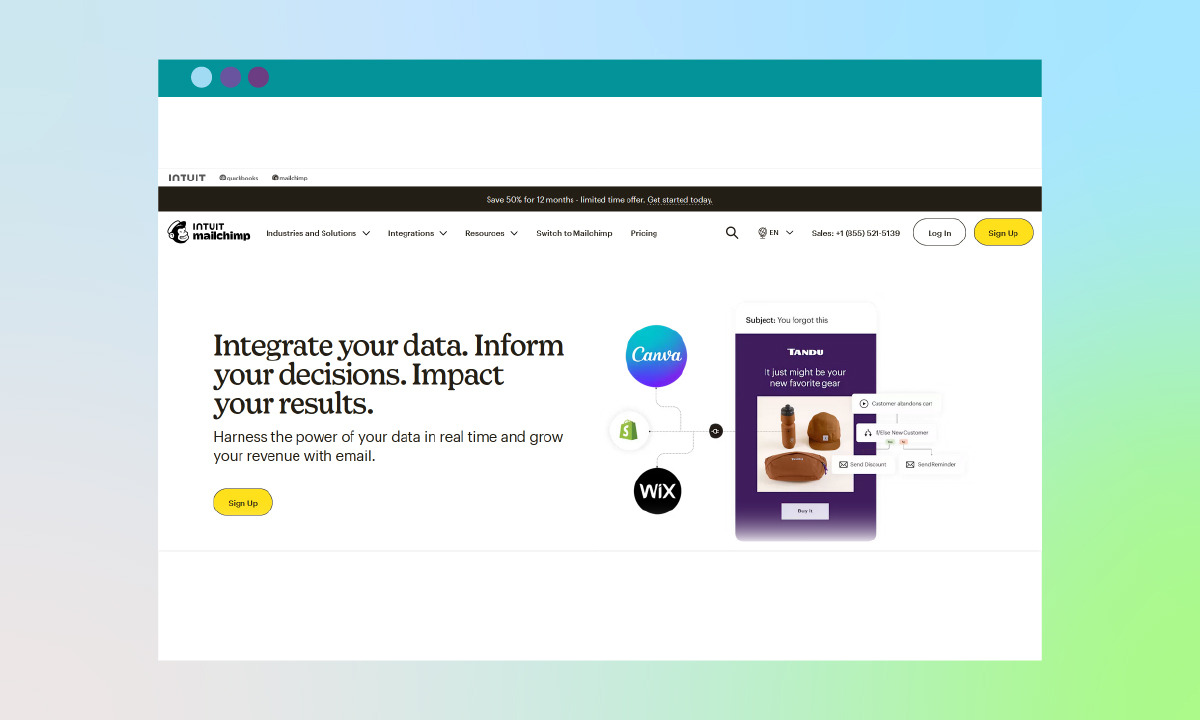
Great for marketing-centric teams
Mailchimp has evolved beyond email marketing into a lightweight CRM and customer engagement platform.
Key Features
Pros and Cons
Pricing
Best For Small businesses, creators, and marketing-led teams.
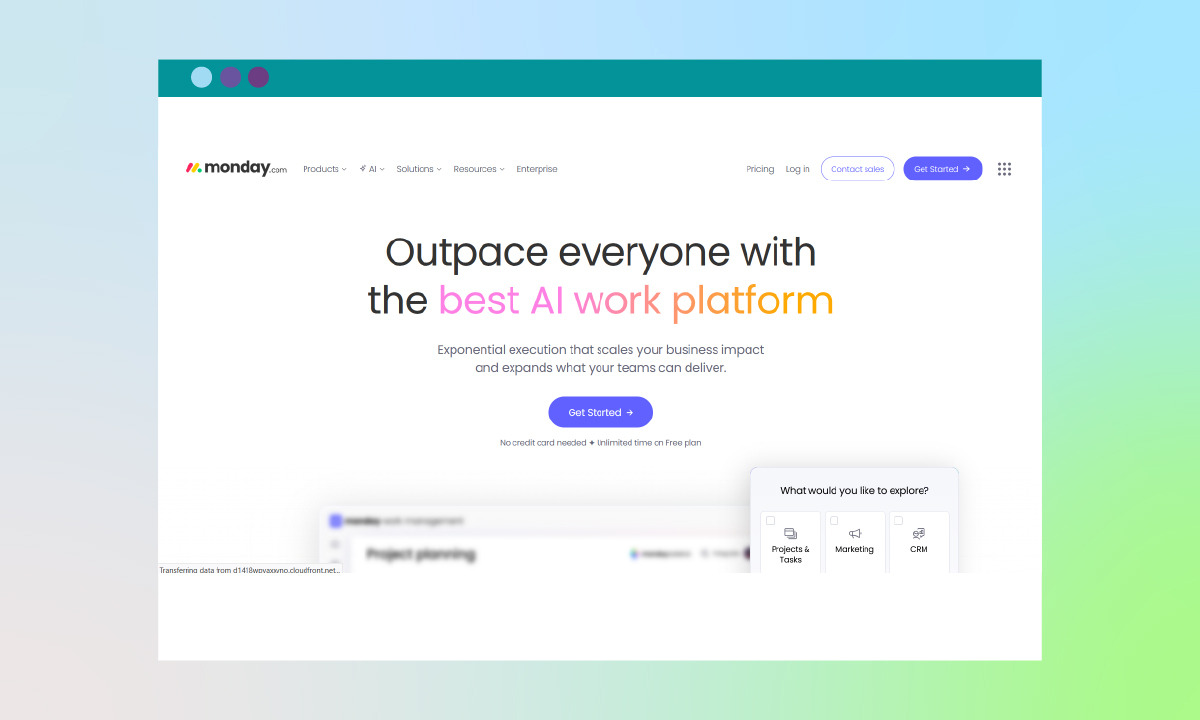
Best for project-led teams or service businesses
monday.com blends project management with customizable CRM workflows.
Key Features
Pros and Cons
Pricing
Ideal For Agencies and service teams needing workflow and CRM alignment.
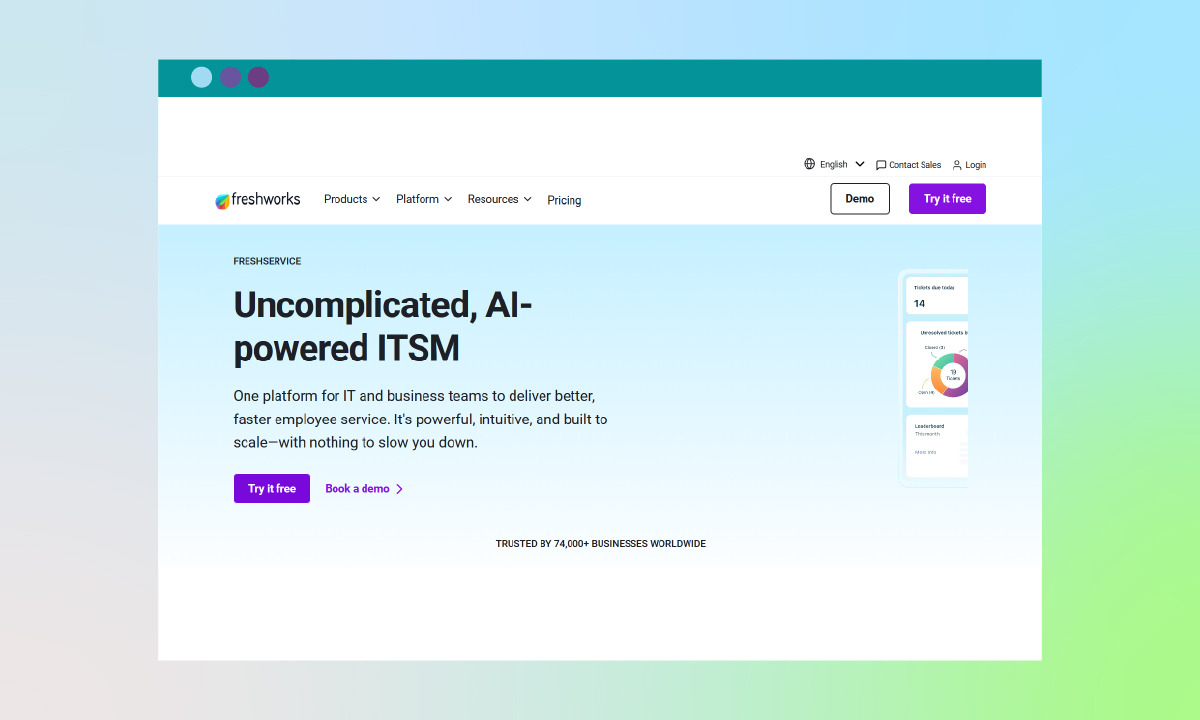
Best budget-friendly CRM with strong automation
Freshsales offers a balance between affordability and advanced features.
Key Features
Pros and Cons
Pricing
Who Should Choose This Growing sales teams seeking value without complexity.
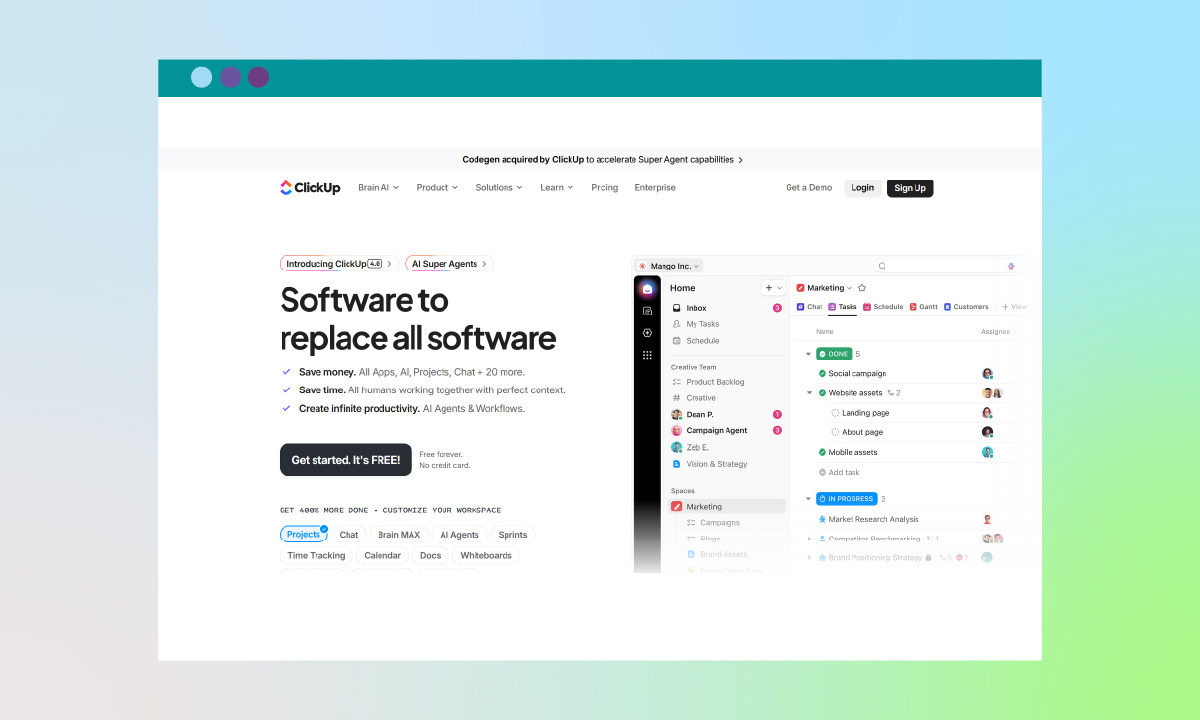
All-in-one productivity + CRM setup
ClickUp enables teams to build custom CRM systems on top of task and project management.
Key Features
Pros and Cons
Pricing
Best For Operations-heavy organizations managing complex internal workflows.
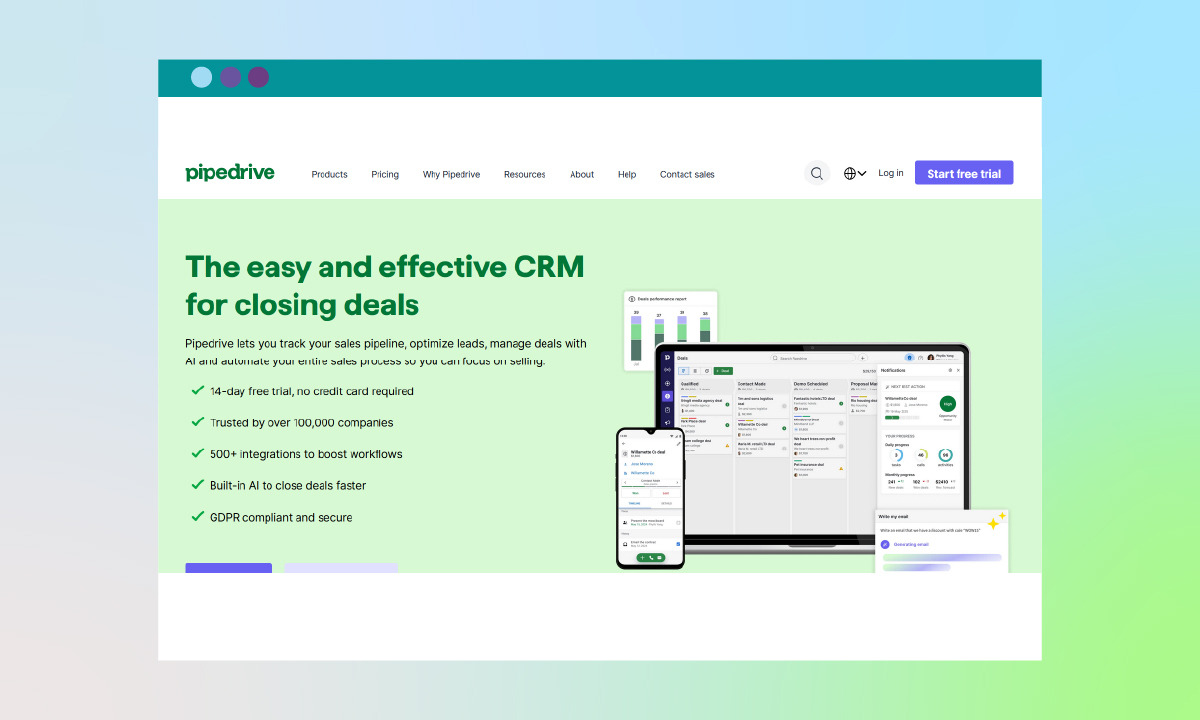
Best for sales-focused teams
Pipedrive is designed around pipeline visibility and sales execution.
Key Features
Pros and Cons
Pricing
Ideal For Small to mid-size sales teams.
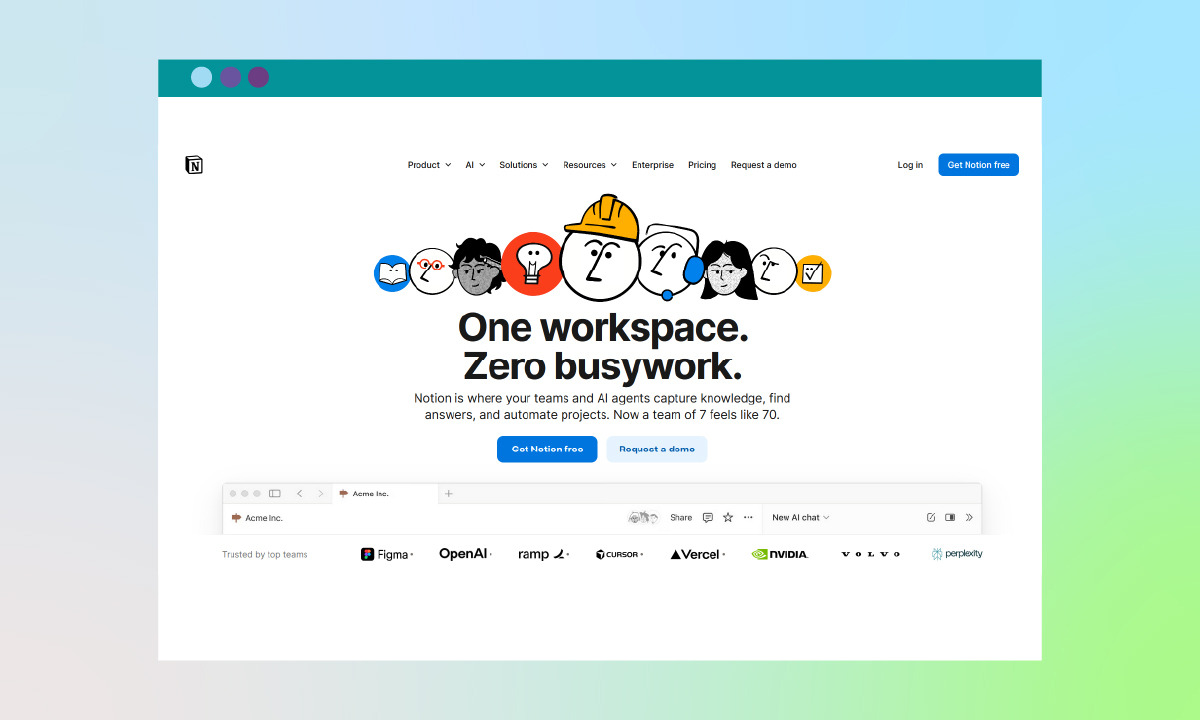
Notion can be adapted into a CRM for teams prioritizing flexibility.
Key Features
Pros and Cons
Pricing
Best For Early-stage teams and solopreneurs.
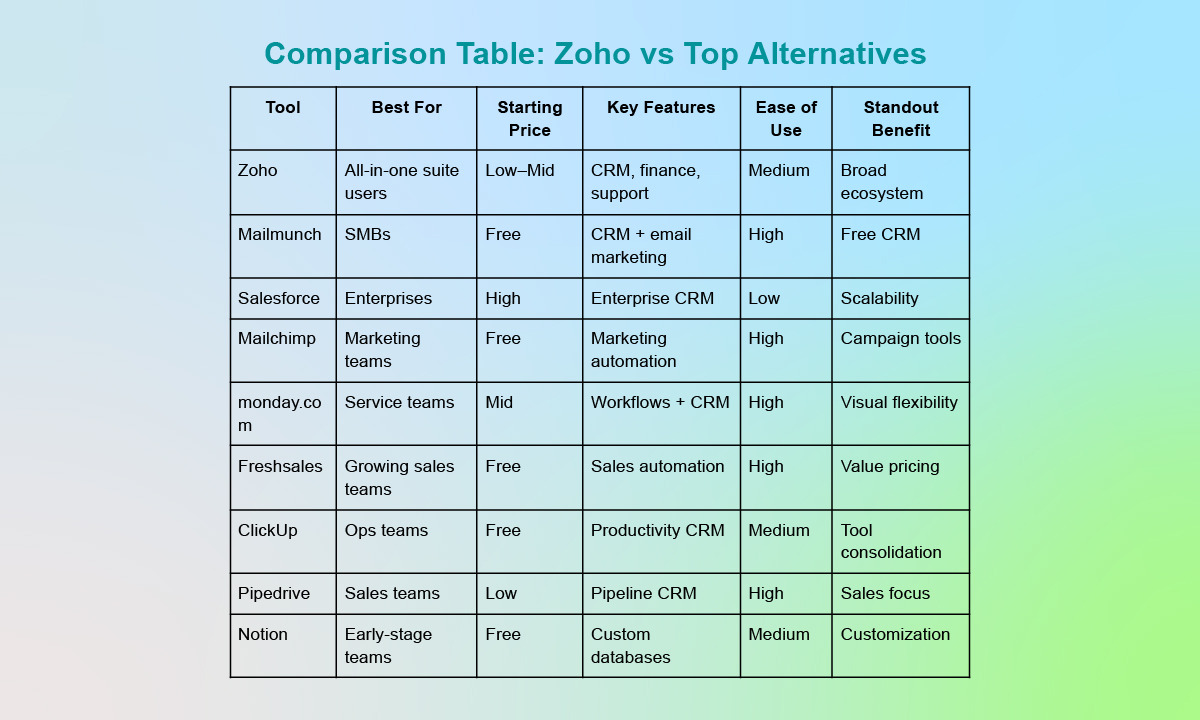
Selecting the right alternative requires alignment with your internal realities.
A structured evaluation process reduces migration risk and ensures adoption.
Zoho remains a capable platform, but it is not universally optimal. The best Zoho alternatives in 2026 range from lightweight, flexible tools to enterprise-grade systems.
Rather than choosing based on popularity, businesses should select platforms that align with their workflows, team maturity, and growth plans. Most leading tools offer free trials—use them to validate fit before committing.
A thoughtful CRM decision today sets the foundation for sustainable growth tomorrow.
Ayesha Ejaz is a passionate writer who loves diving into research to explore new topics and broaden her knowledge. With a keen interest in learning through writing, Ayesha crafts informative and engaging content across various subjects. You'll find her unwinding with music or challenging herself with word search puzzles when she's not writing.
Tags:


