The Upside-Down Marketing Funnel: Why Your Existing Customers Should Come First

Ayesha Ejaz Last updated on
For years, marketers have been taught to think about growth from the top down.
First, you attract as many people as possible. Then, you turn some of them into leads, nurture them, convert a percentage into customers, and hopefully retain them long enough to make another purchase.
This traditional marketing funnel has shaped everything from advertising and content marketing to email campaigns and sales strategies.
But there is another way to think about growth.
Instead of starting with people who have never heard of your brand, what if you started with the people who already know, trust, and use your product?
That is the idea behind the upside-down marketing funnel.
Rather than focusing most of your energy on constantly finding new customers, this approach prioritizes your existing customers first. You focus on delivering a great experience, building loyalty, understanding what customers need, and turning satisfied customers into advocates.
Those advocates then help attract new people to your business through recommendations, reviews, referrals, social media, and word-of-mouth marketing.
The result is a growth cycle that can become stronger over time.
In this guide, we will explain what the upside-down marketing funnel is, how it differs from the traditional funnel, why it works, and how you can build a customer-first marketing strategy for your own business.
What Is an Upside-Down Marketing Funnel?
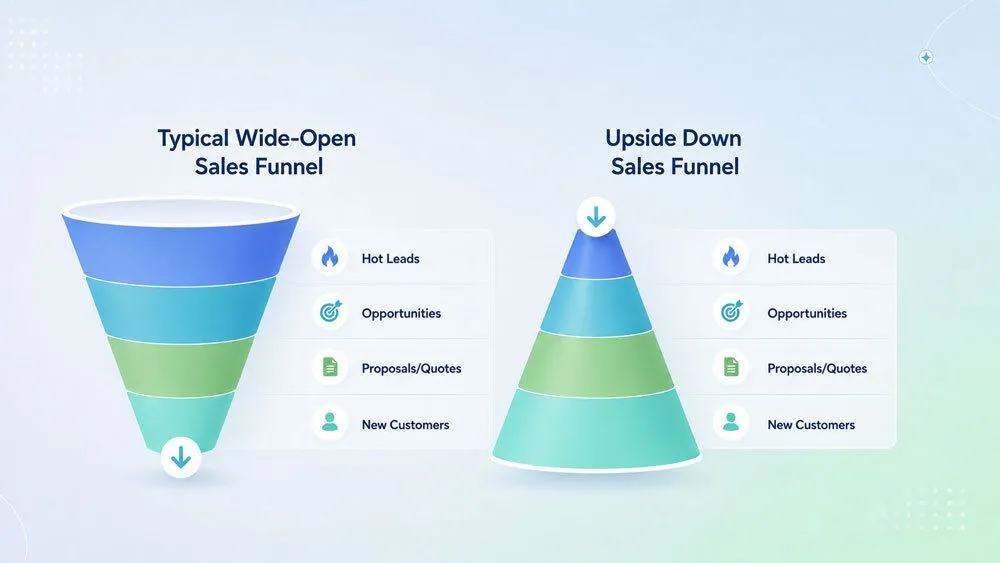
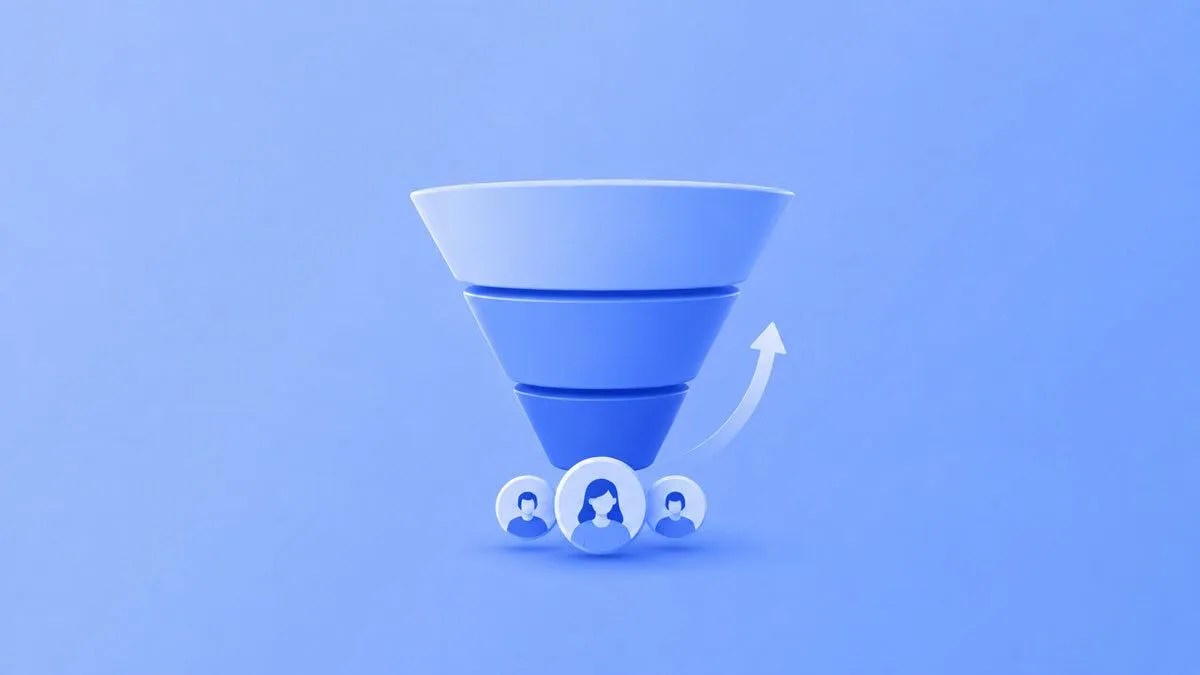
An upside-down marketing funnel is a customer-first marketing model that prioritizes existing customers and advocates before focusing heavily on acquiring new ones.
The traditional marketing funnel usually follows this path:
Awareness → Consideration → Conversion → Retention → Advocacy
The upside-down funnel reverses the emphasis:
Advocacy → Loyalty → Conversion → Engagement → Awareness
The goal is not to completely abandon traditional marketing activities such as advertising, SEO, content marketing, or lead generation.
Instead, the upside-down funnel changes where you place your greatest focus.
Your existing customers are not treated as the final stage of the customer journey. They become the starting point for future growth.
A satisfied customer may:
- Continue buying from your business.
- Become more loyal over time.
- Recommend your brand to friends or colleagues.
- Leave a positive review.
- Share your content or products online.
- Create user-generated content.
- Introduce new people to your business.
Those new prospects then enter your marketing ecosystem with a higher level of trust because they were introduced through an existing relationship or positive customer experience.
This creates a cycle rather than a one-way journey.
Traditional Marketing Funnel vs. Upside-Down Marketing Funnel
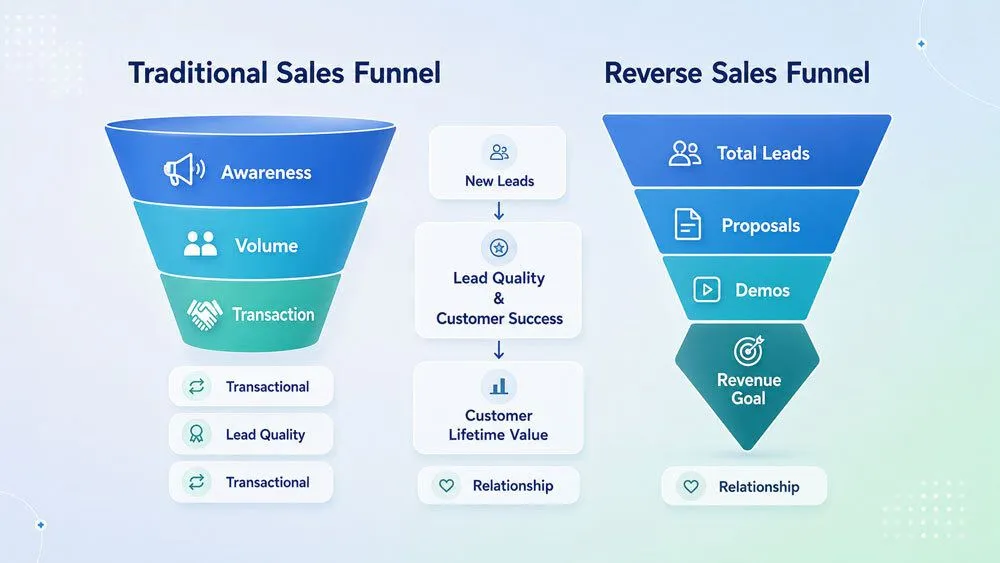
The traditional funnel is designed to move a large audience through a series of stages until a smaller percentage becomes customers.
For example:
Awareness
A potential customer sees an advertisement, reads a blog post, discovers your brand through search, or encounters your business on social media.
Consideration
They begin researching your product, comparing alternatives, reading reviews, and learning more about your brand.
Conversion
They make a purchase or sign up for your service.
Retention
You try to keep them engaged and encourage them to return.
Advocacy
If their experience is positive, they may recommend your business to others.
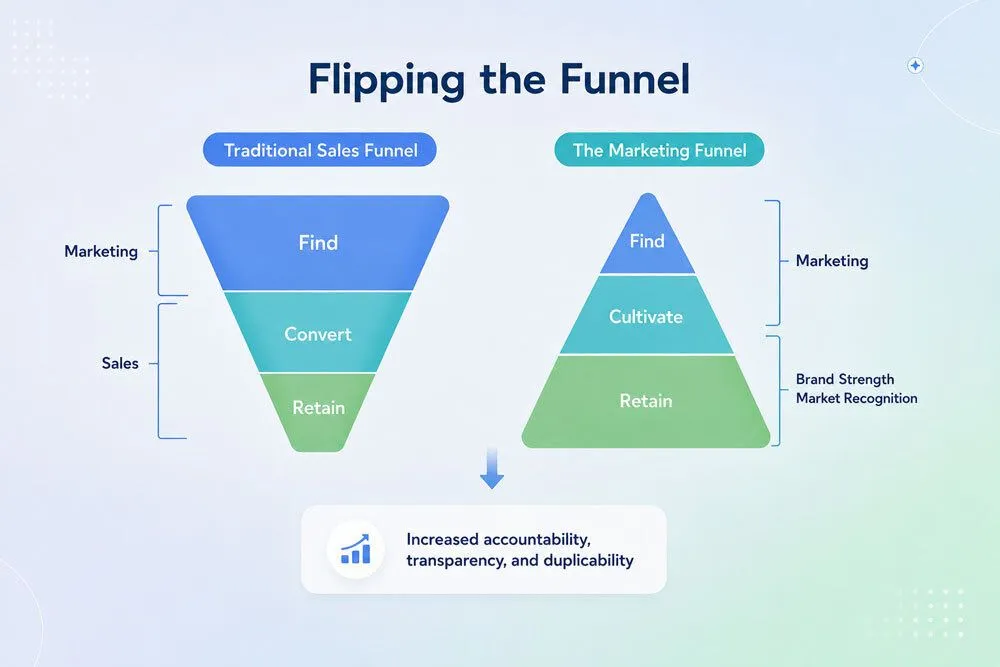
The upside-down funnel begins with the final stage of this traditional model.
You focus first on your best customers and create an experience that gives them a reason to stay, return, and recommend your brand.
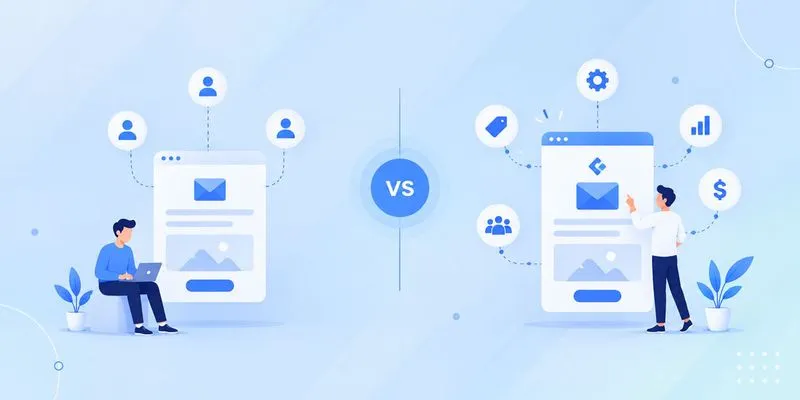
The comparison looks like this:
The most effective marketing strategies often combine both approaches.
You still need to attract new customers. However, your existing customers should not be overlooked once they make a purchase.
Why Does the Upside-Down Funnel Work?
The upside-down marketing funnel works because people tend to trust real customer experiences more than brand claims.
A business can tell people that its product is excellent.
But a recommendation from a friend, a detailed review from another customer, or a genuine customer success story often carries more credibility.
This is particularly important in a crowded market where customers have countless options.
A customer-first approach gives businesses an opportunity to create the experiences that generate those recommendations naturally.
1. It Puts Customers at the Center of Growth
The first advantage of the upside-down funnel is that it forces businesses to think beyond acquisition.
Instead of asking:
How can we get more people to buy from us?
You begin asking:
How can we make our existing customers more successful?
That shift changes the way you approach marketing.
You start paying closer attention to:
- Customer needs
- Common frustrations
- Product feedback
- Support requests
- Customer behavior
- Reasons for churn
- Reasons customers stay
These insights can improve your product, service, messaging, onboarding, and overall customer experience.
When customers feel that a business understands and values them, they are more likely to remain loyal.
2. It Can Improve Retention and Customer Lifetime Value
Acquiring a new customer is only the beginning of the relationship.
If that customer makes one purchase and never returns, the cost of acquiring them may be difficult to justify.
Retention allows businesses to generate more value from existing relationships.
A returning customer may:
- Purchase again
- Upgrade to a higher plan
- Purchase additional products
- Renew a subscription
- Refer another customer
This is why customer retention is so important.
A business that focuses only on acquiring new customers may constantly need to replace customers who leave.
A business that invests in retention can create a stronger foundation for sustainable growth.
3. It Generates More Authentic Social Proof
Your customers can become one of your most powerful marketing channels.
Reviews, testimonials, case studies, social media posts, referrals, and user-generated content can all help demonstrate the value of your product.
The important distinction is authenticity.
Instead of your business simply saying:
Our product is the best.
A customer can explain:
Here is how this product helped me solve a real problem.
That experience is often more persuasive to potential buyers.
The upside-down funnel encourages businesses to actively identify satisfied customers and make it easy for them to share their experiences.
4. It Creates a Continuous Growth Cycle
A traditional funnel often feels like a one-way process.
You attract people, convert them, and then move on to finding more prospects.
The upside-down funnel is more circular.
A satisfied customer becomes an advocate.
That advocate introduces new people to the business.
Some of those new people become customers.
Those customers have a positive experience and may eventually become advocates themselves.
The cycle continues.
This is one of the most valuable aspects of customer-led growth. Your existing customers can contribute to future acquisition while continuing to generate revenue themselves.
5. It Gives You Better Customer Insights
Customers are an incredibly valuable source of information.
They can tell you:
- Why they chose your product
- What problem they were trying to solve
- What almost stopped them from purchasing
- Which features they use most
- What they find confusing
- What they would like to see improved
This information can help you make better business decisions.
For example, if several customers mention that a feature is difficult to use, you may need to improve the user experience.
If customers repeatedly describe your product in a way you never considered, that language could help improve your marketing copy.
Your customers are not only buyers. They are also a source of insight that can help shape your business.
How to Build an Upside-Down Marketing Funnel
Building an upside-down funnel starts with a simple principle:
Create an experience that customers want to continue and share.
Here are the steps you can take.
1. Understand What Your Customers Actually Need
You cannot create a customer-first strategy without understanding your customers.
Start by collecting feedback from multiple sources.
You can use:
- Customer surveys
- Post-purchase feedback forms
- Customer interviews
- Support conversations
- Online reviews
- Social media comments
- Community discussions
- Product usage data
Do not only ask customers whether they like your product.
Ask more specific questions.
For example:
- What problem were you trying to solve?
- What made you choose us?
- What nearly stopped you from purchasing?
- What is the most valuable part of our product?
- What could we improve?
- What would make you recommend us to someone else?
Specific questions generate more useful answers.
The goal is to understand both satisfaction and frustration.
Use Feedback to Make Real Improvements
Collecting feedback is not enough.
Customers quickly notice when businesses ask for opinions but never act on them.
If you receive repeated feedback about the same problem, investigate it.
If you make an improvement based on customer feedback, let customers know.
For example:
You asked, and we made an update.
This type of communication shows customers that their feedback has a direct impact on the product or service.
2. Build Relationships After the Sale
The customer relationship should not end when someone makes a purchase.
In many cases, the post-purchase experience is where loyalty is built.
Email marketing can play an important role here.
You can use email to send:
- Welcome messages
- Onboarding sequences
- Product education
- Helpful resources
- Usage tips
- Customer surveys
- Personalized recommendations
- Loyalty offers
- Re-engagement campaigns
A new customer should not be left wondering what to do next.
A thoughtful onboarding experience can help them understand how to get value from their purchase.
For example, a software company might send:
Day 1: Welcome and account setup instructions
Day 3: A guide to the most important features
Day 7: Advanced tips and best practices
Day 14: A customer success story
Day 21: A request for feedback
This type of communication helps customers become more confident and engaged.
3. Personalize the Customer Experience
Customers do not want to feel like anonymous entries in a database.
Personalization helps make communication more relevant.
You can personalize the customer experience using information such as:
- Purchase history
- Website behavior
- Content interests
- Location
- Subscription type
- Engagement level
- Previous interactions
For example, a customer who purchased running shoes should not receive the same recommendations as someone who purchased hiking equipment.
Similarly, a customer who has not opened an email in six months may need a different message from someone who engages with every campaign.
Segmentation allows you to send more relevant messages to different groups of customers.
This can improve engagement while making the customer experience feel more intentional.
4. Educate Customers Instead of Constantly Selling
One of the most effective ways to build loyalty is to help customers get more value from your product.
This means your content should not always be focused on selling.
You can create content that helps customers:
- Solve problems
- Learn new skills
- Use your product more effectively
- Understand industry trends
- Avoid common mistakes
For example, a fitness brand could share workout advice and nutrition education.
An email marketing platform could share campaign strategies, copywriting tips, and deliverability advice.
A skincare brand could explain how to build a skincare routine.
The content does not need to directly promote a product in every sentence.
When you consistently provide useful information, your brand becomes a valuable resource rather than simply another company asking for a purchase.
5. Make Your Brand Feel Human
Customers connect with people.
They want to understand the story, values, and personality behind a brand.
This does not mean every business needs to become overly casual.
It simply means your communication should feel like it comes from real people.
You can make your brand more human by sharing:
- The story behind your business
- Your company's mission
- Your team
- Behind-the-scenes moments
- Lessons from challenges
- Milestones
- Customer stories
A brand that communicates only through polished promotional content can feel distant.
Showing the people behind the business can create a stronger emotional connection.
6. Turn Happy Customers Into Brand Advocates
Your happiest customers are often your best potential advocates.
However, you should not assume they will automatically promote your business.
Make it easy for them.
You can encourage advocacy through:
Reviews
Send a simple review request after a customer has had enough time to experience your product.
Referral Programs
Reward customers for introducing new customers to your business.
Rewards could include:
- Discounts
- Account credits
- Free products
- Exclusive access
User-Generated Content
Encourage customers to share how they use your product.
You can then request permission to feature their content on your website, social media, or marketing campaigns.
Customer Stories
Ask customers to share their experiences through testimonials or case studies.
A strong customer story can be more persuasive than a page of product claims.
Social Sharing
Make it easy for customers to share content, products, or achievements with their networks.
The key is to make advocacy feel natural.
Customers should not feel pressured to promote a business they have only just discovered.
First create a great experience. Then make sharing that experience easy.
7. Measure Customer Satisfaction and Retention
The upside-down funnel should be supported by data.
Important metrics may include:
Customer Retention Rate
How many customers continue to remain active over a specific period?
Churn Rate
How many customers stop purchasing or cancel their subscription?
Customer Lifetime Value
How much revenue does the average customer generate throughout the relationship?
Repeat Purchase Rate
How often do customers return to make another purchase?
Customer Satisfaction Score
How satisfied are customers with a particular interaction or experience?
Net Promoter Score
How likely are customers to recommend your business to someone else?
Referral Rate
How many new customers are coming through existing customers?
These metrics help you understand whether your customer-first strategy is producing results.
Best Practices for an Effective Upside-Down Funnel Strategy
Focus on Long-Term Value
Do not sacrifice customer relationships for short-term revenue.
A single additional purchase is valuable, but a customer who continues purchasing for years is significantly more valuable.
Think about what will make customers want to stay with your business.
Act on Feedback
Do not collect feedback simply to say that you collect it.
Look for patterns and use customer insights to make improvements.
When customers see that their feedback leads to action, they are more likely to continue engaging with your brand.
Be Consistent
Customer loyalty is built through repeated positive experiences.
A great welcome email followed by months of irrelevant communication will not create a strong relationship.
Every interaction contributes to the overall customer experience.
Make Support Easy to Access
Customer service is a critical part of the upside-down funnel.
Customers should be able to get help when they need it.
Make your support channels clear and accessible.
A fast, helpful response can turn a frustrating experience into a positive one.
Use Personalization Carefully
Personalization should make communication more relevant, not uncomfortable.
Use customer data responsibly and focus on information that genuinely improves the experience.
Find Your Customers Where They Already Spend Time
Your customers may be active in different communities and channels.
Depending on your audience, this could include:
- Discord
- Facebook Groups
- Industry communities
- Online forums
You do not need to be everywhere.
Find the channels where your customers are already having conversations and participate meaningfully.
How Email Marketing Supports the Upside-Down Funnel
Email marketing is one of the most effective channels for maintaining long-term customer relationships.
Unlike platforms where algorithms determine who sees your content, email allows you to communicate directly with people who have chosen to hear from your business.
You can use email throughout the entire customer relationship.
Welcome Emails
Introduce new subscribers and customers to your brand.
Onboarding Emails
Help customers understand how to get started.
Educational Emails
Share useful advice and resources.
Personalized Campaigns
Send content based on customer interests or behavior.
Feedback Emails
Ask customers for their opinions and experiences.
Loyalty Emails
Reward your most engaged customers.
Re-Engagement Campaigns
Reconnect with customers who have become inactive.
Referral Campaigns
Encourage satisfied customers to recommend your business.
The key is to avoid treating every email as a sales opportunity.
Some emails should simply help, educate, thank, or connect with your audience.
This is how email becomes a relationship-building channel rather than just a promotional tool.
Businesses can use platforms such as Mailmunch to build email campaigns, create automated customer journeys, segment audiences, collect leads, and analyze campaign performance.
The more effectively you understand your audience, the easier it becomes to create communication that feels relevant and useful.
Is the Upside-Down Funnel Better Than the Traditional Funnel?
Not necessarily.
The upside-down funnel is not designed to completely replace traditional marketing.
Businesses still need to:
- Build awareness
- Generate leads
- Create content
- Run advertising campaigns
- Optimize for search
- Convert new prospects
The difference is that customer retention and advocacy should receive the same level of strategic attention as acquisition.
A business that spends all its resources attracting new customers while neglecting existing ones may create a leaky funnel.
The upside-down funnel helps close that gap.
The strongest marketing strategy is often a combination of both models.
Use traditional marketing to attract new people.
Use customer-first marketing to turn those people into loyal customers and advocates.
Then allow those advocates to help attract the next wave of customers.
Final Thoughts: Flip the Funnel and Start With Your Customers
The traditional marketing funnel encourages businesses to constantly look for the next customer.
The upside-down marketing funnel asks a different question:
What would happen if we focused more on the customers we already have?
When customers receive a valuable product, helpful support, relevant communication, and a positive overall experience, they are more likely to stay.
They may buy again.
They may recommend your business.
They may leave a review.
They may share your content.
They may become some of your most powerful marketers.
That is the real strength of the upside-down marketing funnel.
It turns customer satisfaction into retention, retention into loyalty, and loyalty into advocacy.
The result is not a one-time marketing campaign.
It is a growth cycle.
Start by listening to your customers. Use their feedback to improve your product and experience. Communicate with them consistently. Provide value beyond the sale. Make it easy for satisfied customers to share their experiences.
When you put customers at the center of your marketing strategy, growth becomes more than a numbers game.
It becomes the natural result of building relationships that people want to continue.