


Last updated on
September 15, 2026
Choosing the right email marketing software can feel overwhelming, especially when you are comparing platforms that seem to offer many of the same features. Most email marketing tools provide email builders, automation, analytics, contact management, templates, and campaign management. But there is another important decision that businesses often overlook: Should you use a traditional email marketing platform or a white label email marketing solution?
The difference becomes particularly important as your business grows. A traditional platform is generally designed for you to use the software under the provider's brand. A white label email marketing platform, on the other hand, allows businesses, agencies, and other organizations to offer email marketing capabilities under their own brand.
So, which option is better?
The answer depends on what you are trying to accomplish. A small business that simply wants to send newsletters may have everything it needs from a traditional email marketing platform. An agency, SaaS company, consultant, or business looking to provide email marketing services to its own customers may benefit significantly more from a white label solution.
In this guide, we will break down white label vs traditional email marketing, explain how each model works, compare their key differences, and help you determine which type of email marketing software is the better fit for your business.
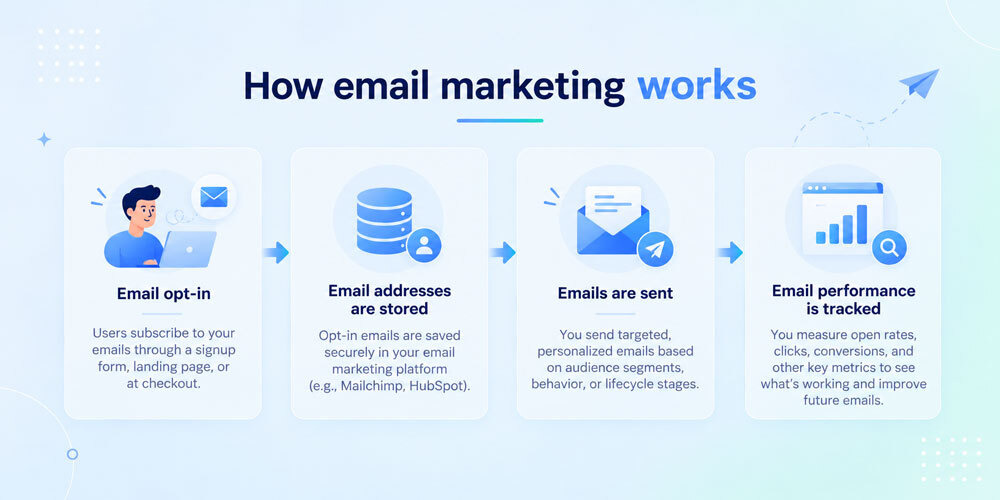
Traditional email marketing software is an email marketing platform that you subscribe to and use directly under the software provider's brand.
You create an account, choose a pricing plan, import or build your audience, create campaigns, and use the platform's tools to manage your email marketing. The software provider owns and operates the platform, while you use its features according to the terms and limitations of your selected plan.
This is the model most businesses are familiar with.
For example, a company might purchase an email marketing subscription to send promotional campaigns, newsletters, automated emails, or transactional messages to its customers. The company does not need to build its own email marketing infrastructure because the software provider handles the technology.
Traditional email marketing platforms can be a practical choice because they are relatively straightforward to get started with. Businesses can usually select a plan based on their contacts, email volume, or required features and begin creating campaigns without needing to manage the underlying technology.
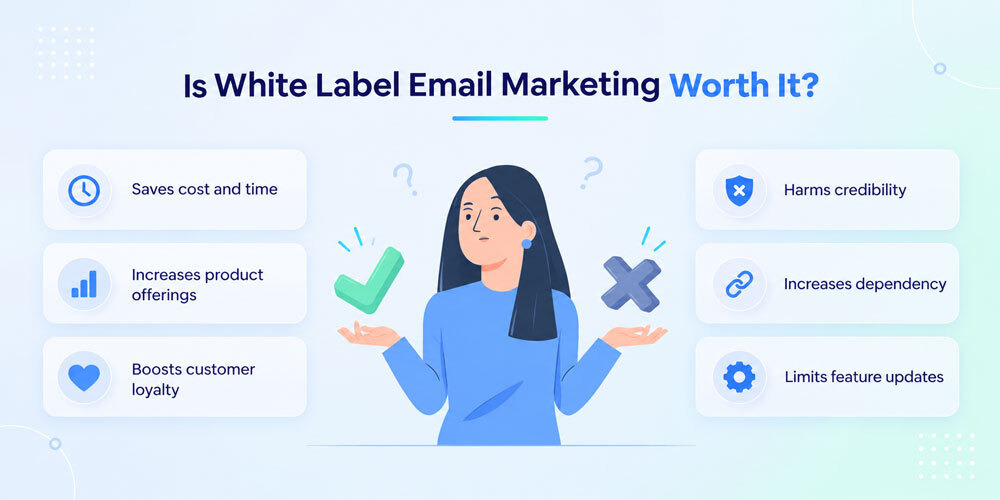
However, the trade-off is that the business is using someone else's platform and brand.
Your team may have limited control over the customer-facing experience, pricing structure, branding, account structure, and other aspects of the software.
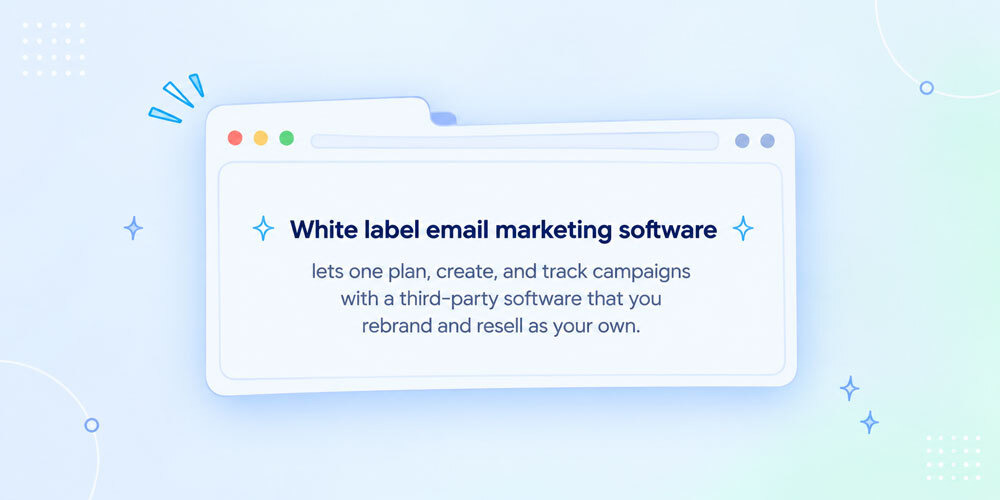
White label email marketing software takes a different approach.
Instead of using an email marketing platform entirely under another company's identity, a business can offer the software as part of its own brand experience. Depending on the provider and plan, white label functionality can allow businesses to customize the platform's branding, domain, interface, pricing, and customer experience.
This makes white label email marketing particularly useful for companies that want to provide email marketing as a service rather than simply use email marketing internally.
For example, a digital marketing agency could offer its clients an email marketing platform branded as part of the agency's own service. A SaaS company could add email marketing capabilities to its existing product offering. A business consultant could provide clients with access to a branded marketing platform without developing email marketing technology from scratch.
The important distinction is that white label software allows you to build a branded offering on top of existing technology.
Instead of investing years into developing an email marketing platform, maintaining infrastructure, creating automation systems, building analytics, and managing deliverability technology, a business can use an existing platform and focus on its own customers, services, and growth.
The simplest way to understand the difference is to look at who the platform is built for and how much control you need.
Traditional email marketing software is primarily designed for businesses that want to use email marketing themselves.
White label email marketing software is designed for businesses that may want to offer email marketing to their customers under their own brand.
Both solutions can provide similar core functionality, including email creation, automation, segmentation, analytics, forms, landing pages, and contact management. The major difference is the level of ownership and control surrounding the software experience.
Think of it this way:
Traditional software: You are the customer of the email marketing company.
White label software: You can use the technology to create your own branded email marketing offering.
This distinction can have significant implications for branding, revenue, scalability, customer relationships, and long-term business strategy.
Before choosing an email marketing platform, it helps to compare the two models across the areas that matter most.
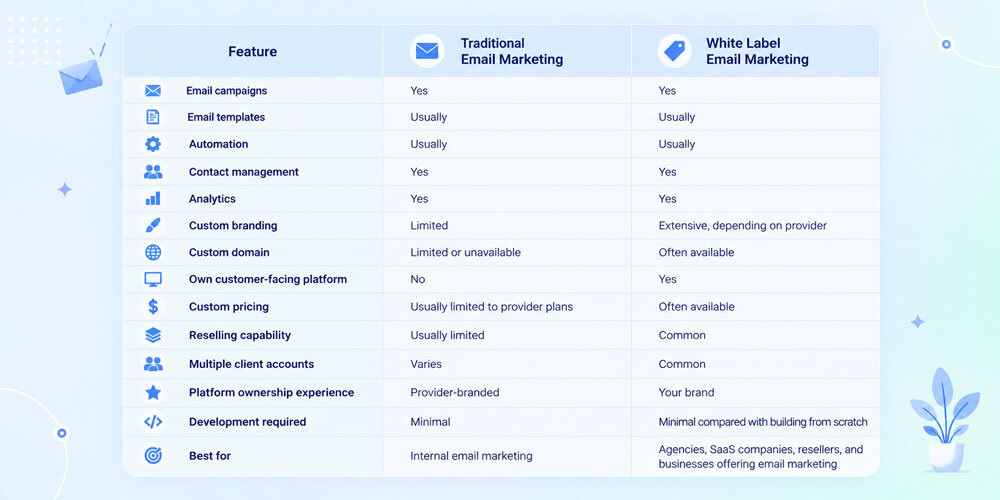
The exact capabilities of a white label platform vary between providers, so businesses should always evaluate the specific features included in a plan rather than assuming that every white label solution provides the same level of customization.
Branding is one of the biggest differences between white label and traditional email marketing software.
With traditional software, customers and team members generally know which platform they are using. The provider's logo, name, interface, emails, help documentation, and other elements may be visible throughout the experience.
For a business using the platform internally, this may not be a major concern.
However, it becomes much more important when you are providing software access to your own customers.
Imagine you are a marketing agency. You have spent years building your brand and developing trust with your clients. You now want to give those clients access to email marketing tools.
With a traditional platform, your clients may have to interact directly with another company's branding.
A white label platform can allow you to create a more consistent experience where the software feels like part of your own service offering.
This can make your overall customer experience more cohesive and can help businesses strengthen their brand presence across their technology stack.
Pricing is another major consideration when comparing white label vs traditional email marketing.
With traditional email marketing software, the provider typically determines the available plans, pricing structure, contact limits, email limits, and feature tiers.
You select the plan that works for your business and pay the provider accordingly.
White label software can provide more flexibility.
Depending on the platform, you may be able to create your own pricing plans for your customers. Instead of simply passing the software provider's pricing directly to clients, you can structure packages around your own services and business model.
For example, an agency could create a basic email marketing package for small businesses, a professional package with additional automation and analytics, and a premium package that combines email marketing software with consulting or campaign management.
This creates an opportunity to turn email marketing software from a business expense into part of a broader revenue-generating service.
However, this does not automatically mean that white label software will be cheaper.
The right question is not simply, "Which option costs less?"
Instead, ask:
"Which option provides the best value for the way I intend to use email marketing?"
If you only need to send emails for your own company, a traditional platform may be more cost-effective.
If you intend to serve multiple customers and generate revenue from the software, the additional flexibility of a white label platform may provide considerably more value.
Your current requirements should not be the only factor you consider when purchasing email marketing software.
You should also think about where your business is going.
A traditional email marketing platform can work extremely well when your requirements are straightforward. You may start with a small subscriber list and eventually increase your contacts, campaigns, automations, and reporting requirements.
The challenge comes when you want to expand beyond using the platform internally.
Suppose your company eventually decides to offer marketing services to customers. Or perhaps you are a software company that wants to add email marketing to your product.
At that point, switching from a traditional platform to a white label solution may become necessary.
Choosing a platform that supports your long-term business model from the beginning can reduce the need for major changes later.
For agencies, SaaS companies, and businesses planning to resell email marketing services, scalability should therefore be considered from day one.
Marketing agencies are one of the clearest use cases for white label email marketing.
Agencies often manage multiple clients, and email marketing can become an important part of their service offering.
Instead of asking every client to purchase and manage a separate email marketing platform, an agency can potentially provide email marketing through its own branded environment.
This creates several advantages.
The agency can maintain a more consistent customer experience, package email marketing alongside its other services, and potentially create recurring revenue from software subscriptions.
It can also reduce the amount of technology development required.
Rather than building an email marketing platform from scratch, the agency uses an existing technology infrastructure while focusing on client acquisition, strategy, content, campaign management, and support.
For agencies looking to move from simply providing marketing services toward offering a technology-enabled service, white label email marketing can be an especially useful model.
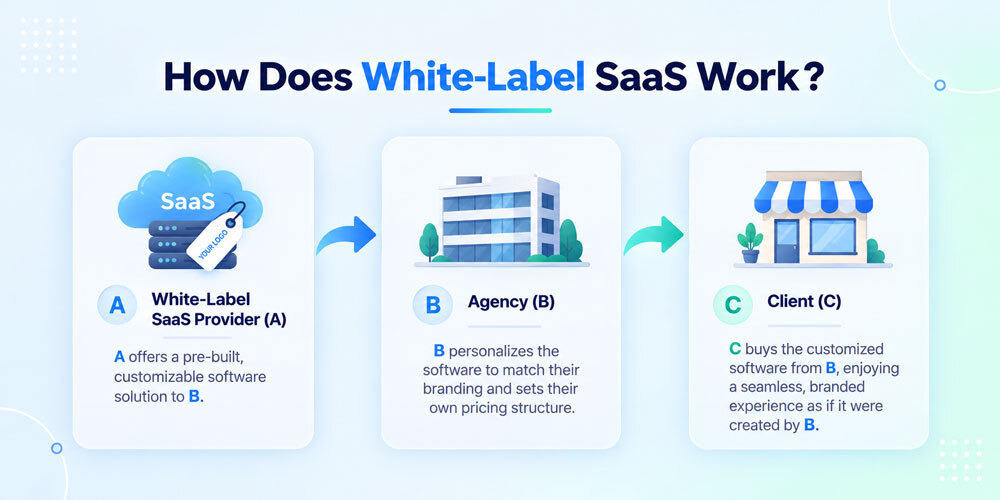
SaaS companies can also benefit from white label email marketing.
Many software businesses want to expand their product offering but do not necessarily want to spend significant development resources building an email marketing system.
Developing an email marketing platform requires much more than creating an attractive email editor. It involves contact management, automation, analytics, infrastructure, integrations, deliverability, compliance, security, and ongoing maintenance.
A white label platform can allow a SaaS company to provide these capabilities without building every component internally.
This can be particularly useful when email marketing is valuable to customers but is not the company's primary product.
Instead of diverting an engineering team toward building an entirely new email marketing product, the company can integrate or offer an established platform while maintaining its own brand experience.
Deliverability is one area where buyers should be particularly careful.
Having a white label platform does not automatically mean that your emails will have better deliverability than emails sent through a traditional platform.
Deliverability depends on multiple factors, including sender reputation, domain authentication, list quality, engagement, email content, sending practices, infrastructure, and compliance.
When evaluating an email marketing platform, look for features and processes that support responsible sending.
These may include tools for SPF and DKIM authentication, DMARC support, bounce management, unsubscribe handling, email validation, suppression management, reputation monitoring, and other deliverability controls.
A good email marketing platform should make responsible sending easier rather than simply focusing on how many emails you can send.
Traditional email marketing software generally wins when convenience is your primary concern.
You sign up, select a plan, configure your account, and start sending campaigns.
There is less responsibility for managing the platform experience because the provider controls most of it.
White label software gives you more control, but that control comes with additional responsibility.
You may need to think about how you package the software, how you price it, how customers access it, how support is handled, and how the platform fits into your overall business offering.
That is not necessarily a disadvantage.
In fact, it is one of the main reasons companies choose white label solutions.
Businesses that want more control over their customer experience are often willing to take on additional responsibility because the potential business value is greater.
One common misconception is that businesses need to build their own platform if they want a branded email marketing experience.
That is not necessarily the case.
Building an email marketing platform from the ground up can require substantial investment in software development, infrastructure, security, email delivery, automation, analytics, integrations, compliance, and ongoing maintenance.
For many businesses, this is unnecessary.
If email marketing is not your core technology product, building everything yourself may divert resources away from the areas where your company has the greatest competitive advantage.
White label software provides a middle ground.
You can offer an email marketing solution under your brand without taking on the full cost and complexity of developing the technology yourself.
This is one of the strongest reasons businesses consider white label email marketing platforms.
There is no universal answer because the economics depend on how you use the software.
For an individual business that needs email marketing for its own campaigns, traditional software may provide better value. You are paying for the functionality you need without taking on the additional requirements associated with managing a branded software offering.
For an agency, reseller, SaaS company, or business serving multiple customers, white label software can potentially provide stronger economics.
Instead of treating the platform purely as an operating expense, you may be able to package it into your own services and subscriptions.
The important factors to compare include:
Do not choose a platform based solely on the lowest monthly subscription.
The cheapest platform may become expensive if it limits your growth, restricts your branding, or forces you to migrate later.
Traditional email marketing software is generally the better choice if you:
For example, an online store that wants to send promotional emails, abandoned cart messages, newsletters, and post-purchase campaigns may not need white label functionality.
A traditional platform can provide everything the business needs without introducing unnecessary complexity.
White label email marketing software is generally more suitable if you:
The more your business depends on providing email marketing to other businesses, the more attractive the white label model becomes.
Whether you choose a traditional or white label platform, there are several questions you should answer before making a purchase.
Will only your internal marketing team use the platform, or will your customers use it too?
If customers will access it, investigate white label capabilities.
If maintaining a consistent brand experience is important, determine exactly what the platform allows you to customize.
Do not assume that "white label" means complete customization. Ask whether you can customize the logo, colors, domain, login experience, emails, interface, and other customer-facing elements.
A single business account has very different requirements from an agency managing dozens or hundreds of customers.
Make sure the platform can scale with your account structure.
If you plan to resell the software, find out whether you can create your own plans and pricing.
This can have a major impact on your business model.
Check contact limits, sending limits, automation limits, user limits, API access, and pricing increases before committing to a platform.
A modern email marketing platform should offer more than drag-and-drop campaign creation.
Look for automation, segmentation, analytics, forms, landing pages, integrations, testing, contact management, and deliverability tools.
If you are offering software to your own customers, support becomes especially important.
Consider whether the provider offers technical support, documentation, onboarding assistance, and resources for partners.
If you are still unsure which option makes sense, start with one question:
Are you buying email marketing software for your business, or are you planning to make email marketing software part of your business?
If you are buying software primarily to market your own products or services, traditional email marketing will likely be the simpler option.
If you want to provide email marketing capabilities to your customers, build a branded software offering, or generate revenue from software subscriptions, white label email marketing is likely worth exploring.
There is also a third consideration: future growth.
You may only need basic email marketing today, but if your business model is moving toward agency services, SaaS, reselling, or multi-client management, choosing a platform that can support that direction can save you from switching technologies later.
There is no single winner in the white label vs traditional email marketing debate because the two models solve different problems.
Traditional email marketing software is built around simplicity and direct usage. It is a practical solution for businesses that want to manage their own email marketing without worrying about the underlying technology.
White label email marketing software focuses more on control, branding, scalability, and business opportunities. It is particularly valuable for agencies, SaaS companies, consultants, resellers, and other businesses that want to provide email marketing capabilities to their customers.
The right choice ultimately comes down to your business model.
If you simply need to send better emails, automate campaigns, and understand your marketing performance, a traditional platform may be all you need.
If you want to build your own branded email marketing offering without developing the technology from scratch, white label software can provide a much more flexible foundation.
Before making a decision, look beyond the feature checklist. Consider your customers, branding requirements, pricing model, scalability, deliverability, integrations, support, and long-term goals.
The best email marketing platform is not necessarily the one with the most features. It is the one that fits the way your business actually operates and gives you enough flexibility to grow without forcing you to change platforms every time your needs evolve.
Ayesha Ejaz is a passionate writer who loves diving into research to explore new topics and broaden her knowledge. With a keen interest in learning through writing, Ayesha crafts informative and engaging content across various subjects. You'll find her unwinding with music or challenging herself with word search puzzles when she's not writing.
Tags:


